
Plated Dinner Vs. Family Style Wedding: Which Service Style Fits Your Day
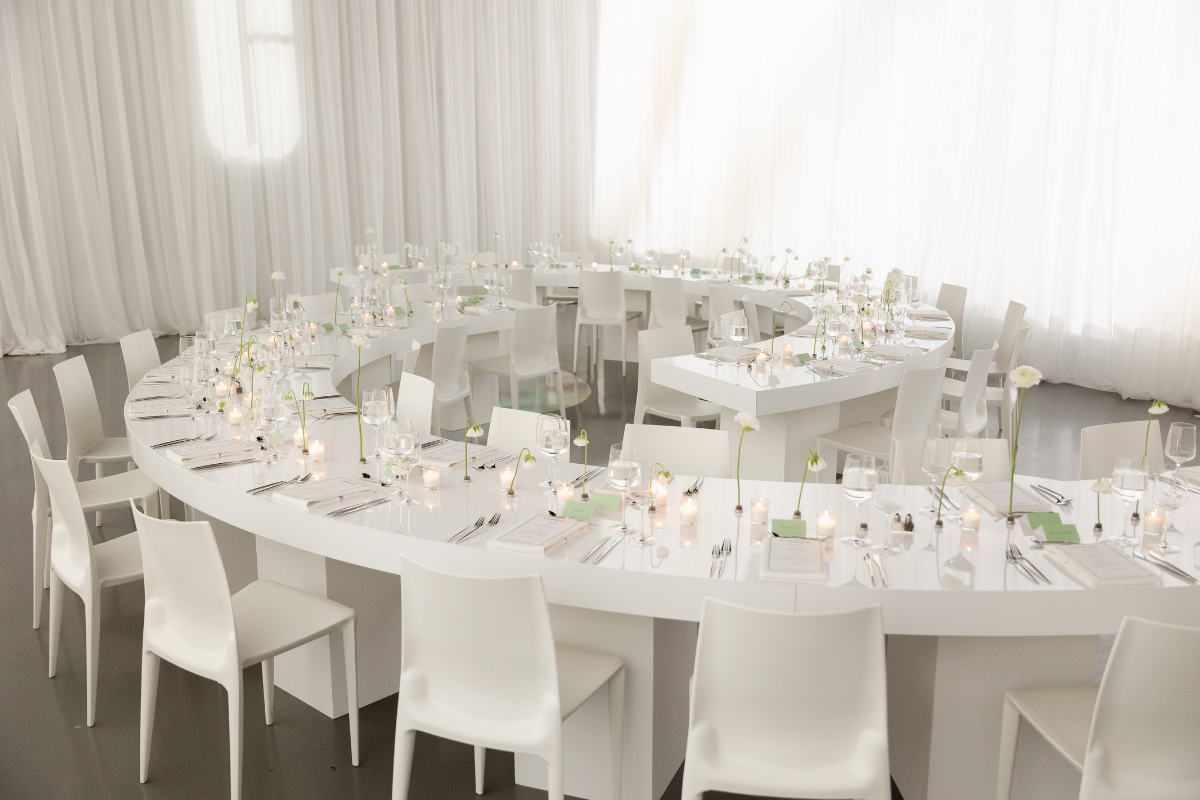
Quick Answer: The plated dinner vs family style wedding decision comes down to the tone you want your reception to feel like. A plated dinner delivers polished elegance, synchronized timing, and chef-finished presentation, which is the right fit for black-tie weddings, formal ballroom celebrations, and couples who want the meal itself to feel like the centerpiece. A family-style wedding delivers warmth, conversation, and a sense of communal abundance, which is the right fit for couples who want the reception to feel intimate and connected even at a larger scale. Both can be executed beautifully at the luxury tier. The right answer depends on your guest experience priorities, your venue, and the kind of memory you want the room to carry home.
Why the Service Style Decision Matters More Than Most Couples Realize
The plated dinner vs family style wedding question is one of the most consequential decisions on a wedding planning checklist. According to The Zola Wedding Cost Index, wedding catering averages roughly 6,900 dollars nationwide and accounts for about 14 percent of the total wedding budget.
At the luxury tier in New York, that figure climbs substantially higher. More importantly, the service style choice shapes the pacing of the entire reception, the visual character of the dinner moment, and the emotional register your guests carry from the day.
The decision is not really about which style is better. It is about which style fits the wedding you and your partner are actually planning. A black-tie celebration at a Manhattan ballroom asks for a different service style than a sun-drenched reception at a Long Island City loft.
A couple whose priority is a refined multi-course tasting experience will lean different than a couple whose priority is a long, conversational dinner with both families seated together. This guide walks through both options at the level of detail that matters: visual character, pacing, cost, guest experience, and how each one performs at the luxury wedding scale that defines New York celebrations.
What a Plated Dinner Wedding Actually Looks Like
A plated dinner is the classic formal service. Guests remain seated through the entire meal. Each course arrives at the table individually portioned, plated in the kitchen, and finished with the chef's intended presentation.
The standard structure runs three to four courses, typically a first course of soup or salad, a fish or starch intermediate course in larger productions, the main entrée, and a dessert course tied to the cake program.
The visual character is precise. Every plate looks the way the chef designed it. Garnishes hold their position. Sauces remain composed rather than pooling on a passed platter. The dinner reads as deliberate, formal, and editorial. Photography of plated courses tends to outperform family style for couples who want clean, magazine-quality dinner imagery in their gallery.
The pacing is structured. Courses are served in coordinated waves, which means the whole room eats together. That synchronization opens up natural windows for toasts between courses, parent dances during clearing, and a controlled flow toward the dance floor. Speeches do not have to compete with platter passing or guests refilling their plates.
Staffing requirements are higher. A plated dinner typically calls for a server-to-guest ratio between 1:8 and 1:10, with a captain managing the room and additional back-of-house staff handling plate finishing. At 200 guests, that means a service team in the range of 22 to 28 personnel. The higher staffing is what creates the polished feel of the night and what drives the cost up relative to other formats.
What a Family Style Wedding Actually Looks Like
A family-style wedding service brings large, beautifully composed platters to each table for guests to pass and share. The structure is similar to a plated dinner in that guests remain seated through the meal, but the energy is fundamentally different. Sharing platters creates conversation.
Guests serve each other. Tables organize themselves around the act of passing, which often becomes one of the most photographed parts of the reception.
The visual character is abundant and editorial in its own way. A long farm table laden with whole roasted proteins, harvest vegetables, fresh bread, and shared sides photographs beautifully and creates the warm, sun-washed aesthetic that has become a defining look for modern luxury weddings. Florals and table styling integrate directly with the food, which gives the dinner moment a strong visual identity.
The pacing is slower and more conversational. There is no synchronized course service. Tables eat at their own rhythm, which produces a longer dinner window and a softer transition into the dance floor portion of the night. For couples who want both families to genuinely connect over the meal, that extended conversational arc is the entire point.
Staffing sits between a plated dinner and a buffet. Family style typically calls for a server-to-guest ratio in the 1:12 to 1:15 range, with attendants supporting platter refreshes and clearing. Costs run between plated and buffet on a per-guest basis.
Side By Side Comparison
The table below summarizes how the two formats compare across the variables that most influence the plated dinner vs family style wedding decision.
| Consideration | Plated Dinner | Family Style |
|---|---|---|
| Formality | Highest, black-tie ready | Elevated, warm, communal |
| Pacing | Structured, synchronized | Relaxed, conversational |
| Visual Presentation | Chef-finished plates | Abundant shared platters |
| Guest Experience | Refined, individual | Communal, social |
| Server-to-Guest Ratio | 1:8 to 1:10 | 1:12 to 1:15 |
| Typical Time at Dinner | 75 to 90 minutes | 90 to 110 minutes |
| Speech Integration | Easy, between courses | Works best before dinner starts |
| Dietary Customization | Built into each plate | Best handled with separate plated alternates |
| Average Per-Guest Cost (Luxury Tier) | $225 to $400+ | $175 to $325 |
Cost Comparison Without the Generic Numbers
Most cost comparisons of plated dinner vs family style wedding service rely on national averages that miss the luxury tier almost entirely. At the level of New York weddings produced by experienced catering teams, the spread looks different.
The chart below shows how cost typically scales with guest count at a luxury New York wedding for each format. The figures reflect food and beverage at premium quality, plus service, and assume a cocktail hour and full dinner production.
| Guest Count | Plated Dinner (Total Range) | Family Style (Total Range) | Cost Difference |
|---|---|---|---|
| 100 guests | $32,000 to $48,000 | $26,000 to $38,000 | ~15 to 20% less |
| 150 guests | $48,000 to $72,000 | $39,000 to $57,000 | ~15 to 20% less |
| 200 guests | $62,000 to $96,000 | $50,000 to $76,000 | ~15 to 20% less |
| 250 guests | $77,000 to $120,000 | $62,000 to $95,000 | ~15 to 20% less |
The savings on family style are real but not transformative. The savings come primarily from reduced staffing, not from food cost. The food budget often runs similar or even higher on family style because portions need to be generous enough to support sharing without anyone feeling rationed.
Which Style Fits Different Wedding Visions
The plated dinner vs family style wedding choice should follow your vision for the day, not the other way around.
A plated dinner is the right fit when the wedding is genuinely formal in tone. A New York ballroom celebration, a black-tie reception, a wedding designed around a multi-course tasting experience, or a wedding where the meal itself is meant to be the centerpiece of the evening all read more strongly as plated.
It is also the right fit when speeches and toasts are integral to the program and need to land cleanly within a structured dinner window. Couples whose menu is built around chef-driven, presentation-forward dishes typically choose plated for the same reason.
A family-style wedding is the right fit when the priority is connection. Couples who want both families to genuinely meet each other over the meal, weddings hosted in lofts or galleries where the architectural character is warm rather than formal, multi-cultural celebrations where shared dishes are part of the tradition, and weddings designed around abundance and conversation all read more strongly as family style.
It is also the right fit for couples who want a slower, more pleasurable dinner without the pacing pressure of synchronized course service. There is no single right answer, but there is almost always a right answer for a specific couple. The wedding planning conversation should start with the experience you want, not with the format.
Hybrid and Small Plate Approaches
The plated dinner vs family style wedding choice does not have to be binary. Increasingly, luxury weddings in New York adopt hybrid formats that capture the strengths of both.
A common hybrid is a plated first course followed by family-style mains and a plated dessert. This gives the dinner a polished opening, opens the room into communal conversation in the middle, and closes with the visual moment that supports the cake program. Another popular hybrid is a plated dinner with one or two interactive late-night stations, which extends the celebration well past the formal dinner window.
A third increasingly popular option is the small plate station experience. Cloud Catering's Small Plate Station format combines a casual dining experience with the sophistication and excitement of a plated dinner, with elegant, abbreviated dishes that elevate a standard buffet into a thoughtfully designed guest experience.
This approach is particularly strong for couples who want the polish of plated presentation, the energy of family style movement, and the menu variety of a multi-course tasting all in a single dinner moment.

How Cloud Catering Approaches the Plated Dinner Vs Family Style Wedding Question
Cloud Catering and Events has produced weddings across the full spectrum of New York's luxury wedding venues, from intimate plated celebrations of 60 guests to family-style productions of 300 and large-scale hybrid programs. The Cloud culinary team is trained at Michelin-starred restaurants and approaches both formats with the same precision and care.
The Cloud planning conversation around service style does not begin with the menu. It begins with the experience. The Cloud team works with couples and their planners to understand the tone they want the reception to feel like, the family dynamics that matter most, the venue character, and the way the dinner needs to integrate with the cocktail hour and the dance floor program.
The service style decision follows that conversation rather than driving it. You can see more about the Cloud creative approach and the culinary craft the team brings to wedding programs.
For couples beginning to plan a luxury New York wedding, the Cloud team is available to consult on service style, menu structure, and venue partnerships well in advance of the formal proposal stage.
The plated dinner vs family style wedding decision is one of the most personal calls you will make in your planning. The right answer is the one that matches the day you are actually trying to create.
Frequently Asked Questions
Which service style is more expensive, plated dinner or family style?
Plated dinners are typically 15 to 20 percent more expensive per guest than family style at the luxury tier in New York. The difference is primarily driven by staffing, since plated service requires a higher server-to-guest ratio. Food costs often run similarly across both formats.
Does family style work for large weddings?
Family style scales well up to roughly 250 guests in venues with appropriately sized tables. Beyond that, the logistics of platter delivery and table refreshes get more challenging, and many couples shift to hybrid formats or small plate stations to maintain the communal feel without the operational complexity.
How long does each service style typically take?
A plated dinner usually runs 75 to 90 minutes from first course to dessert clearance. Family style typically runs 90 to 110 minutes because the pacing is naturally slower and more conversational. Plan your reception timeline accordingly, particularly if you have a strict venue end time.
Which is better for guests with dietary restrictions?
Plated service handles dietary restrictions most cleanly because each meal can be customized in the kitchen and delivered directly to the right guest. Family style can absolutely accommodate dietary needs, but works best when guests with severe allergies or specific requirements receive an individually plated alternative.
Can I combine plated and family style at the same wedding?
Yes, and hybrid formats are increasingly popular. A common approach is a plated first course, family-style mains, and a plated dessert, which captures the polish of plated service and the warmth of family style in a single dinner. Talk to your caterer about the format that supports your vision best.
Sources
The Zola Wedding Cost Index, Wedding Catering Costs: Real Numbers and Budget Tips:https://www.zola.com/expert-advice/cost-of-wedding-caterers
The Knot, Buffet vs. Plated Wedding Dinner: Expert Advice on How to Decide:https://www.theknot.com/content/costs-for-different-meal-options
LD Events Decor, Plated vs. Buffet Wedding: What's the Best Choice for Your Reception?:https://ldeventsdecor.com/plated-vs-buffet-wedding/
Stone Cove Catering, Family-Style vs Buffet vs Plated Wedding Catering:https://stonecovecatering.com/blog/family-style-buffet-vs-plated-wedding-catering/