
Scaling Nonprofit Gala Catering in NYC for Large Guest Lists

Quick Answer: Scaling nonprofit gala catering in NYC for large guest lists is fundamentally about operational discipline. The catering decisions that work beautifully for a 150-guest benefit dinner break down at 400, 600, or 1,000 guests unless the catering team has the kitchen capacity, staffing infrastructure, service systems, and venue fluency to handle the scale. The strongest large-format nonprofit gala catering in NYC builds the entire program around three principles: service formats that scale cleanly, kitchen operations engineered for volume without quality loss, and service timing tightly choreographed around the mission moment. Done well, a 600-guest gala feels as intentional as a 60-guest dinner.
Why Large Nonprofit Galas Require a Different Catering Discipline
A nonprofit gala for 600 to 1,000 guests is a different animal than a 150-guest benefit dinner. The fundamentals of donor experience remain the same. The mission moment matters. The ask drives revenue. The hospitality reflects the organization's standards. But every operational decision that supports those fundamentals becomes more complex at scale.
According to research from Double the Donation and Neon One, 81 percent of donors attend nonprofit fundraising events, and 97 percent cite understanding impact as a major factor in their giving decisions. CauseVox benchmarks target a healthy gala expense ratio of 35 percent or less, with returns of two to four dollars per dollar spent.
At a larger gala scale, catering typically accounts for 35 to 45 percent of total event expenses, which makes the operational efficiency of the catering program one of the most consequential decisions on the development calendar.
The challenge is that catering quality often degrades at large scale unless the operation is specifically built for it. A 200-guest plated dinner that arrives hot and on time can become a 600-guest plated dinner that arrives lukewarm and pushes the ask 20 minutes off schedule.
A cocktail reception that flows beautifully for 150 guests can become a service bottleneck for 400. A catering team that has not built the systems for scale will struggle to deliver consistent quality, and that struggle shows up directly in donor experience and ultimately in fundraising outcomes.
The strongest nonprofit gala catering in NYC at scale is built around operational discipline. The kitchen capacity, the staffing model, the service systems, the venue partnerships, and the timing choreography all need to be engineered for the specific scale of the event rather than scaled up from a smaller template.
The Scaling Thresholds That Change Catering Decisions
Gala scale changes the catering brief in specific ways at specific thresholds. Understanding these thresholds is the first step in scoping the right catering program. The table below summarizes how catering decisions shift across common nonprofit gala guest counts.
| Guest Count | Key Catering Decisions | Typical Format |
|---|---|---|
| 150 to 250 | Full plated service feasible, single kitchen team | Plated dinner with dance floor |
| 250 to 400 | Plated service requires multiple service waves, more kitchen staff | Plated dinner or hybrid plated + stations |
| 400 to 600 | Hybrid formats outperform full plated, kitchen flow becomes critical | Plated 1st course + station mains |
| 600 to 800 | Small plate stations or family style typically outperform plated | Station-driven, multi-area layout |
| 800 to 1,000+ | Specialized scaling, multi-kitchen production | Stations + heavy passed canapé hour |
The transition points matter. A 300-guest gala can absolutely run a full plated dinner with the right operation. A 700-guest gala plated dinner is technically possible but typically produces a worse donor experience than a station-driven format because of the service timing and kitchen flow demands.
The right catering format flows from the actual guest count and the venue's operational realities, not from the development team's traditional preferences.
Service Format Decisions Drive Everything
The single most consequential catering decision at a large gala scale is the service format. The format determines the staffing model, the kitchen operations, the timing of every program element, and ultimately the donor experience.
A full plated dinner at 600 guests requires a server-to-guest ratio of approximately 1:8 to 1:10, which means a service team of 60 to 75 servers, plus captains, plus runners, plus back-of-house production staff.
The kitchen needs to plate and dispatch 600 first courses simultaneously, then 600 entrees, then 600 desserts, with each course requiring 12 to 18 minutes of staged plating and another 8 to 12 minutes of service to all tables. Total dinner service time runs 90 to 110 minutes at minimum, and that timing is non-negotiable because plate temperature and presentation degrade quickly if the service pace slips.
A station-driven format at the same 600-guest scale operates fundamentally differently. Stations distribute the service load across multiple service points rather than concentrating it through a single plated wave. Guests circulate at their own pace.
The kitchen produces in continuous batches rather than in sequenced waves. Service staffing typically sits at 1:15 to 1:20, which means a team of 30 to 40 servers plus station chefs and bar staff. Total dinner service can run 75 to 90 minutes with significantly more flexibility built in.
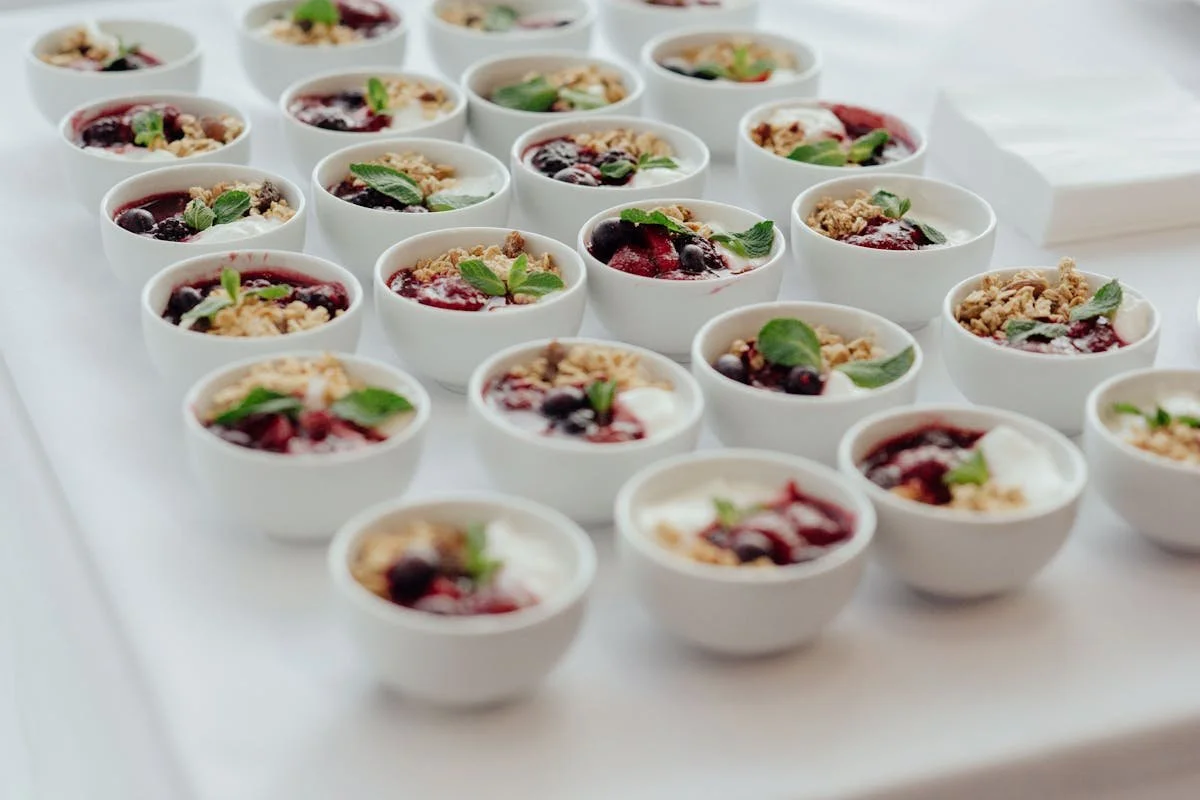
Cloud Catering's small plate station experience combines a casual dining experience with the sophistication and excitement of a plated dinner, with elegant abbreviated dishes that elevate a standard buffet into a thoughtfully designed guest experience.
That format has become a particularly strong choice for large-scale NYC nonprofit galas because it captures the polish of plated service while operating with the flexibility that scale demands.
Kitchen Operations Are Where Scale Actually Lives
The operational reality of large nonprofit gala catering in NYC is that the kitchen has to deliver consistent quality across hundreds of plates without the production line approach that traditional restaurants use. This is not a job traditional catering operations can absorb without specific infrastructure.
The strongest large-format caterers in NYC build their kitchen operations around three principles. The first is pop-up kitchen capability, which means the catering team can establish a fully functional production kitchen on-site at any venue, including spaces that lack permanent kitchen infrastructure.
The second is parallel production lines, with multiple cooking stations working simultaneously to produce in volume without sacrificing technique. The third is hold-and-finish protocols, which let the kitchen prepare components ahead of service and finish them in real time as service waves move through the room.
A 600-guest plated dinner cooked from raw ingredients to plated course in real time would fail at the time-temperature curve. The same dinner with proper hold-and-finish protocols, executed by a kitchen built for the scale, delivers consistent quality across every plate. The difference is operational infrastructure, not effort.
Cloud Catering operates from exactly this kind of kitchen infrastructure. The Cloud culinary team is trained at Michelin-starred restaurants, which provides the technical foundation. The Cloud operational team brings the production systems that translate that technical foundation into reliable execution at scale across NYC venues.
Service Timing Around the Mission Moment
The single most important timing decision at any nonprofit gala is the relationship between the catering service and the mission moment. The ask, the paddle raise, the live auction, and the program speeches are the moments that drive donations. The catering operation needs to fall silent around them.
At a small gala scale, this is relatively easy to manage. At 600-guest scale, it requires deliberate planning. Plate clearing in the middle of the ask is one of the most common large-gala catering failures. Kitchen movement during the auction is the second most common. Dessert delivery competing with the closing speech is the third. Each of these failures undercuts the very revenue the gala was designed to drive.
The strongest nonprofit gala catering in NYC builds intentional service pauses into the run-of-show. The development team and the catering team work together on the timing of clearing, the staging of dessert service, and the points at which the kitchen needs to suspend movement entirely. A captain manages the room with this choreography in mind throughout the evening.
The table below summarizes the typical service timing for a 600-guest NYC nonprofit gala with a mission moment program.
| Program Phase | Time Block | Catering Activity |
|---|---|---|
| Cocktail Reception | 60 to 75 min | Passed canapés, full bar service |
| Seating and Welcome | 15 min | Water service, pre-set first course |
| First Course | 20 to 25 min | Plated service to all tables |
| Mission Moment / Program | 20 to 30 min | Service pauses, no clearing |
| Main Course Service | 30 to 40 min | Plated or station service |
| Ask / Paddle Raise | 15 to 20 min | Service fully suspended |
| Dessert and Coffee | 20 to 30 min | Plated or station dessert |
| Celebration Close | 30 to 60 min | Espresso bar, late-night bites |
A catering operation that handles this choreography reliably at 600-guest scale is operating from a different level than one that handles it for 150 guests and assumes the same playbook scales up. The difference is built into the captain's training, the service manual, and the kitchen's production schedule.
Staffing the Service Team at Scale
Staffing is one of the most underestimated dimensions of large-scale nonprofit gala catering in NYC. The numbers add up faster than most hosts expect, and the quality of the staffing translates directly into donor experience.
For a 600-guest plated gala, plan on a service team of 75 to 95 personnel total. This typically breaks down into 60 to 75 servers, 4 to 6 captains, 8 to 10 bartenders, 4 to 6 runners, and 6 to 10 back-of-house production staff.
For a station-driven format at the same scale, the total team typically runs 50 to 70 personnel, with the savings coming from reduced server count offset partially by additional station chefs and culinary staff. The chart below provides typical staffing estimates for premium nonprofit gala catering in NYC across common guest counts and formats.
| Guest Count | Plated Service Team | Station-Driven Service Team |
|---|---|---|
| 200 | 28 to 35 | 22 to 28 |
| 400 | 52 to 65 | 38 to 48 |
| 600 | 75 to 95 | 50 to 70 |
| 800 | 95 to 120 | 65 to 85 |
| 1,000 | 115 to 145 | 80 to 105 |
Beyond raw numbers, the quality and training of the staff matters more at scale than at any smaller event. The captain managing a 600-guest gala is making real-time decisions that affect the entire room. The server running a six-table section is the only point of contact for 60 guests for the evening.
Cloud's service philosophy is grounded in hospitality that aims to be as thoughtful as it is thorough and as considerate as it is correct, which is exactly the standard a sophisticated NYC donor base expects.
Venue Capacity and Layout for Large Galas
The venue selection for a large nonprofit gala in NYC is itself a catering decision. The catering operation lives within the venue's kitchen capacity, freight access, floor plan, and service flow. A venue that hits capacity numbers on paper may not actually support a 600-guest plated dinner with the catering quality the gala needs.
The venues that handle large-scale nonprofit galas best in NYC include historic ballrooms, large architectural lofts, museum spaces, and dedicated event halls with full kitchen infrastructure.
Cloud Catering and Events operates regularly across many of these spaces, including the Frick Collection, Knockdown Center, Melrose Ballroom, IAC Building, Angel Orensanz Foundation, Glasshouses, and the Park Avenue Armory. You can see more of the Cloud venue partner list for spaces that work especially well at scale.
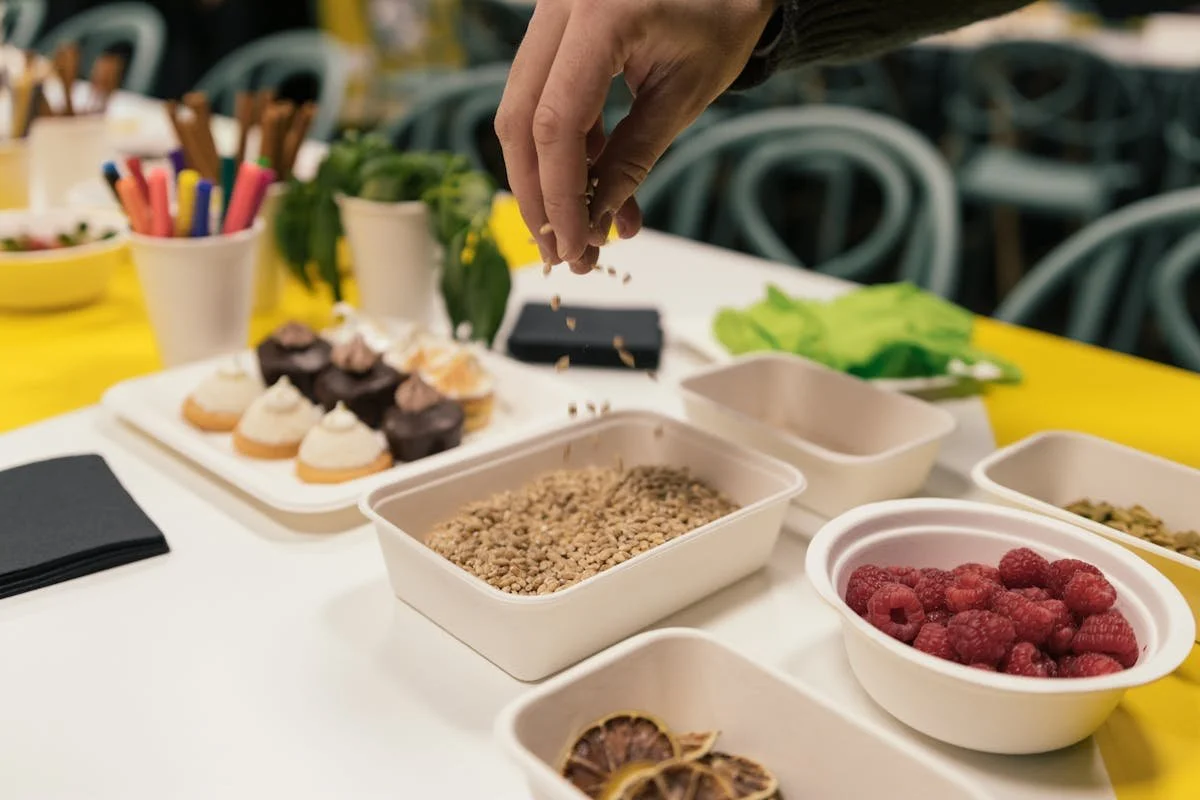
For galas in spaces without permanent commercial kitchens, the catering team needs to be able to establish a fully functional pop-up kitchen on-site.
This requires specific equipment infrastructure, experienced production leadership, and the operational planning to deliver restaurant-quality output from a temporary production environment. Not every catering operation can do this. The ones that can have built their business around it.
Cost Realities at Large Gala Scale
Premium nonprofit gala catering in NYC at large scale typically runs $250 to $450 per guest for food, beverage, and service at the quality tier appropriate for a sophisticated donor audience. Production scaling, equipment rentals, design integration, and venue logistics add additional line items.
The economics improve modestly as scale increases. A 600-guest gala typically runs 5 to 10 percent lower per guest than a 300-guest gala at equivalent quality, primarily because some fixed costs are spread across more attendees.
However, this scaling benefit only materializes if the catering team has the operational infrastructure to execute at scale without quality degradation. A catering team that cannot scale efficiently sees the savings vanish into operational chaos, increased staffing, or quality issues.
Sponsored beverage partnerships become increasingly meaningful at large scale. A spirits brand or champagne house underwriting the bar in exchange for visible signage and a program mention can meaningfully reduce the catering line while elevating the perceived quality of the offering.
How Cloud Catering Approaches Large Nonprofit Gala Catering in NYC
Cloud Catering and Events has built a deep practice in large-format nonprofit gala catering in NYC. The Cloud team integrates the culinary, design, and service operations as a single coordinated engagement, with the operational infrastructure to deliver consistent quality across guest counts that stress lesser catering operations.
The Cloud approach to large-scale nonprofit galas centers on three commitments. First, the menu and service format are designed for the specific scale of the event, with the operational realities built in from the start rather than scaled up from a smaller template.
Second, the service timing is choreographed in close collaboration with the development team so the food never competes with the mission moment, the ask, or the program. Third, the kitchen operations are engineered for volume without quality loss, with pop-up kitchen capability for venues that lack permanent infrastructure and parallel production systems for venues that do.
Cloud's experience executing for major nonprofit and cultural institutions across New York includes engagements with the Smithsonian, MoMA, the American Ballet Theatre, the Park Avenue Armory, the Central Park Conservancy, the New Museum, the New York Times, and Columbia Law School, among many others.
That breadth of cultural and institutional gala experience is part of why the Cloud team is trusted by development leaders at the largest NYC nonprofits.
For development teams beginning to scope an upcoming benefit gala, annual fundraiser, or signature event, the Cloud team is available to consult on menu structure, service format, kitchen operations, and venue logistics well in advance of the formal proposal stage. You can read more about the Cloud approach to event craft.
The largest nonprofit galas in New York can be among the most beautiful events of the year, or among the most operationally compromised. The difference comes down to whether the catering partner has built its operation specifically for scale. That is the standard worth selecting to, and the standard the strongest catering partners are built to deliver.
Frequently Asked Questions
At what guest count does a nonprofit gala become a large-scale event?
At roughly 400 guests, gala catering shifts from standard execution into operational scale work. Above 400, the staffing model, kitchen operations, and service timing all require specific infrastructure rather than simple scaling of a smaller event. Above 600 guests, the catering operation needs to be built for scale, not adapted to it.
Are plated dinners or stations better for a large nonprofit gala?
For galas above 400 to 500 guests, station-driven formats and small plate station experiences typically outperform full plated dinners on both donor experience and operational reliability. They keep the room mobile, support better networking, accommodate dietary needs more cleanly, and produce a more flexible service timing around the ask. Plated dinners remain appropriate for traditional table-sponsorship structures and formal awards programs at moderate scale.
How much should a nonprofit budget per guest for large gala catering in NYC?
Plan on $250 to $450 per guest for food, beverage, and service at the quality tier appropriate for a sophisticated New York donor audience. Production, equipment, design integration, and venue logistics typically add additional line items. Costs scale modestly more efficiently at higher guest counts when the catering operation has true infrastructure for scale.
How far in advance should we contract our caterer for a large NYC gala?
For benefit galas above 400 guests, contract your catering partner nine to twelve months in advance. Premium NYC catering teams capable of executing at scale book the same calendar windows as luxury weddings and major corporate events, and the operational planning of a large gala requires benefits from extended lead time for tasting, kitchen logistics, and staffing coordination.
What is the most common large-gala catering failure?
Service timing around the mission moment. Plate clearing during the ask, kitchen movement during the auction, and dessert delivery competing with the closing speech are the three most common failures, and each one directly undercuts the fundraising outcomes the gala was designed to drive. A catering partner who builds intentional service pauses into the run-of-show is essential at scale.
Sources
Double the Donation, Nonprofit Fundraising Statistics:https://doublethedonation.com/nonprofit-fundraising-statistics/
Neon One, 28 Fundraising Statistics Every Nonprofit Should Know:https://neonone.com/resources/blog/fundraising-statistics/
CauseVox, How to Calculate Event Fundraising ROI:https://www.causevox.com/blog/fundraising-roi/
Catering Rewards, 10 Tips for Executing Large-Scale Events:https://cateringrewards.com/blog/catering-events-10-tips-for-executing-large-scale-events
OneCause, A Complete Guide to Fundraising Galas:https://www.onecause.com/blog/fundraising-gala/