
What Makes Rooftop Wedding Catering in NYC Worth the Height
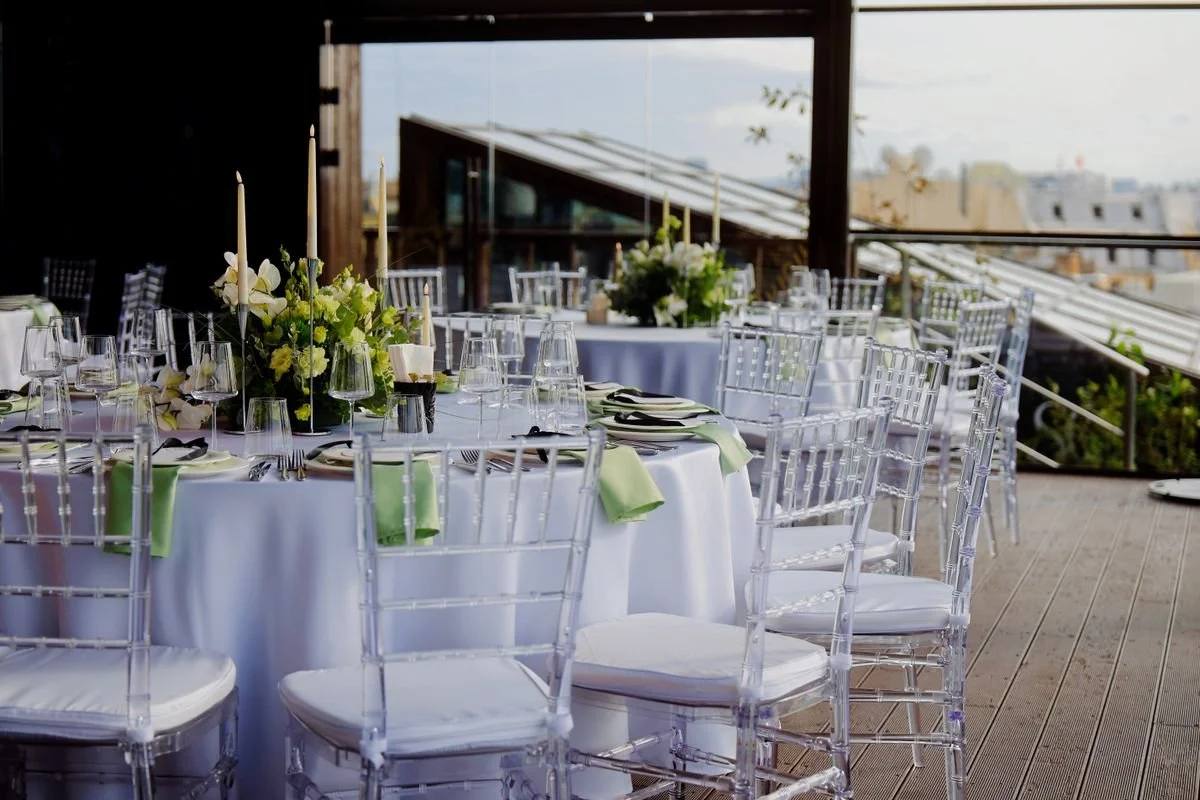
Quick answer: Rooftop wedding catering in NYC is worth the added complexity because it delivers a setting no traditional venue can offer: open sky, skyline views, and a sense of scale that shapes the whole event. The tradeoff is real logistical planning, since a caterer has to solve for kitchen access, weather contingency, building restrictions, and timing around natural light in ways a standard indoor venue never requires.
Rooftop wedding catering NYC comes with real logistical demands, from equipment access to weather contingency, that make it a different discipline from catering a standard ballroom or event space.
The reward for solving those logistics is a setting no indoor venue can replicate, with skyline views and open-air atmosphere that shape the entire feel of the celebration.
The right rooftop wedding venues NYC caterer treats the height and exposure as part of the design, building a menu and service plan that works with the setting instead of fighting it.
Why Couples Choose Rooftop Venues for a NYC Wedding
There is a reason rooftop venues remain some of the most requested settings for a luxury wedding in New York City. Few backdrops can compete with an open sky, a skyline view, and the sense of scale that comes from celebrating above the city rather than inside it.
A rooftop wedding feels inherently elevated, in every sense of the word, and that atmosphere becomes part of the story guests remember long after the day ends.
But that atmosphere comes with a tradeoff most couples do not fully consider until they start planning: rooftop venues are rarely built with full catering infrastructure. Rooftop wedding catering NYC has to solve problems that simply do not exist inside a traditional ballroom or event space, and how well a caterer solves them determines whether the height feels like a triumph or a source of stress on the wedding day.
The Logistics Rooftop Wedding Catering NYC Has to Solve
The appeal of a rooftop is entirely about atmosphere. The challenge is that almost none of that atmosphere comes with a commercial kitchen, indoor storage, or weather protection built in.
Kitchen Access and Equipment
Most rooftop venues have limited or no on-site kitchen space, which means a caterer has to plan around a mobile kitchen setup capable of producing a full menu without the equipment a standard commercial kitchen provides.
Everything from refrigeration to plating stations to service equipment often has to be brought in, staged, and broken down within tight elevator and freight access windows. A rooftop wedding catering NYC team with real experience in this setting plans equipment logistics as carefully as the menu itself, since a missing piece of equipment cannot simply be run down the street to replace mid-service.
Weather Contingency Planning
An open-air setting means weather is always part of the plan, not an afterthought. A strong caterer builds contingency into the service plan from the start, accounting for wind that can affect open flame service or delicate presentation, sudden temperature shifts that affect food safety and guest comfort, and the possibility of rain requiring a shift to covered or indoor space.
Rooftop wedding catering in NYC couples choose almost always include some kind of covered or indoor backup, and a caterer needs a service plan that can pivot to that backup smoothly if needed, without the transition feeling like a scramble.
Timing Around Natural Light
Much of what makes a rooftop wedding feel special is timing the celebration around natural light, particularly the transition into golden hour and evening skyline views.
That timing affects far more than photography. It shapes when courses are served, when the bar opens, and how the evening's pacing is built, since a caterer coordinating a rooftop event has to work backward from sunset and the building's own lighting or curfew restrictions rather than a standard reception timeline.
Menu and Service Choices That Work Best at Height
Not every menu or service style translates well to a rooftop setting, and the strongest rooftop wedding catering NYC programs adapt their approach accordingly.
| Rooftop Consideration | Why It Matters | How It's Handled |
|---|---|---|
| Wind Exposure | Affects open flame service and delicate presentation | Wind-resistant staging and adjusted plating choices |
| Equipment Access | Limited elevator and freight windows for load-in | Mobile kitchen equipment staged on a precise schedule |
| Temperature Shifts | Evening temperature drops affect food safety and comfort | Timed service and proper holding equipment |
| Weather Backup | Rain or extreme heat can require a full pivot indoors | A rehearsed backup service plan, not an improvised one |
Coordinating Rooftop Catering With Building and Venue Requirements
Beyond the elements themselves, rooftop venues in New York City typically come with building-specific requirements that a caterer has to navigate. Many rooftops restrict or entirely prohibit open flame cooking, which changes how certain dishes and stations can be executed.
Freight elevators often operate on limited schedules, which shapes exactly when a catering team can load in equipment and load out after the event. Some buildings also enforce sound or curfew restrictions that affect how late an evening reception can run.
A rooftop wedding catering NYC team with genuine experience in this setting treats these building requirements as part of the planning conversation from the very beginning, not a surprise discovered during a final walkthrough. That familiarity is often the real difference between a rooftop wedding that feels effortless and one where guests can sense the strain behind the scenes.
What to Confirm With Your Rooftop Wedding Caterer

Before booking a rooftop venue and caterer, a few conversations help ensure the two are working from the same plan.
Confirm what kitchen equipment and infrastructure the venue provides versus what the catering team needs to bring in.
Ask how the caterer's weather contingency plan works, including what backup space is available and how quickly service can transition.
Review the building's freight elevator schedule and any restrictions on open flame cooking or sound.
Clarify how the service timeline will be built around sunset and available natural light.
Ask for examples of rooftop events the caterer has produced, specifically at venues with similar access or space constraints.
Working through these details early is what allows a rooftop wedding to deliver on its atmosphere without the logistics becoming visible to guests.
Bringing It Together at NYC's Rooftop Venues
Among New York City's rooftop settings, Brooklyn Grange stands out as a distinctive option, offering a working rooftop farm atmosphere that pairs open sky views with a genuinely unique sense of place. Venues like this reward couples who choose a caterer with real rooftop experience, since the payoff, a wedding set against an actual skyline with the city spread out below, is unmatched by any indoor space.
A partner who has worked at this kind of venue before understands how to let the setting do the work visually while quietly managing every logistical detail that makes the evening possible.
What This Means for Couples Considering a Rooftop Wedding
Choosing a rooftop venue for a luxury NYC wedding is ultimately a decision to prioritize atmosphere and view above the convenience of a fully built-out indoor space. That is a worthwhile tradeoff when the catering team behind the event has the experience to manage everything the setting demands, from equipment logistics to weather contingency to building restrictions.
With the right rooftop wedding catering NYC partner, couples get the full reward of an open-air celebration above the city without having to personally manage the complexity that makes it possible. The height becomes part of the wedding's story, not a source of stress behind the scenes.
Frequently Asked Questions
Why do rooftop venues require different catering logistics than indoor spaces?
Most rooftops lack full commercial kitchen infrastructure and have limited elevator access, open flame restrictions, and exposure to weather, all of which require specialized planning.
What happens if it rains during a rooftop wedding?
A well-planned rooftop wedding includes a rehearsed weather contingency, typically a covered or indoor backup space, so the caterer can transition service smoothly if needed.
Can a full menu be served at a rooftop wedding?
Yes, with the right mobile kitchen setup and equipment logistics, a rooftop wedding catering NYC team can execute a full menu comparable to an indoor venue.
How does timing work around sunset for a rooftop wedding?
Caterers coordinate service, including course pacing and bar timing, around the natural light and sunset window to make the most of the rooftop's visual appeal.
Are there building restrictions that affect rooftop wedding catering?
Yes, many rooftop venues restrict open flame cooking and operate freight elevators on limited schedules, both of which need to be factored into the catering plan well in advance.