
What Sets Harlem Apart for Large-Scale Wedding and Corporate Catering in New York City
Quick Answer: Harlem stands apart for large-scale events because it offers architecturally significant rooms at a scale most of Manhattan cannot match, inside a neighborhood with unmistakable cultural identity. What it does not offer is turnkey infrastructure. Landmark theaters, former church halls, university buildings, and converted industrial spaces in Harlem rarely include a working production kitchen, which means Harlem catering is produced off-site and assembled on location. For a 400-guest corporate gala or a luxury wedding of 300, that trade works beautifully when the catering team studies the building before it designs the menu.
Harlem pairs landmark architecture with rooms large enough to seat 200 to 600 guests, a combination that is increasingly rare in Manhattan.
Most Harlem venues were never built for banquet service, so Harlem catering depends on off-site production, a fully built temporary kitchen, and staffing sized for limited back-of-house space.
Access rules, historic district restrictions, and narrow residential side streets shape the production timeline more than the menu does.
Where Harlem Sits, and Why the Geography Matters
Harlem runs roughly from 110th Street north to 155th Street, stretching river to river across upper Manhattan. Central Harlem holds most of the landmark performance and cultural spaces. East Harlem sits east of Fifth Avenue. West Harlem climbs into Manhattanville, Hamilton Heights, and Sugar Hill, where the street grid rises, and the architecture turns residential and grand at once.
That footprint matters for a large event. Guest arrival is unusually easy for upper Manhattan. The 2 and 3 run up Lenox Avenue, the A, B, C, and D stop at 125th Street, and the 4, 5, and 6 run under Lexington. Metro-North stops at Harlem-125th Street, one of only two Manhattan stations on the line, so guests traveling from Westchester or Connecticut arrive without transferring at Grand Central.
For a corporate audience spread across the tri-state area, that single detail can move a venue decision. It also shapes Harlem catering timing, because arrival waves tend to be sharper here than at a midtown hotel where guests trickle in from nearby offices.
What Kinds of Venues Define Harlem Catering?
The neighborhood's event spaces fall into a few clear categories, and each one changes what a catering team has to carry through the door.
Landmark theaters and performance halls
Harlem's cultural institutions are the reason many clients look uptown in the first place. The Apollo Theater anchors 125th Street, the Schomburg Center sits at 135th, and Malcolm X Boulevard, and smaller stages and cultural houses fill the blocks between.
These rooms deliver atmosphere no ballroom can manufacture. They also deliver narrow wings, working stages, and lobbies that have to serve as bar, buffet, and staging area at the same time.
Historic religious and institutional halls
Harlem holds some of the most beautiful assembly rooms in New York, many inside buildings more than a century old. Ceiling heights run high, floors are often original, and capacity can be generous. Kitchens, where they exist, were designed for community service rather than a plated dinner for 400, which is exactly why Harlem catering here leans on off-site cooking and a temporary plating line.
University and campus spaces
The City College campus in Hamilton Heights and the newer Manhattanville development to the south both bring formal halls and modern event rooms into the mix. Campus buildings add credentialing, security desks, and fixed load-in windows to the plan. They also tend to have real elevators and real loading areas, which makes them among the friendlier addresses for Harlem catering at scale.
Lofts and converted industrial buildings
West Harlem and Manhattanville still hold warehouse floors and light industrial buildings that convert well for corporate galas and luxury weddings. These are raw spaces in the truest sense. Power, water, restrooms, furniture, lighting, and the entire kitchen arrive with the production team.
Why Kitchen Infrastructure Is the First Harlem Catering Question
In most Harlem venues, the catering company is the kitchen, and that single fact drives every other Harlem catering decision. Food is produced in a licensed commissary, transported under temperature control, and finished in a mobile setup built inside the venue that morning.
Cloud Catering works from Long Island City, which puts the RFK Bridge and the FDR between the production kitchen and upper Manhattan, a straightforward run for a staggered delivery schedule.
A temporary kitchen is not a folding table and a few chafers. For a seated dinner of 350 or more, the build usually follows the same sequence:
Confirm electrical capacity, water access, and venting limits with the building weeks before the event, then size the equipment package to what the room can actually support.
Secure a staging footprint that is close to the dining room but fully out of guest sightlines, including a path that never crosses the guest route.
Set hot holding, cold holding, and a plating line long enough that every plate leaves at the same moment, which for 350 guests means space for roughly 40 to 50 covers at a time.
Add independent power where the building cannot carry the load, along with protective floor covering in landmarked or gallery spaces.
Build the breakdown plan before the first delivery arrives, because most Harlem buildings require the space returned to original condition the same night.
That sequence is the practical heart of Harlem catering. Menus are designed against it, not the other way around.
How Load-In and Access Shape the Harlem Catering Day
Harlem's residential character is part of its charm and most of its logistical challenge. Brownstone blocks in the Mount Morris Park Historic District, the St. Nicholas Historic District, and Sugar Hill are narrow, parked solid, and governed by alternate side rules.
A 53-foot truck is rarely the answer. Harlem catering deliveries arrive in staged box trucks instead, timed so no vehicle sits on a residential block longer than it has to.
Landmark status adds another layer. Protected facades and interiors limit where equipment can be anchored, how doors can be propped, and what can touch a wall or a floor. Experienced Harlem catering teams walk the route twice before the event, once for measurements and once for timing, and they build the schedule around the tightest point rather than the average.
Elevators deserve their own attention. Many older Harlem buildings have one passenger elevator and no freight car, which turns a 90-minute equipment load into a four-hour one. When that is the case, the Harlem catering answer is an earlier call time and a smaller, smarter equipment package rather than a rushed setup.
| Harlem Venue Type | Typical Large-Event Range | Kitchen Situation | What the Catering Team Supplies |
|---|---|---|---|
| Landmark theater or performance hall | 250 to 600 guests | No production kitchen, minimal back-of-house | Full mobile kitchen, off-site production, lobby staging plan |
| Historic hall or assembly room | 200 to 450 guests | Community kitchen not sized for volume plating | Hot and cold holding, dedicated plating line, added power |
| Cultural or gallery space | 150 to 400 guests | Cooking restricted near collections and finishes | Cold production, controlled finishing, floor and wall protection |
| University or campus hall | 200 to 500 guests | Shared kitchen with restricted access windows | Scheduled load-in, staff credentialing, self-contained equipment |
| Loft or converted industrial floor | 250 to 600 guests | Raw space, often no gas, water, or venting | Complete kitchen build, generator power, full rental package |
What Large-Scale Harlem Wedding Catering Looks Like
Couples choose Harlem for character. They want a room with history in the walls, high windows, worn wood, or soaring arches, and they want their guests to feel they have arrived somewhere with a point of view. Harlem wedding catering has to match that confidence without flattening it, which is why Harlem catering at this scale starts with the room rather than the recipe.
In practice, that means service design carries as much weight as the menu. Cocktail hour often happens in a lobby, a side gallery, or an outdoor courtyard while the main room is flipped from ceremony to dinner, so the passed hors d'oeuvres program has to hold a crowd's attention for a full 60 to 75 minutes.
A Michelin-trained kitchen helps here, because the first bite a guest takes sets the register for everything that follows. Harlem catering earns its reputation in that first hour.
Dinner service in these rooms rewards precision. Long banquet tables photograph beautifully under original architecture, but they demand tighter captain coordination than round tables do. The best Harlem catering teams staff to a ratio that lets an entire side of a 300-guest room be served in a single pass, then clear just as cleanly so speeches land without plate noise underneath them.
What Harlem Corporate Catering Demands
Corporate work uptown runs on a different clock. Harlem corporate catering tends to serve galas, donor events, board dinners, cultural partnerships, and company celebrations where a fixed program governs the evening, and where the neighborhood itself often carries meaning for the organization hosting.
Three Harlem catering requirements come up repeatedly. The first is program discipline, since courses have to move around presentations rather than through them.
The second is discretion, because many uptown corporate events include press, board members, or public officials, and service staff need to read a room rather than work through it. The third is contingency planning, since buildings without dedicated event infrastructure leave less margin when something shifts.
Harlem corporate catering also benefits from that Metro-North advantage. Board members and executives commuting in from the suburbs can reach a 125th Street venue faster than a downtown one, which makes uptown a surprisingly efficient choice for a weeknight gala.
How Menus Can Honor the Neighborhood Without Caricature
Harlem has one of the deepest culinary identities in the country, and clients often ask whether Harlem catering menus should reflect it. The honest answer is that it can, beautifully, when the nod is genuine rather than decorative.
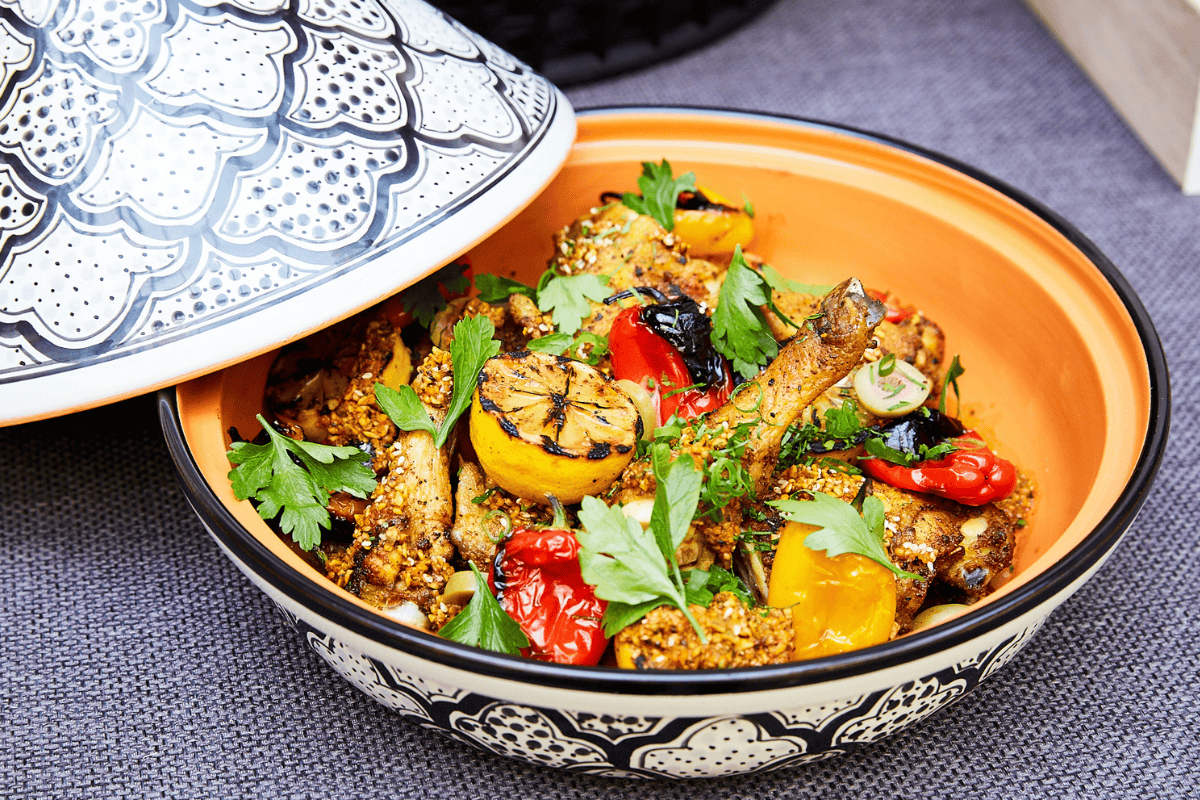
That usually looks like technique and ingredient choices rather than theme. Smoked and slow-cooked proteins, seasonal produce handled simply, cornmeal, greens, and warm spice work naturally into a refined seasonal menu without turning dinner into a costume. Small plate stations can carry those flavors at the cocktail hour, then give way to a plated dinner built on classic technique.
The rule for Harlem catering menus is the same as anywhere else at this level. Cook what is good right now, present it with restraint, and let the room supply the theater.
How Far in Advance Should You Book Harlem Catering?
For a 300-guest wedding or a corporate gala in a landmark Harlem space, start 10 to 14 months out. The reason is not the caterer's calendar. It is the venue walkthrough, the infrastructure assessment, and the permitting and insurance requirements that older buildings and campus properties impose.
A realistic Harlem catering timeline includes a site visit with the culinary and operations leads together, an equipment plan built from that visit, a tasting roughly three to four months before the event, and a final production schedule locked two weeks out. Harlem catering booked inside 90 days is possible, though the venue options narrow quickly.
Bringing It Together
Harlem gives a large-scale event something Manhattan rarely offers at this size: rooms with real character, a neighborhood with a story guests recognize, and access that works for both city and suburban attendees. Harlem catering has to be built for those buildings rather than dropped into them.
Done properly, Harlem catering disappears into the evening. The kitchen no one sees, the load-in no one hears about, and the service that moves 400 plates without breaking the mood are what let the architecture and the occasion take the foreground where they belong.
Frequently Asked Questions
Do Harlem venues have kitchens for large events?
Most do not have a kitchen sized for a large seated dinner. A few campus and institutional buildings have usable facilities with restricted access. Assume the Harlem catering team will build a temporary kitchen and confirm otherwise during the site visit.
How many guests can a Harlem venue realistically hold?
Large Harlem event spaces commonly handle 200 to 600 guests, with theaters, lofts, and historic halls at the upper end of that range. Seated dinner capacity is usually lower than reception capacity in the same room, sometimes by a third.
Is Harlem harder to cater than midtown or downtown?
Harlem catering requires more preparation, not more compromise. Loading is tighter, buildings are older, and infrastructure is thinner, so the planning lead time runs longer. The finished experience can be stronger because the rooms themselves do so much of the work.
Can a Harlem wedding and its cocktail hour happen in the same room?
Often yes, with a room flip between ceremony and dinner while guests move to a lobby, gallery, or outdoor space. That flip has to be staffed and timed as its own production sequence, and it shapes both the hors d'oeuvres program and the dinner service plan.
Does Harlem catering cost more than other Manhattan neighborhoods?
Venue rental is frequently lower uptown, while production costs can be higher because equipment, power, and rentals are brought in. The net result depends far more on the specific building than on the neighborhood.