
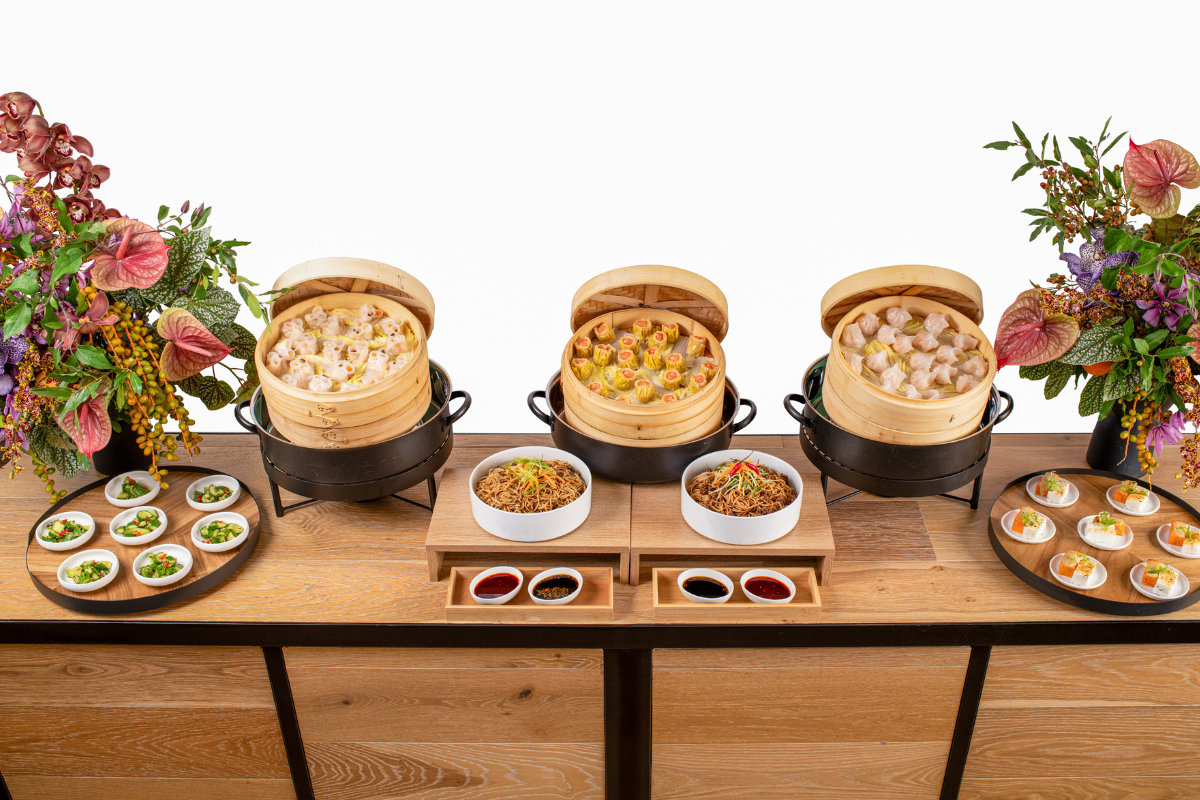
Quick Answer: Food stations for events divide a large crowd into smaller groups, so guests move freely instead of waiting in one long line. Multiple stations offer variety, support dietary needs, and encourage mingling. With the right layout and staffing, stations keep service fast, the room lively, and every guest well fed.
Food stations for events spread guests across the room, which keeps lines short and conversation flowing at large receptions.
Variety is built in, so every guest can find something they love, including those with dietary needs.
Strong station design depends on layout, staffing, and pacing, not just a good menu.
At a large reception, the biggest challenge is movement. Hundreds of guests arrive at once, want to eat at roughly the same time, and also want to talk, network, and enjoy the room. A single buffet line cannot keep up with that, and a fully plated dinner can feel too formal for a cocktail-style evening.
Food stations for events solve this by spreading the experience across the space. Each station serves a manageable group, so no one waits long, and no area becomes crowded. Guests drift from one station to the next at their own pace, which keeps the energy of the room moving.
This is why food stations for events have become a favorite for corporate receptions, product launches, galas, and wedding cocktail hours across New York City.
How Do Food Stations for Events Prevent Long Lines?
Lines are the most common complaint at large receptions, and they are almost always a layout problem. When every guest is directed to one serving area, a line forms no matter how fast the team works.
Well-designed food stations for events remove that bottleneck. Stations are placed in different corners and along different walls, so guests naturally split up. Each station has its own team, its own supplies, and its own pace, so a delay at one never slows down the others.
A good caterer plans station count around guest count, room shape, and the length of the reception. More guests means more stations, not longer lines. A Manhattan loft, a museum hall, and a hotel ballroom each call for a different arrangement.
What Does a Well-Planned Station Layout Look Like?
Layout is where large-scale station service is won or lost. Placement affects traffic, sightlines, and how comfortable the room feels.
Here is how the main planning decisions typically work.
| Planning Decision | Best Practice | Why It Works |
|---|---|---|
| Station Count | One station for every manageable group of guests | Keeps lines short and prevents crowding. |
| Placement | Spread across walls and corners, away from entrances | Splits guests naturally across the room. |
| Staffing | A dedicated team at each station | Keeps service fast and dishes fresh. |
| Pacing | Stations open for the full reception window | Lets guests eat when they are ready. |
| Labeling | Clear signage with dietary information | Helps guests choose confidently and move on. |
Stations work best when they stay away from entrances, bars, and coat checks, since these are already high-traffic areas. Wide walkways between stations keep guests moving, and clear signage helps them find what they want without asking.
Which Types of Food Stations Work Best at NYC Receptions?
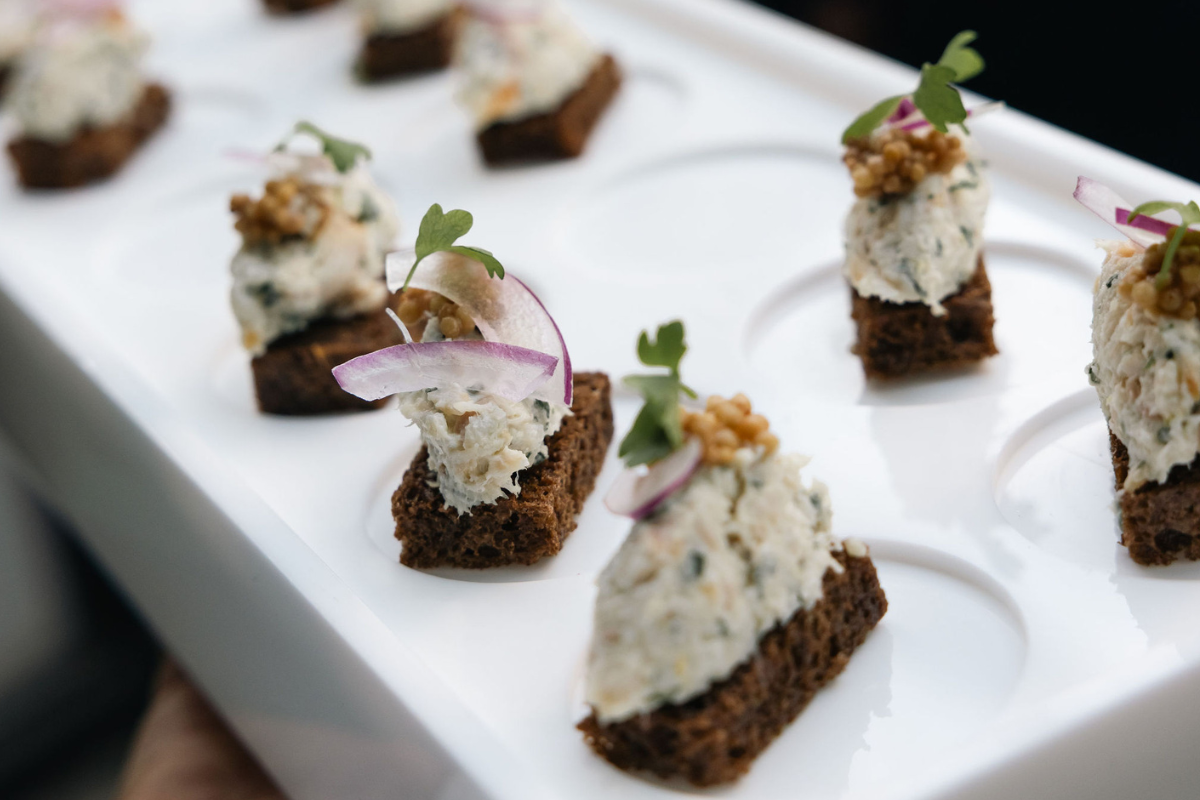
The best stations match the mood of the event and the tastes of the guest list. For corporate receptions, a mix of lighter and heartier options keeps guests satisfied through a long evening of networking. For luxury weddings, stations can feel like an extension of the celebration, with each one telling a different part of the couple’s story.
For food station catering in NYC, Cloud Catering offers a Small Plate Station that combines the casual ease of a reception with the sophistication of a plated dinner. These elegant, abbreviated dishes elevate a standard buffet into a thoughtfully designed guest experience. You can explore the format on the stations page.
Food stations for events also pair beautifully with passed hors d’oeuvres. Guests start with bites passed through the room, then move to stations for something more substantial. The hors d’oeuvres menu shows how both formats can work together.
Why Do Food Stations for Events Support Every Dietary Need?
Large guest lists always include a wide range of dietary needs. Vegetarian, vegan, gluten-free, kosher, and allergy-conscious guests all need to feel included, and they should not have to ask for special treatment.
Food stations for events make this easy. Each station can feature a range of dishes, clearly labeled so guests can choose confidently. Separate serving tools and prep areas protect guests with allergies, and a variety of options means no one is left with a single choice.
This flexibility is one of the strongest reasons executive teams and wedding hosts choose stations. Everyone eats well, and no one is singled out.
How Do Food Stations Encourage Conversation and Connection?
Receptions exist for connection. Guests want to meet colleagues, reconnect with friends, and talk with the hosts. Food stations for events give them a reason to circulate and a natural way to start a conversation.
A guest waiting at a station meets someone new. A group gathers around a favorite dish, and a conversation begins. Because stations stay open throughout the reception, people can eat when they are ready rather than all at once, and the room never loses its momentum.
For corporate hosts, that means better networking. For wedding couples, it means guests mingle across families and friend groups. In both cases, food stations for events turn the meal into part of the experience.
What Should You Ask Your Caterer About Food Stations for Events?
Before you commit, a few questions will tell you how well a caterer handles large-scale station service.
Ask how many stations they recommend for your guest count and why. Ask how many staff will be at each station and how they refresh dishes during the event. Ask how they handle venue constraints such as limited kitchen space, narrow corridors, or building load-in rules. Finally, ask how they plan for guest count changes close to the date.
Cloud Catering has served New York’s premier hospitality scene since 2011, with a culinary team trained in Michelin-star restaurants and service staff hand-selected for each event. That experience is the foundation of confident station planning. You can learn more on the Our Approach page.
Planning Food Stations for Events That Feel Effortless
The best receptions feel easy. Guests eat well, talk freely, and never think about logistics. Behind that ease is careful planning: the right number of stations, a layout that moves people naturally, and a team that keeps every dish fresh and every line short.
If you are planning large-scale reception catering in NYC, the right food stations for events can make the entire night feel more generous and more alive. Start early, share your guest count and venue details, and choose a partner who knows how to scale. Visit the contact page to begin the conversation.
Frequently Asked Questions
How many food stations do you need for a large reception?
It depends on guest count, room size, and the length of the event. A caterer will typically recommend more stations as the guest list grows, so no single station becomes crowded. Share your numbers early so the layout can be planned around them.
Are food stations more casual than a plated dinner?
Not necessarily. Stations can be as elegant as a seated dinner when the dishes, presentation, and service are refined. Formats like a small plate station bring plated sophistication to a more social setting.
Can food stations for events accommodate dietary restrictions?
Yes. Stations offer variety by design, and dishes can be labeled clearly so guests with vegetarian, gluten-free, kosher, or allergy needs can choose confidently. Separate prep and serving tools help keep dishes safe.
What venues work best for food station catering in NYC?
Lofts, museums, ballrooms, and event spaces with open floor plans all work well. Smaller corridors and tight layouts can be managed with careful planning, so share venue details with your caterer early.
How do food stations for events affect the guest experience?
They give guests more choice, shorter waits, and more opportunities to mingle. The result is a livelier room and a reception that feels generous from start to finish.