
How Cultural Venues Are Changing the Luxury Wedding Catering Experience in NYC
Quick answer: Museum and cultural venue wedding catering in NYC means designing a full luxury reception inside a space built for art and history rather than events, working around preservation requirements, unconventional layouts, and strict load-in windows. When executed by an experienced catering team, the result gives couples a wedding that feels genuinely singular, set against architecture and collections that cannot be recreated anywhere else.
Museums and cultural venues are becoming a defining choice for luxury weddings in NYC, offering couples a backdrop no traditional ballroom can replicate.
Cultural venue wedding catering NYC requires a different level of coordination, since museum spaces come with their own preservation rules, layout constraints, and timelines.
The result, done well, is a reception that feels like an extension of the art and architecture around it, not a catered event dropped into a borrowed room.
Why Couples Are Choosing Museums and Cultural Institutions for Weddings
For years, luxury weddings in NYC gravitated toward a familiar set of choices: grand ballrooms, rooftop venues, and private estates. A newer trend has taken hold among couples planning large-scale luxury weddings, one that trades the expected for the extraordinary. Museums, galleries, and cultural landmarks across the city are increasingly hosting wedding receptions, and the shift makes sense.
A museum space carries weight. Whether it is a grand hall, a sculpture garden, or a historic building with decades of cultural significance, these venues offer an atmosphere that a standard event space simply cannot manufacture. For couples who want their wedding to feel like a true reflection of their taste and story, a cultural venue does a lot of that storytelling before a single course is served.
Cloud Catering has experience working within exactly this kind of setting, including at the Frick Collection, one of New York's most storied cultural institutions and a working example of what museum and cultural venue wedding catering in NYC actually requires.
What Makes Museum and Cultural Venue Wedding Catering Different
Catering a wedding inside a museum is not simply a matter of bringing the same reception plan into a more beautiful room. These spaces come with real operational considerations that shape everything from the menu to the timeline.
Preservation comes first. Museums exist to protect collections, art, and architecture, which means open flame, certain lighting setups, and even specific cleaning products may be restricted. A catering team working in these spaces needs to understand what is and is not possible well before the wedding day.
Layouts were not designed for events. Grand halls, atriums, and galleries were built to showcase art, not to host a seated dinner for hundreds of guests. Kitchen access is often limited or nonexistent, which means a full mobile kitchen operation has to be built from scratch, staged, and struck without disrupting the space.
Timelines are tighter. Many cultural institutions only allow evening access after public hours close, which compresses load-in, setup, service, and breakdown into a much narrower window than a traditional venue allows.
The room itself sets the tone. Menu, tablescape, and service style all need to feel intentional next to the art and architecture already in the room, not competing with it.
How Cloud Catering Approaches a Cultural Venue Wedding
A wedding inside a cultural institution succeeds when the catering team treats the space as a full creative partner rather than a backdrop. That starts well before the event itself, with a detailed walkthrough of the venue to understand power access, load-in routes, kitchen staging areas, and any restrictions specific to that institution's collection.
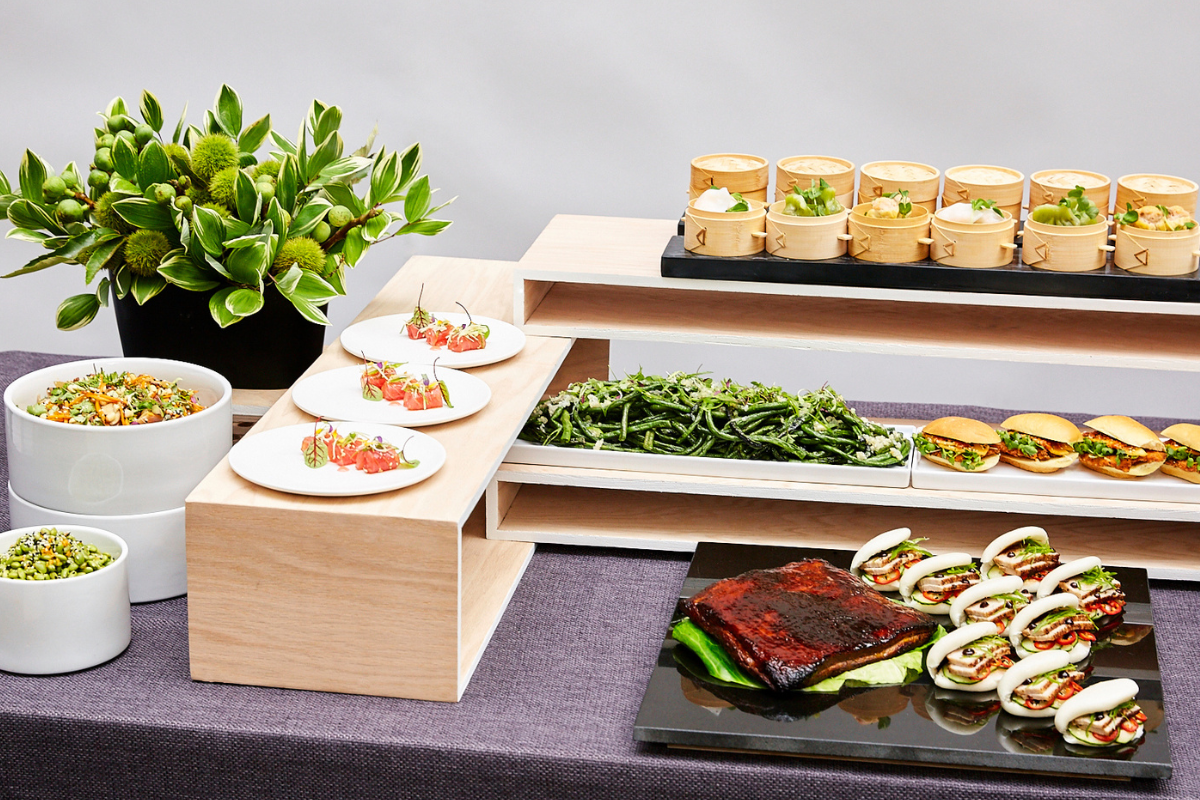
From there, the menu and presentation are built to complement the setting rather than overwhelm it. A grand, ornate hall might call for a more refined, classic plated dinner, while a modern gallery space could support a more contemporary, stationed reception. The goal is always the same: a wedding that feels like it could only happen in that specific room.
Cloud Catering's broader client relationships, including institutions like MoMA, the Smithsonian, and the New Museum, reflect the level of trust cultural organizations place in a catering and event design team capable of operating carefully inside spaces built to preserve, not entertain.
Planning Considerations for a Museum Wedding Reception
Couples drawn to a museum or cultural venue for their wedding should walk into planning with a few key questions ready.
Confirm exactly which hours the venue is available for setup, service, and breakdown, since museum access windows are often stricter than traditional venues.
Ask what open flame, candle, or lighting restrictions apply, since these vary significantly between institutions.
Clarify kitchen access and whether a full mobile kitchen setup will be required for the caterer to work from.
Discuss how food and beverage service will be positioned relative to any permanent collections or installations in the space.
Confirm guest flow and capacity limits specific to the venue's layout, since museum spaces are rarely built with a single, obvious reception flow in mind.
Working through these details early with an experienced cultural venue wedding catering NYC partner prevents surprises later in the planning process and allows the creative vision for the day to come together smoothly.
| Consideration | Traditional Ballroom Venue | Museum or Cultural Venue |
|---|---|---|
| Kitchen Access | Often built-in and event-ready | Frequently requires a full mobile kitchen setup |
| Load-In Timing | Flexible, longer setup windows | Limited to after-hours access, tighter windows |
| Open Flame and Lighting | Generally permitted with standard precautions | Often restricted to protect collections and architecture |
| Atmosphere | Elegant, familiar event setting | Distinctive, tied to art, history, and architecture |
What This Means for Couples Planning a Luxury Wedding
Choosing a museum or cultural venue for a wedding is ultimately about creating something guests will never quite experience the same way twice. It takes a catering partner who understands both the formality a luxury wedding calls for and the specific care that operating inside a cultural institution requires.
For couples weighing this kind of venue, the most important early step is choosing a catering and event design team with direct experience in these spaces, since the difference between a museum wedding that feels effortless and one that feels logistically strained almost always comes down to that experience.
Frequently Asked Questions
Can any museum in NYC host a wedding reception?
Not every museum allows private events, and those that do often have specific rules around hours, capacity, and preservation requirements, so availability should be confirmed directly with the venue early in planning.
Do museums typically have kitchens for catering?
Most do not have a full working kitchen for events, which means an experienced catering team usually needs to bring in a mobile kitchen setup to prepare and finish food on-site.
Are open flame candles allowed at museum weddings?
This varies widely by institution. Many cultural venues restrict open flame to protect collections and architecture, so battery-operated or alternative lighting is often used instead.
How far in advance should a museum wedding be booked?
Cultural venues in NYC are in high demand for events and often book six months to a year or more in advance, so early planning is essential.
What service style works best for a museum wedding reception?
It depends on the space. A grand formal hall often suits a classic plated dinner, while a more contemporary gallery may support a stationed or interactive reception format instead.