
How NYC Caterers Bring Italian Cuisine to Corporate Events
Quick Answer: NYC caterers deliver Italian corporate catering by building courses around Italian dining structure: antipasti, a pasta or risotto course, a protein-focused secondo, and a light dolce, then adapting the format to the event. A trade show floor gets grab-and-go arancini and crostini, while an investor dinner gets a plated four-course menu with wine pairings and precise timing around remarks.
Italian corporate catering works because its courses are built for pacing, so a menu can flex around presentations, networking breaks, and tight run-of-show timing.
The best Italian corporate catering leans on real technique, wood-fired proteins, house-made pasta, and imported ingredients, rather than a red sauce buffet stereotype.
NYC caterers translate Italian corporate catering into formats that fit business settings, from plated boardroom dinners to interactive pasta and antipasti stations at large receptions.
Why Italian Corporate Catering Fits the Business Event Calendar
Italian corporate catering has a built-in advantage for business hosting. Its traditional structure- antipasti, primi, secondi, and dolce- already mirrors the pacing that a corporate program needs. Antipasti works during arrival and networking.
A pasta or risotto course lands during opening remarks. A secondo carries the middle of the program, and dolce closes the evening on a warm, unhurried note. This structure is one of the reasons Italian corporate catering has become a steady request among planners who want a menu that feels considered rather than assembled.
New York caterers who do Italian corporate catering well start from technique, not from cliché. That means house-made pasta rolled and cut the same day, San Marzano tomatoes and good olive oil rather than generic pantry staples, and proteins finished over live fire or in a wood-burning oven.
A branzino cooked whole and filleted tableside, or a porchetta carved to order, reads as considered and premium in a way a chafing dish of penne never will. Executives who travel for business and who eat at a lot of catered events notice the difference between a kitchen executing real Italian cuisine and one leaning on the idea of it.
Matching the Menu Format to the Event Type
Not every corporate event calls for the same Italian corporate catering approach, and the format decision usually comes before the menu itself. A breakfast meeting or half-day training session calls for something lighter, frittata bites, a caprese skewer, cornetti, and espresso service, all designed to be eaten standing or between sessions without slowing the agenda.
A seated business dinner, an investor meeting, or a board retreat calls for the opposite instinct. Here, Italian corporate catering NYC teams build a full plated sequence, often four courses, timed against a run of show that includes toasts, a keynote, or a slide presentation. Course timing has to protect the moments that matter. Servers clear between the pasta course and the secondo while a speaker is still at the podium, not while all eyes are on the plate.
Large receptions and holiday parties tend to favor a station-based approach to Italian corporate catering. A carving station for porchetta or prime rib alongside a pasta station where a chef finishes cacio e pepe or a short rib ragu to order gives guests both spectacle and choice, and it keeps a big room moving instead of forming one long buffet line.
This format also solves for guest lists with a wide range of dietary needs, since a station lets a chef adjust portions and preparations one plate at a time.
Building the Menu Itself
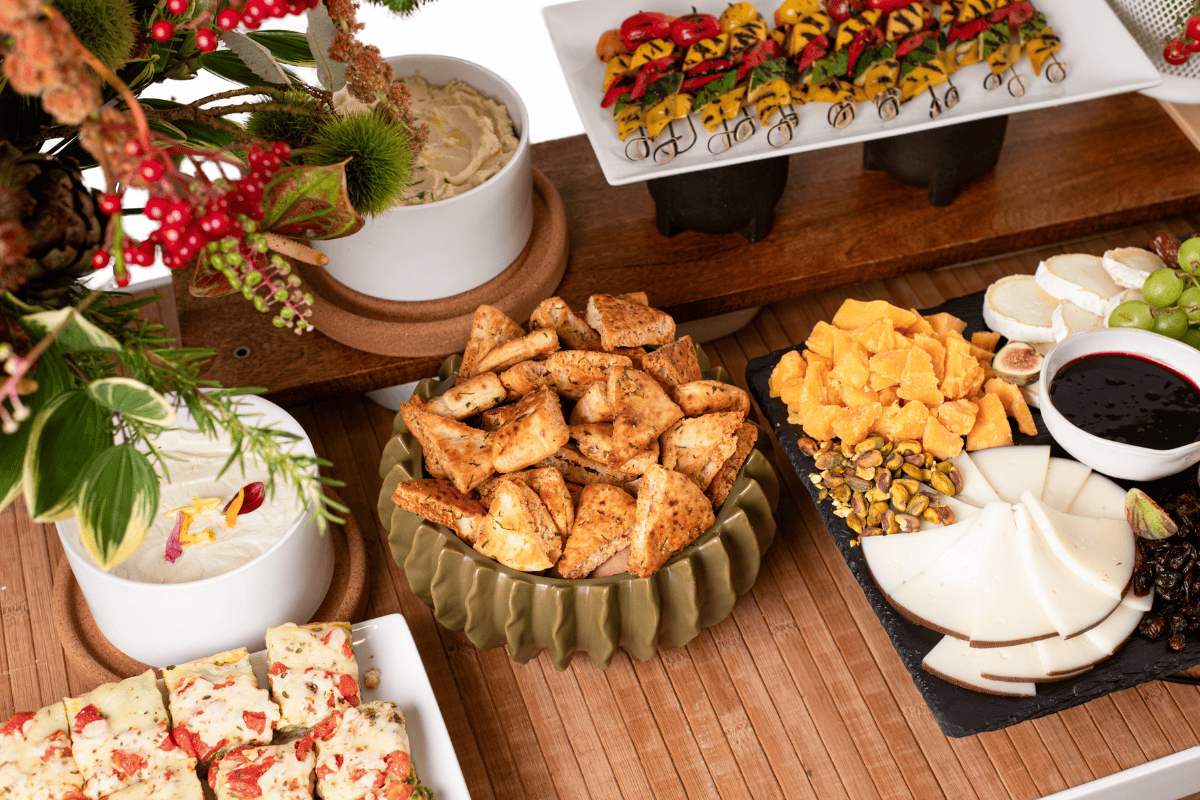
Strong Italian corporate catering starts with antipasti that photograph well and travel well: burrata with heirloom tomato, prosciutto-wrapped melon, marinated olives, and a proper charcuterie board with imported cheese and cured meat.
From there, the pasta or risotto course is usually the emotional center of the meal. A saffron risotto, a truffle tagliatelle, or a simple cacio e pepe executed with real technique tends to be the dish guests remember and mention afterward, which matters when the meal is meant to reflect well on the company hosting it.
The secondo course carries the protein, and this is where Italian corporate catering earns its reputation for craft. A branzino, a veal scaloppine, or a slow braised short rib finished with a red wine reduction all read as considered choices for a business audience that expects a certain level of polish.
Vegetable sides, roasted potatoes, charred broccolini, or a simple salad dressed with good olive oil, round out the plate without competing with the main course.
Dessert closes the meal on a lighter note than a heavy American plated dessert might. Tiramisu, panna cotta, or a small selection of Italian cookies with espresso service gives guests a graceful exit point, especially useful when the program still has closing remarks or an award presentation left to go.
Wine, Aperitivo, and the Details That Signal Quality
Italian corporate catering rarely stops at food. A short aperitivo hour before the meal, with a spritz, a negroni, and a simple bar of Italian wine, sets a tone that a passed tray of generic hors d'oeuvres cannot match. Wine service matters here too.
A Chianti or Barolo alongside the secondo, and a crisp Pinot Grigio or Prosecco during antipasti, gives the meal a sense of intention that corporate guests, many of whom travel often and eat at a lot of business dinners, tend to notice and appreciate.
The details that separate strong Italian corporate catering from an average execution are usually small. Bread service with real olive oil rather than packaged butter, imported Parmigiano Reggiano shaved tableside, and espresso rather than drip coffee at the end of the meal all signal a caterer who understands the cuisine rather than one applying an Italian label to a generic corporate menu.
Handling Dietary Needs Without Losing the Cuisine
Corporate guest lists almost always include a mix of dietary restrictions, and Italian corporate catering happens to accommodate them gracefully. A gluten free guest can still have a risotto, a grilled branzino, or a vegetable forward secondo without feeling like an afterthought.
A vegetarian guest can be served a mushroom risotto or a roasted vegetable antipasti plate that reads as a full course rather than a substitution. Good Italian corporate catering teams build these options into the original menu design instead of bolting them on later, which keeps every plate at the table looking and tasting intentional.
| Event Type | Best Italian Corporate Catering Format | Signature Course Focus |
|---|---|---|
| Breakfast Meeting | Passed bites and espresso service | Frittata bites, cornetti, caprese skewers |
| Investor Dinner | Plated four course sequence | Risotto or pasta course, branzino or veal secondo |
| Holiday Reception | Carving and pasta stations | Porchetta carving, made to order cacio e pepe |
| Multi Day Conference | Rotating lunch stations | Antipasti bar, seasonal risotto, grilled branzino |
What to Ask a Caterer Before Booking
Companies planning Italian corporate catering for a business dinner or reception should ask a caterer how dishes are actually made, not just what is on the menu.
Is the pasta made in-house or bought frozen? Is the olive oil a real extra virgin or a blend? Is the protein finished over fire or reheated from a steam table? These questions separate a kitchen built around Italian technique from one applying an Italian theme to a standard corporate menu.
It also helps to ask how the caterer plans to time service around the event itself. Italian corporate catering NYC teams that regularly work business events already know how to hold a second course while a keynote runs long, or how to compress a dessert course when a program falls behind schedule.
That kind of experience rarely shows up on a printed menu, but it is often the difference between a dinner that supports the program and one that fights it.
Bringing It Together
Italian corporate catering gives business hosts a menu language that already understands pacing, warmth, and quality, three things every corporate event is trying to communicate, whether the goal is closing an investor or thanking a team at the end of the year.
Done well, Italian corporate catering does not read as a theme. It reads as a considered choice, built course by course around real technique and around the actual shape of the program it is feeding.
Frequently Asked Questions
Is Italian cuisine appropriate for a formal business dinner?
Yes. A plated Italian corporate catering menu with a pasta or risotto course, a refined secondo like branzino or veal, and a light dolce reads as formal and considered, especially when paired with wine service and precise course timing around the program.
Can Italian corporate catering accommodate large receptions?
Yes. Stations built around a carving course and a made-to-order pasta course scale well for large receptions, giving guests choice and spectacle while keeping the room moving without one long buffet line.
How do NYC caterers handle dietary restrictions within an Italian menu?
By building gluten-free and vegetarian options into the original menu design. A mushroom risotto, a grilled branzino, or a roasted vegetable antipasti plate can stand in as full courses rather than substitutions.
What makes Italian corporate catering feel different from a standard corporate menu?
Technique and ingredients. House-made pasta, imported cheese and olive oil, and proteins finished over fire or in a wood-burning oven separate real Italian cuisine from a generic menu with an Italian name attached to it.
Should a company serve wine at an Italian corporate catering event?
A short aperitivo hour and wine service paired to each course, a lighter white during antipasti and a fuller red with the secondo, is standard practice and adds to the sense of occasion without requiring a full open bar.