
Menu Strategy for Non-Profit Catering Events That Impress Major Donors
Quick Answer: The best menu strategy for nonprofit catering events pairs elevated, seasonal cuisine with a service style that keeps donors engaged. Match the menu to your audience, reflect your mission in the food, and work with a caterer experienced in large-scale galas so every course reinforces donor confidence in your organization.
A thoughtful menu strategy signals professionalism and stewardship to major donors, showing that every dollar behind the event was spent with intention.
Service style, menu personalization, and mission alignment are the three levers that turn non-profit catering events into memorable donor experiences.
Partnering with an experienced caterer helps organizations balance elevated cuisine with responsible budgets at any guest count.
Why Does Menu Strategy Matter at Nonprofit Catering Events?
Major donors attend dozens of galas, benefits, and receptions every year. They know what a well-run evening feels like, and they notice when one falls short. The menu is one of the most visible signals of how carefully an organization plans, which is why menu strategy deserves the same attention as your program, your speakers, and your ask.
Food shapes the emotional arc of the evening. A beautifully composed first course sets a tone of care and generosity before a single word is spoken from the podium. When the meal feels considered, donors extend that impression to the organization itself. When it feels generic, the entire event can read as an afterthought.
There is also a practical reason to get this right. According to Giving USA, charitable giving in the United States reached $617.20 billion in 2025, the first time giving has passed the $600 billion mark. Competition for those dollars is real. Organizations that treat nonprofit catering events as a strategic touchpoint, rather than a logistical checkbox, position themselves to earn a larger share of donor attention and trust.

How Do You Match the Menu to Your Donor Audience?
Start with who is in the room. A board of longtime philanthropists has different expectations than a younger crowd of emerging major donors, and the menu for nonprofit catering events should reflect that difference.
For established donors who attend many benefits each season, familiarity is the enemy. They have seen the standard chicken entree and the predictable dessert trio many times. Surprise them with seasonal ingredients, unexpected pairings, and dishes with a clear point of view. Michelin-trained culinary teams can reinterpret classic gala fare so it feels fresh without feeling risky.
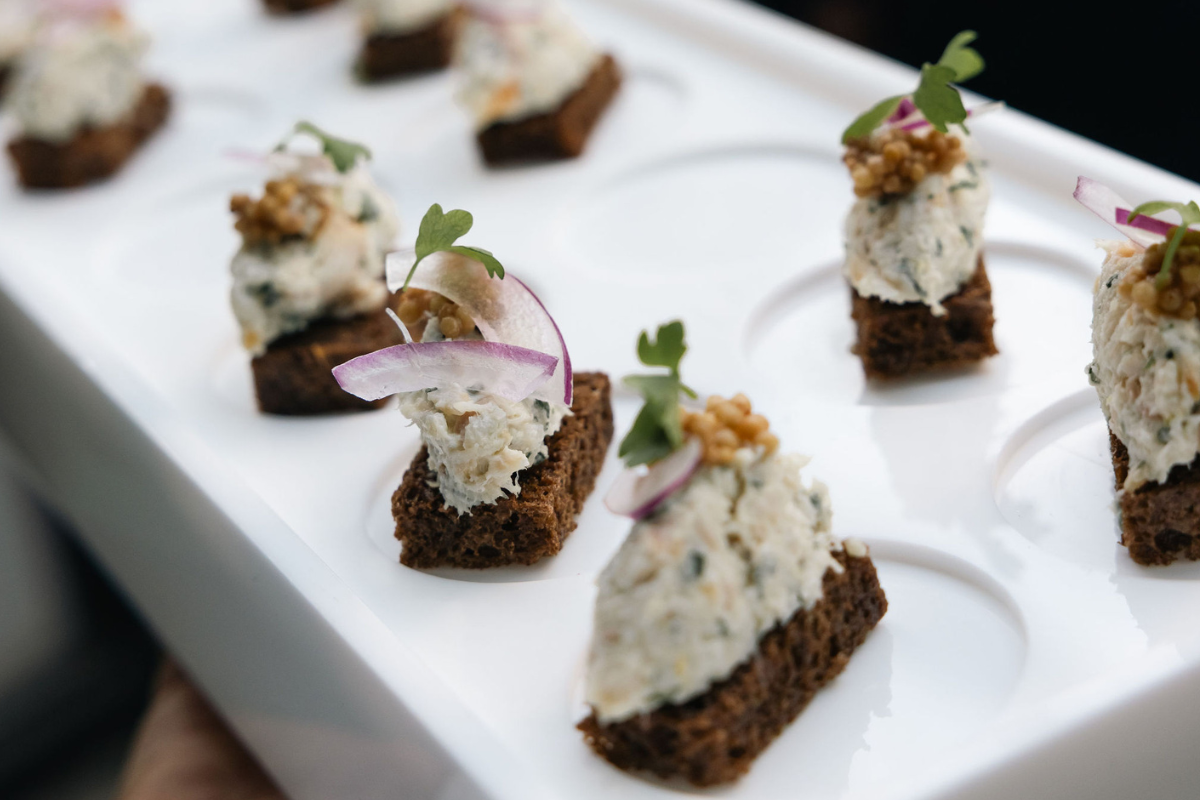
For newer donors, comfort and generosity matter most. Approachable dishes executed at a high level make guests feel welcomed rather than tested. Abundant passed hors d'oeuvres during the reception hour create warmth and energy before the seated program begins.
In every case, dietary inclusivity is non-negotiable at nonprofit catering events. Vegetarian, vegan, gluten-free, kosher-style, and halal-friendly options should be planned into the menu from the start, not treated as special requests. Donors remember when their needs were anticipated without having to ask.
Which Service Style Works Best for Major Donor Events?
Service style determines the pace and personality of the evening. Each format serves a different strategic purpose at nonprofit catering events, and the right choice depends on your program, your venue, and your fundraising goals.
| Service Style | Best For | Donor Experience Impact |
|---|---|---|
| Plated dinner | Formal galas with seated programs and live appeals | Signals elegance and control; keeps guests seated and attentive during the ask |
| Chef-attended stations | Receptions focused on networking and mingling | Encourages movement and conversation; creates moments of culinary theater |
| Passed hors d'oeuvres | Cocktail hours and pre-program receptions | Builds energy and warmth; allows staff to engage donors personally |
| Family style | Community-centered benefits and intimate donor dinners | Fosters connection at the table; reinforces themes of sharing and generosity |
Many of the strongest nonprofit catering events combine formats. A passed hors d'oeuvres reception builds momentum, a plated dinner anchors the program and the appeal, and a dessert station gives guests a reason to linger and connect with your leadership after the formal portion ends.
Timing matters as much as format at nonprofit catering events. The main course should never arrive during your live appeal, and service should be quiet and seamless while speakers hold the room. An experienced catering team choreographs service around your program so the food supports the fundraising rather than competing with it.
What Should the Menu Say About Your Mission?
The most memorable menus at nonprofit catering events tell a story. Food is a natural storytelling medium, and mission-aligned menus at nonprofit catering events give donors one more way to feel connected to your cause.
An environmental organization might build the menu around sustainably sourced seafood and produce from regional farms. A hunger-relief nonprofit might highlight humble ingredients elevated through refined technique, a quiet nod to the dignity at the heart of its work. An arts institution might commission courses inspired by a current exhibition or performance.
These choices do not need to be announced from the stage. A short line on the printed menu is enough. Donors who notice feel rewarded for paying attention, and the detail becomes a talking point at every table.
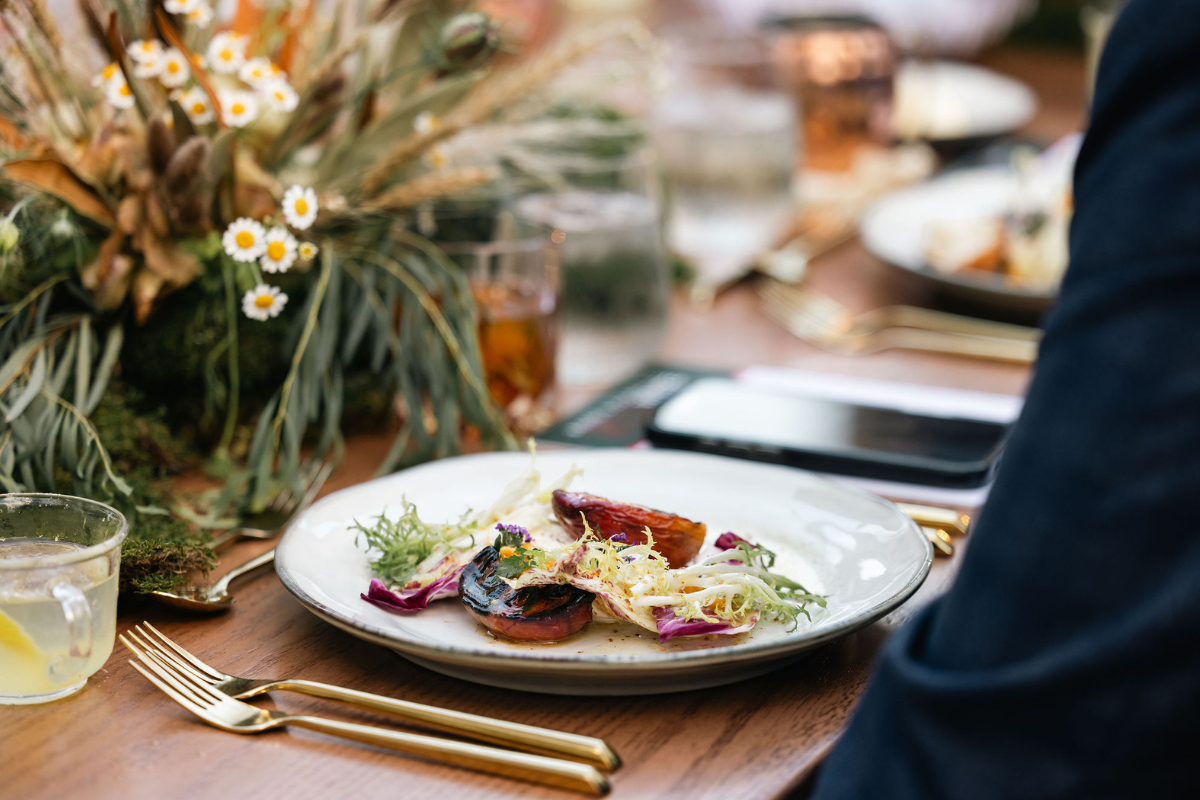
Presentation carries the story as well. Table design, linens, serviceware, and florals should feel cohesive with the food and the cause. Full-service catering and event design under one roof makes this alignment far easier to achieve, since the culinary and visual teams work from the same creative brief.
How Do You Balance Budget and Impression at Nonprofit Catering Events?
Boards and finance committees rightly scrutinize event spending. The goal is not to spend more; it is to spend visibly well. These five strategies help organizations produce impressive nonprofit catering events while respecting the budget donors expect them to honor.
Invest where donors linger. The reception hour and dessert course are high-visibility moments. Concentrating quality there creates outsized impressions.
Choose seasonal ingredients. Produce at its peak costs less and tastes better, letting the kitchen deliver luxury without premium sourcing costs.
Simplify the entree, elevate the details. A refined single entree with a stunning amuse-bouche and dessert reads as more luxurious than a sprawling mid-tier menu.
Use service style strategically. Stations and passed service can reduce staffing intensity for certain formats while adding energy to the room.
Consolidate vendors. Combining catering, rentals, and event design with one partner reduces coordination costs and eliminates duplicated fees.
Transparency also builds trust. Many organizations find that donors respond well to sponsorship structures where a table sponsor underwrites the culinary program, turning the meal itself into a named giving opportunity.
How Does the Right Caterer Elevate Nonprofit Catering Events?
Menu strategy only succeeds when execution matches ambition. Large guest lists, complex venues, and tightly timed programs demand a catering partner with deep gala experience.
Look for a team that has worked in New York's most demanding venues, from landmark cultural institutions to industrial lofts, and that can produce restaurant-quality plates for hundreds of guests at once.
Ask how they handle timing around live appeals, how they staff for seamless service, and how their kitchen scales without sacrificing quality. Our guide to scaling nonprofit gala catering in NYC for large guest lists covers these operational questions in detail.
The right partner behaves like an extension of your development team. They understand that nonprofit event catering is ultimately about relationships, and that every course is an opportunity to reinforce donor confidence.
Cloud Catering's dedicated nonprofit gala and event catering services in NYC were built around exactly this philosophy, pairing Michelin-trained culinary talent with production teams who know how galas actually run.
When the food, the service, and the mission all speak the same language at nonprofit catering events, donors feel it. That feeling is what they remember when the next appeal arrives.
Frequently Asked Questions
What is the best menu format for non-profit catering events?
A combined format works best for most galas: passed hors d'oeuvres during the reception, a plated dinner during the program, and a dessert station afterward. This structure builds energy, focuses attention during the appeal, and encourages donors to stay and connect.
How far in advance should we plan catering for a major donor gala?
Six to nine months is ideal for large-scale nonprofit catering events. Early planning secures your preferred date and venue, allows time for menu tastings, and gives the culinary team room to design a mission-aligned menu rather than a rushed standard package.
How do we handle dietary restrictions at a large gala?
Collect dietary information during RSVP and share it with your caterer well before the event. An experienced team plans inclusive menus from the start and prepares elegant alternatives that match the main menu, so no guest feels singled out.
Should the menu connect to our organization's mission?
Yes, when it can be done naturally. At nonprofit catering events, mission-aligned ingredients, sourcing choices, or menu themes give donors another point of connection to your cause. A brief note on the printed menu is enough to tell the story without slowing the program.
How much should a nonprofit spend on gala catering?
Budgets vary widely by guest count and format, but the guiding principle is visible stewardship. Concentrate spending on high-impact moments like the reception and dessert, use seasonal ingredients, and consolidate vendors to reduce overhead while preserving quality.