
How to Plan Investor Day Catering in NYC for a Fortune 500 Audience
Quick Answer: Planning investor day catering in NYC for a Fortune 500 audience requires precision rather than flourish. The room is filled with institutional analysts, portfolio managers, and sell-side researchers who are reading every signal you send. The catering should support a tight presentation schedule, never compete with the program, and reflect the same standards of execution as the financial disclosures being shared. That means a sharp continental breakfast, a working lunch built for productivity, refreshment breaks engineered around the analyst Q&A rhythm, and a closing reception that creates a controlled networking environment for 1:1 follow-up.
Why Investor Day Catering Is Not Like Other Corporate Catering
An investor day is one of the highest-stakes events on the corporate calendar. According to the National Investor Relations Institute, roughly 73 percent of public companies host investor days, and 84 percent do so primarily to showcase management. The audience is not a general business crowd. It is institutional investors, equity research analysts, key sell-side coverage teams, and, in many cases, the financial media.
They arrive with notes, models open on tablets, and a calibrated expectation that every detail of the day reflects the operational discipline of the company hosting it. That makes investor day catering in NYC a uniquely demanding category. The food and beverage program is not the event. It is a quiet, continuous signal about how the company manages its details.
A morning where the espresso bar runs out before the CFO presentation begins, or a lunch service that pushes the afternoon agenda fifteen minutes late, is the kind of operational miss that institutional investors notice and quietly note. A program that runs cleanly from arrival through the closing reception reinforces the operational story management is presenting on stage.
Fortune 500 hosts also know that investor day attendees are some of the most well-traveled and sophisticated audiences in corporate hospitality. These are guests who attend dozens of corporate events a year across financial centers globally. The bar for execution is calibrated to that level of exposure.
Build the Catering Around the Investor Day Agenda
The first principle of investor day catering in NYC is that the food serves the agenda, not the other way around. A typical Fortune 500 investor day in New York follows a tightly choreographed schedule that includes arrival and registration, a sequenced morning of CEO and CFO presentations, segmented breakouts or business-unit deep dives, a working lunch, an afternoon strategic discussion, formal Q&A, and a closing reception for 1:1 conversations. Each of those moments has a specific catering requirement.
The table below maps the common investor day framework to the catering decision at each phase.
| Time Block | Program Phase | Catering Decision |
|---|---|---|
| 7:30 to 8:30 a.m. | Registration, arrival, badge pickup | Sharp continental, espresso bar, fresh juice, no full breakfast plates |
| 10:15 to 10:30 a.m. | Mid-morning break between CEO and CFO segments | Coffee refresh, light savory and sweet bites, sparkling water service |
| 12:30 to 1:30 p.m. | Working lunch, often paired with a business-unit segment | Plated or curated bowl-style; light proteins; no heavy starches |
| 3:00 to 3:15 p.m. | Afternoon break before strategic deep dive | Quick-grab energizing snacks, espresso, no buffet line |
| 5:00 to 6:30 p.m. | Closing reception with 1:1 management access | Passed canapés, wine, signature cocktail, no plated service |
The catering rhythm shapes the analyst's experience throughout the day. A sluggish lunch undercuts the afternoon presentations. A break that runs long crowds the Q&A. A reception that overshoots scheduled airline departures earns quiet complaints. The strongest investor day catering in NYC is engineered around exact timing.
Breakfast Sets the Operational Tone for the Day
The first cup of coffee at an investor day is doing more work than most hosts realize. It is the moment when analysts and portfolio managers form their initial impression of how the day will be run. A breakfast that arrives clean, well-stocked, and fully set up by the first registered guest tells the room the host is operationally tight.
A breakfast that is still being set up at 7:35 a.m. or runs out of espresso by 8:15 sends a different message entirely. The menu itself should be sharp rather than indulgent. A continental display with high-quality pastries, fresh seasonal fruit, smoked salmon with whole grain accompaniments, Greek yogurt parfaits, and a chef-style frittata or hot egg station covers the spectrum without becoming a heavy meal.
The morning audience needs energy and clarity, not a full breakfast spread that slows them down before the CEO presentation.
The espresso bar is non-negotiable. A barista-staffed espresso program with a trained operator producing real cappuccinos, lattes, and espresso shots signals professionalism in a way that hotel-grade coffee urns do not. This is a small line on the catering budget that delivers an outsized return on perceived quality.
The Working Lunch Is Where the Afternoon Is Won or Lost
The post-lunch attention drop is the single most predictable challenge in any full-day corporate program, and investor days are not exempt. Investor day catering in NYC at the lunch hour has shifted decisively away from heavy plated meals and toward lighter, energy-forward formats that support the afternoon program.
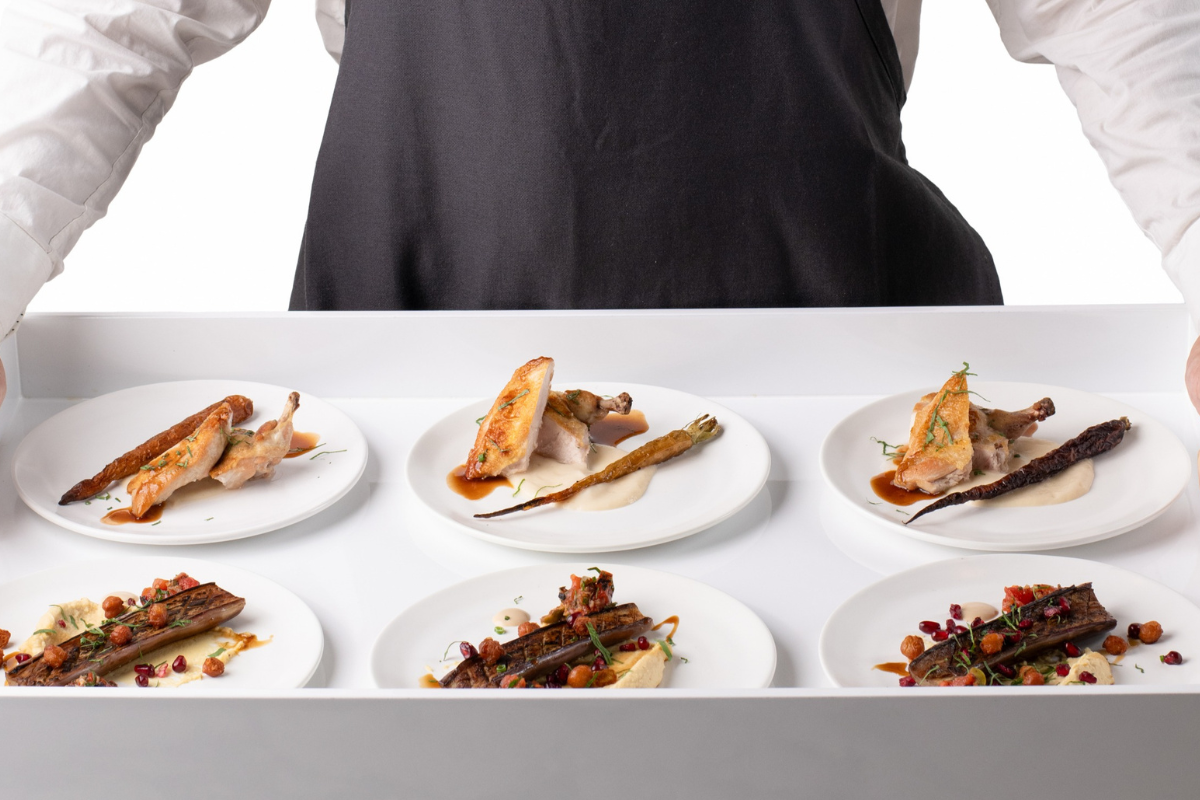
Two structures consistently outperform. The first is a chef-curated bowl lunch with two or three proteins, two or three bases, and a selection of vegetable-forward sides. The second is a plated lunch with a single composed course, such as a grain bowl with grilled fish or a seasonal salad with brisket or chicken.
Both formats deliver clean, satisfying nutrition without producing the post-meal slowdown that derails the strategic deep dive. The chart below summarizes the typical impact of different investor day lunch formats based on common patterns across NYC Fortune 500 programs.
| Lunch Format | Service Speed | Afternoon Engagement | Suitability for Investor Day |
|---|---|---|---|
| Plated Three-Course Lunch | Slow | Notably reduced | Rarely appropriate |
| Plated Single Course | Moderate | Strong | Strongly recommended |
| Curated Bowl or Grain Bar | Fast | Strongest | Strongly recommended |
| Boxed Lunch | Fastest | Moderate | Acceptable for compressed agendas |
| Buffet Stations | Slow | Variable | Use only with extended lunch window |
Dietary inclusivity for this audience is not a side consideration. Vegetarian, vegan, gluten-free, kosher, and halal accommodations should be designed in parallel with the main menu rather than tacked on as visibly lesser options.
A Fortune 500 audience often includes senior portfolio managers and analysts who observe religious dietary observances, and the strongest investor day catering in NYC treats those needs as design inputs rather than adjustments.
You can read more about how the Cloud Catering culinary team approaches menu development for corporate programs, including the precision that comes from a kitchen trained in Michelin-starred environments.
Breaks Are Strategic, Not Decorative
The mid-morning and mid-afternoon breaks at an investor day are not just refreshment moments. They are the engineered windows for analysts to step out, check on their models, take a call with their desks, and return ready to engage. Investor day catering in NYC at break time should facilitate this rhythm rather than slow it down.
Mid-morning breaks should be quick-grab. Coffee and espresso refreshed, sparkling water and still water available in clear pours, a small selection of light savory and sweet bites that can be taken in hand and consumed in under three minutes. There should not be a buffet line that takes attention from the breakroom conversations that often produce the most useful informal exchanges.
Afternoon breaks should lean toward energy. Cold brew, fresh juice, fruit, energy bites, and a barista-attended espresso station all work harder than heavy snacks at this point in the day. The goal is to extend afternoon engagement through the final presentations and the formal Q&A.
The Closing Reception Is a Targeted 1:1 Environment
The closing reception is where the institutional relationships are reinforced. Analysts, portfolio managers, and key sell-side coverage will look for time with the CEO, CFO, and segment heads in a controlled environment. The catering should support that goal without overwhelming it.
That means passed canapés rather than stationed buffets, a controlled wine and signature cocktail program rather than a full premium open bar, and service ratios that allow staff to anticipate needs without crowding conversations. A one-to-twenty server ratio for passed bites and one-to-seventy-five for bartender service is the right standard for an institutional audience.
Length matters as well. A closing reception that runs 75 to 90 minutes is the sweet spot. Long enough to allow 1:1 conversations with management. Short enough to respect the travel schedules of out-of-town investors.
The catering team should be ready to extend service modestly if conversations are running, but not so much that the room becomes a late-evening cocktail party rather than a controlled close to the program. Cloud Catering's service team operates from a hospitality philosophy grounded in thoughtfulness and consideration, which is exactly the standard a Fortune 500 audience expects in this moment.
NYC Logistics That Make or Break the Day
Conference catering in NYC carries operational complexity that is unique to the city. Most Fortune 500 investor days in New York are hosted at the Nasdaq MarketSite, the New York Stock Exchange, midtown hotel ballrooms, or major corporate-event venues like Convene or Spring Studios. Each carries its own catering protocol, COI requirements, and freight access rules.
Certificate of insurance requirements typically run two to five million dollars in general liability coverage for institutional spaces, with the venue owner and management company named as additional insured. Freight elevator access in Manhattan office buildings is often scheduled in 30-minute windows. Loading dock queues in Midtown can stack three or four catering trucks deep during morning rush.
Security clearance for catering staff at financial-center venues sometimes requires badging 48 hours in advance. A caterer with deep institutional knowledge of these venues prevents the kind of opening-hour delay that creates a visible operational problem.
Cloud Catering and Events has a long history of executing across Manhattan corporate venues for clients, including Nasdaq, Bloomberg L.P., JP Morgan Chase, Citibank, UBS, Bank of America, First Republic Bank, McKinsey & Company, and others on the Cloud client roster. That institutional fluency is the difference between a smooth investor day and one that opens with a freight elevator scramble.
How Cloud Catering Approaches Investor Day Catering in NYC
Cloud Catering and Events has built its corporate practice around the demands of financial-sector and Fortune 500 clients. The team works from a single guiding standard: an event is a collaborative expression, and every detail of the catering should reinforce the operational story management is telling on stage.
For investor day programs in particular, the Cloud team integrates closely with the investor relations team, the executive office, and the venue operations staff weeks in advance.
The kitchen team and the service team review the run-of-show, the AV cues, the room flow, and the seating chart before menu development begins. The result is a day where the food, the service, and the program read as one continuous expression of operational discipline.
You can read more about the Cloud approach to event design and the venues where the team operates regularly across New York. For investor relations teams beginning to scope an upcoming investor day, the Cloud team is available to consult on menu structure, service flow, and venue logistics well in advance of the formal proposal stage.
The most effective investor day catering in NYC is the catering you do not notice because every detail is in its place. That is the standard a Fortune 500 audience expects, and the standard worth planning to.
Frequently Asked Questions
How far in advance should we contract investor day catering in NYC?
For major Fortune 500 investor days, contract your caterer six to nine months in advance, aligning with venue booking and executive calendar holds. Premium NYC catering teams book the same calendar windows as luxury weddings and major corporate galas, and late contracting limits both menu customization and execution capacity.
What is the typical catering budget per attendee for a Fortune 500 investor day?
Plan on $250 to $500 per attendee for full-day breakfast, breaks, working lunch, and closing reception at the quality tier appropriate for an institutional investor audience. The range is driven primarily by venue logistics, beverage program complexity, and staffing levels.
Should we host a plated lunch or a working bowl-style lunch?
For most Fortune 500 investor days, a curated bowl-style lunch or a single-course plated lunch outperforms a three-course plated meal. Both formats deliver clean nutrition and faster service, which protects the afternoon program and preserves analyst engagement through the strategic deep-dive sessions.
How important is the closing reception?
The closing reception is one of the most strategic moments of the day. It is where institutional investors get controlled 1:1 access to management, where sell-side analysts reinforce coverage relationships, and where soft signals about the company's culture get communicated. Strong investor day catering in NYC treats the reception as a designed environment, not an afterthought.
What is the most common catering misstep at investor days?
Underestimating the program's operational visibility. Late breakfast setup, slow lunch service, or running out of espresso during the morning break are small misses that institutional audiences notice and quietly read as signals about how the company manages its details. A caterer with deep experience in Fortune 500 investor day environments is the right safeguard against this.
Sources
National Investor Relations Institute (NIRI), Investor Day Practices Research:https://www.niri.org
ViaVid, Hosting an Investor Day in 2025: Everything You Need to Know:https://viavid.com/hosting-an-investor-day-in-2025-everything-you-need-to-know/
Convene, A 10 Step Guide to Planning a Successful Investor Day:https://convene.com/catalyst/meeting-event-planning/investor-day-guide/
WeConvene, Investor Day Planning Checklist:https://weconvene.com/investor-day-planning-checklist/
Journal of Convention and Event Tourism, Influence of Conference Food Function on Attendee Satisfaction:https://www.tandfonline.com/doi/full/10.1080/15470140903178567