
What Goes Into Designing a Multi-Course Tasting Menu For High-End Catering?
Quick Answer: A multi-course tasting menu is built around a deliberate progression of small, refined courses, balancing flavor, texture, temperature, and pacing. For high-end catering, designers also plan kitchen workflow, plating, dietary adaptations, and synchronized service so every guest enjoys each course at its best, even at large events.
A multi-course tasting menu is designed like a story, with each course building on the one before it through flavor, texture, and pacing.
High-end catering adds a second challenge: delivering that same precision to hundreds of guests at the same moment.
The best menus balance creativity with execution, and they are shaped by season, venue, dietary needs, and the mood of the event.
What Is a Multi-Course Tasting Menu in High-End Catering?
A multi-course tasting menu presents a series of smaller dishes in a planned order, rather than a single appetizer, entree, and dessert. Each course shows off a specific idea, ingredient, or technique, and together they create a complete dining journey.
In a restaurant, this format serves a few dozen guests at a time. In high-end catering, the same concept is delivered to a ballroom of several hundred, whether for a corporate dinner, a luxury wedding, or a milestone celebration. That scale changes everything about how the menu is designed, tested, and served.
The result, when done well, is an evening guests remember. The food has rhythm, the courses feel connected, and the pacing keeps the room engaged from the first bite to the last.
How Do You Build the Flow of a Multi-Course Tasting Menu?
Flow is the heart of the design. A great multi-course tasting menu moves guests through contrast and balance, never leaving them overwhelmed or bored.
How Many Courses Should a Tasting Menu Have?
There is no single right number. Many high-end events work well with four to six courses, which gives the menu variety without stretching the evening too long. The right count depends on the event length, the program, and how much time guests have between remarks, music, and dancing.
More courses are not automatically better. Each course must earn its place by adding something new to the experience.
What Order Creates the Best Progression?
Most menus begin light and build toward richer dishes. A fresh, bright first course wakes up the palate. Middle courses introduce more depth, and the entree delivers the richest flavors. A dessert brings the experience to a gentle close.
Cloud Catering’s fall seated dinner shows how this progression works in practice. It can open with a poached pear salad dressed with fall greens, move to a hearty entree such as tea-smoked chicken or a duo of venison, and finish with a candied apple dessert. Each course reflects the season while building toward the next.
Why Does Contrast Matter?
Contrast keeps the menu exciting. A crisp element beside a silky one, a warm dish after a chilled one, or a bright citrus note after something rich all refresh the palate. Designers think carefully about texture, temperature, acidity, and color so no two neighboring courses feel the same.
How Do You Design a Multi-Course Tasting Menu for Large-Scale Execution?
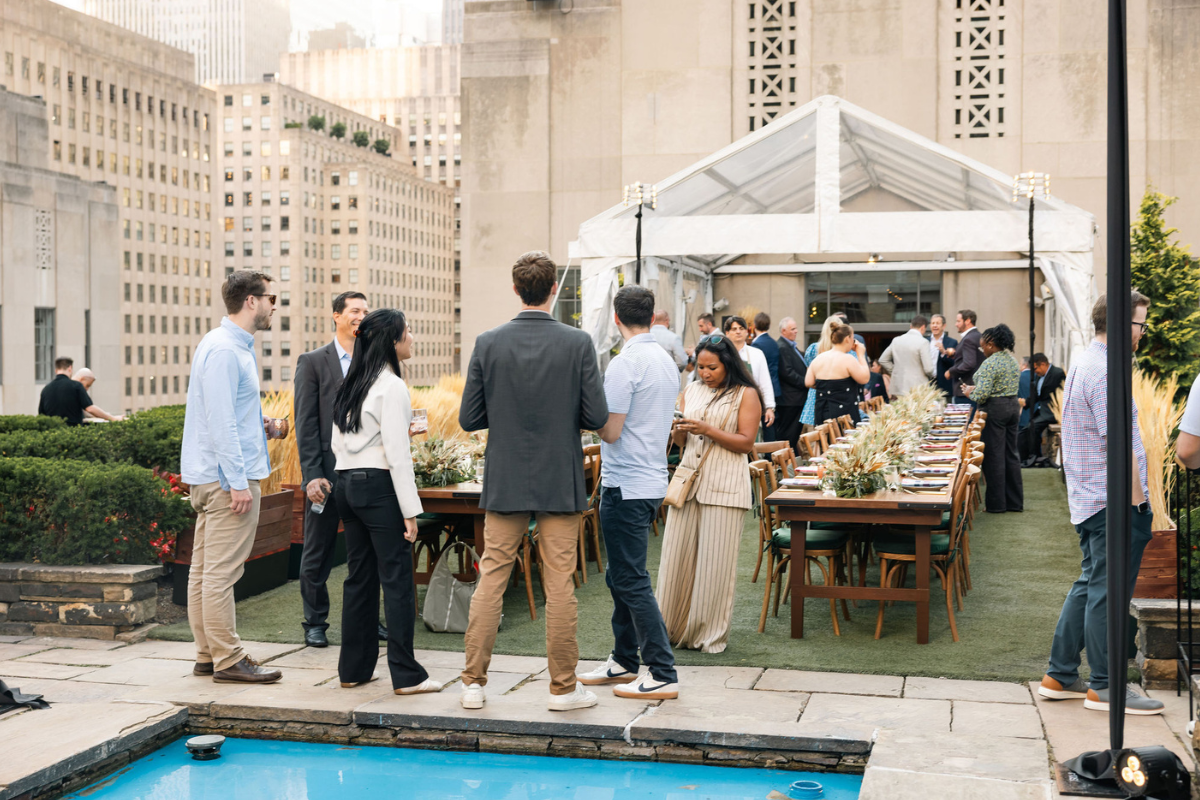
Creativity matters, but execution decides whether a menu succeeds. Every dish must be designed with the reality of a large kitchen and a large room in mind.
How Does Kitchen Workflow Shape the Menu?
Each course requires its own preparation, plating, and timing. A menu that looks simple on paper can create a bottleneck if several courses need the same equipment at the same moment. Experienced culinary teams plan the sequence so work is spread across stations and nothing waits.
Cloud Catering’s culinary team has trained in Michelin-starred kitchens around the globe, and that background brings the discipline needed to plate refined dishes for large crowds with consistency.
Why Do Plating and Portion Size Matter?
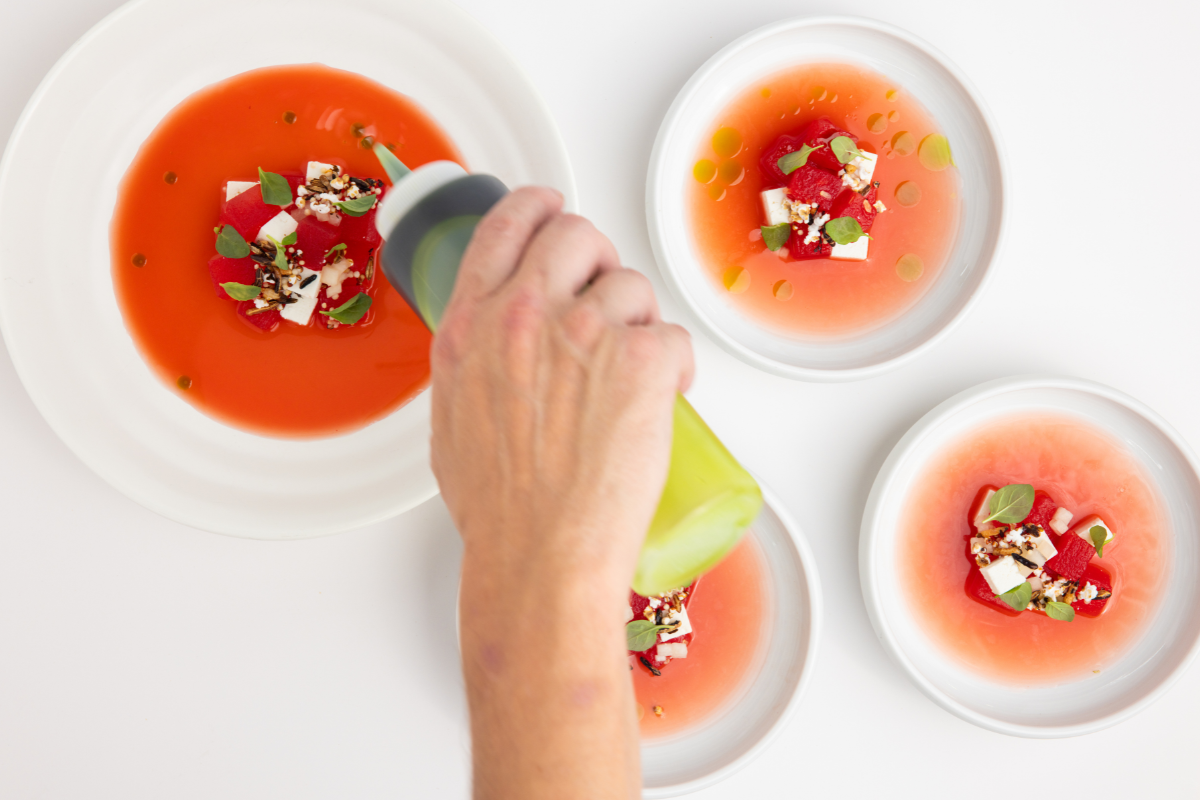
Tasting courses are smaller by design, so presentation carries more weight. Each plate needs to look composed, and portions need to feel satisfying across the full sequence. The goal is for guests to leave feeling pleasantly full, not overwhelmed and not underfed.
How Is Service Timed Across Hundreds of Guests?
At a large event, every table should receive a course together. This takes careful coordination between the kitchen and the service team, with clear signals for when to plate, when to serve, and when to clear. Well-trained staff move in sync so the room experiences each course as a single, graceful moment.
What Do Designers Consider When Building Each Course?
The table below shows how a typical multi-course tasting menu is structured and what designers consider at each stage when serving a large guest list.
| Course | Purpose | Design Consideration at Scale |
|---|---|---|
| Opening Bite | Set the tone and awaken the palate | Items that can be prepared ahead and finished quickly |
| First Course | Introduce the season and the theme | Bright, fresh dishes that hold their look while plating |
| Middle Courses | Build depth and show technique | Careful sequencing so stations are never overloaded |
| Entree | Deliver the richest, most memorable flavors | Proteins and sauces that stay hot and consistent for every plate |
| Dessert | Close the experience with a sweet, balanced finish | Elements that plate quickly without losing texture |
How Do Seasonality and Ingredients Shape the Menu?
Seasonal ingredients give a multi-course tasting menu its sense of place and time. Autumn might bring roasted root vegetables, pears, apples, and game. Spring calls for tender greens, herbs, and lighter proteins. Designing around the season keeps flavors at their peak and makes the menu feel current.
Ingredient quality matters even more in a small-portion format. When a dish is composed of only a few elements, each one must be excellent. Strong sourcing and precise technique show up clearly on a tasting plate.
How Do You Include Every Guest in a Tasting Menu?
A large guest list always includes dietary needs. A thoughtful multi-course tasting menu plans for them from the start rather than as an afterthought.
Designers prepare vegetarian, vegan, and allergen-safe versions of each course so guests with restrictions receive the same number of courses at the same time as everyone else. These alternatives should feel just as polished, with their own flavor logic and presentation. When the whole room moves through the meal together, no guest is left watching others eat.
How Does a Multi-Course Tasting Menu Fit the Event?
The menu should match the mood of the occasion. A corporate dinner for clients may favor an efficient four-course sequence that leaves time for remarks. A luxury wedding may call for a longer, more romantic progression that mirrors the arc of the evening. A milestone celebration might feature courses that nod to the company’s history.
The venue matters as well. Kitchen access, load-in, and distance from the kitchen to the dining room all affect which dishes will travel and plate well. Sharing venue details with the culinary team early helps them design a menu that works in the actual space.
What Steps Lead to the Final Menu?
A well-designed menu is refined step by step. This sequence reflects how many culinary teams approach the work.
Define the event, guest count, and desired atmosphere.
Select a seasonal theme and a course count that suits the program.
Draft the progression with attention to contrast and pacing.
Review kitchen workflow, plating, and service timing.
Refine dietary alternatives and finalize the menu.
Many hosts also sample key dishes before finalizing, which lets the team adjust seasoning and presentation with confidence.
Frequently Asked Questions
How many courses are in a multi-course tasting menu?
Most high-end events use four to six courses, though the right number depends on your program and timing. A shorter sequence works well for corporate dinners with remarks, while a longer one suits wedding receptions where dining is the centerpiece of the evening.
Can a multi-course tasting menu be served to hundreds of guests?
Yes. With careful kitchen planning, trained service staff, and synchronized timing, a multi-course tasting menu can be delivered to large guest lists. The key is designing each course for consistency so every table receives the same quality at the same moment.
How are dietary restrictions handled in a tasting menu?
Designers create alternate versions of each course for vegetarian, vegan, and allergen-sensitive guests. These dishes follow the same pacing as the main menu so everyone is served together, and they receive the same attention to flavor and presentation.
What is the difference between a tasting menu and a standard plated dinner?
A standard plated dinner typically offers a starter, entree, and dessert. A tasting menu presents more courses in smaller portions, with each one building on the last. The format emphasizes progression, variety, and craft, making the meal feel like an experience.
How far in advance should we plan a multi-course tasting menu?
Plan several weeks to a few months ahead. This gives the culinary team time to design the progression, coordinate seasonal ingredients, and refine dietary options. Early planning also allows for dish sampling and adjustments before the event.