
What Makes Tented Wedding Catering Work for Large NYC Celebrations
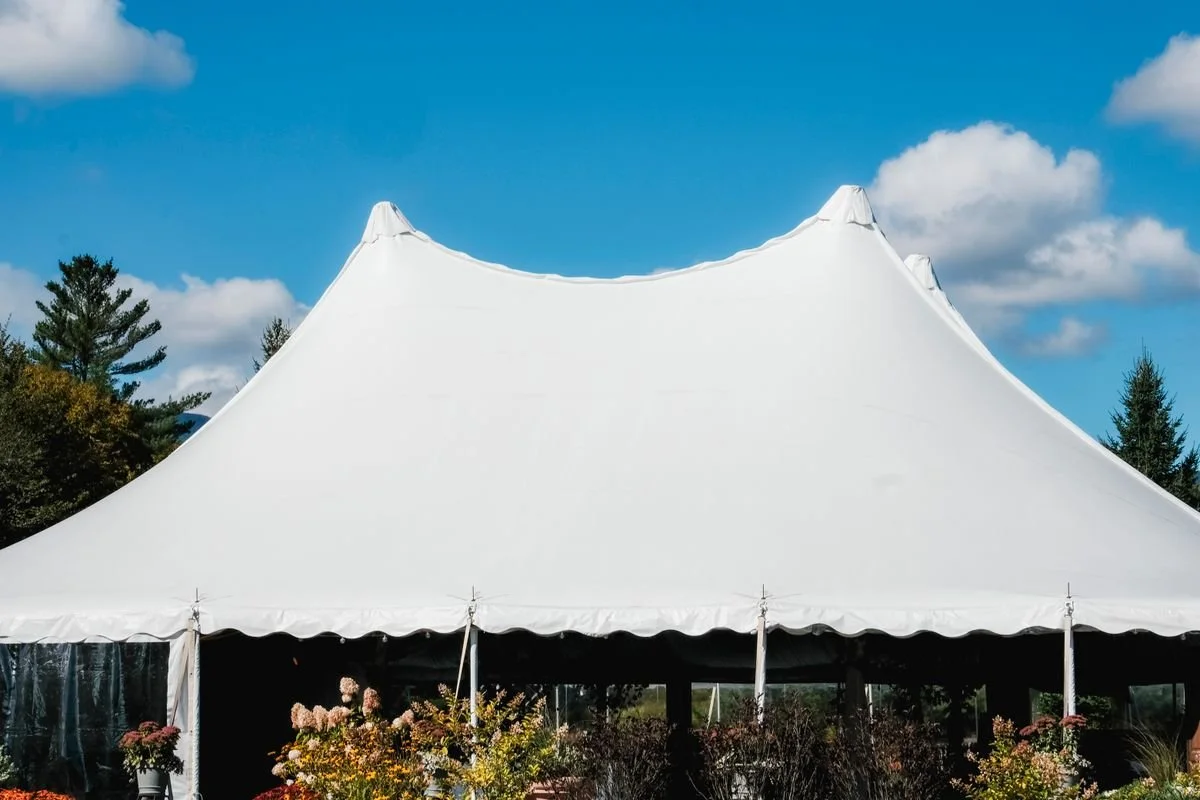
Quick answer: Tented wedding catering works for large NYC celebrations by treating the tent as a complete, self-contained venue that requires its own kitchen infrastructure, climate control, power, and flooring plan, rather than assuming any of it will already be in place. Done well, the result is a fully custom space built entirely around the couple's vision, with none of the fixed limitations of an existing indoor venue.
Tented wedding catering NYC gives couples a blank canvas setting, but it also means building nearly every piece of infrastructure from scratch, from the kitchen to the lighting.
Tent wedding catering NYC succeeds when climate control, power, and flooring are treated as core planning decisions rather than afterthoughts added once the design is finalized.
The design freedom a tent offers is what makes it worth the added logistics, giving couples complete control over a space built entirely around their vision.
Why Tented Weddings Offer a Different Kind of Freedom
A tented wedding occupies a distinct category among New York City celebration venues. Unlike a loft, ballroom, or historic building, a tent starts as an empty structure with no existing infrastructure at all. That blank slate is exactly what draws many couples to a tented reception in the first place.
Every element of the space, from layout to lighting to flow, can be designed entirely around the couple's vision rather than adapted to fit an existing room.
That same freedom is what makes tented wedding catering NYC a genuinely different discipline from catering an established venue. Nothing about a tented reception can be assumed. Every piece of infrastructure that a conventional venue would already provide has to be planned, built, and coordinated from the ground up.
What Tented Wedding Catering NYC Actually Requires
Building a Full Kitchen From Scratch
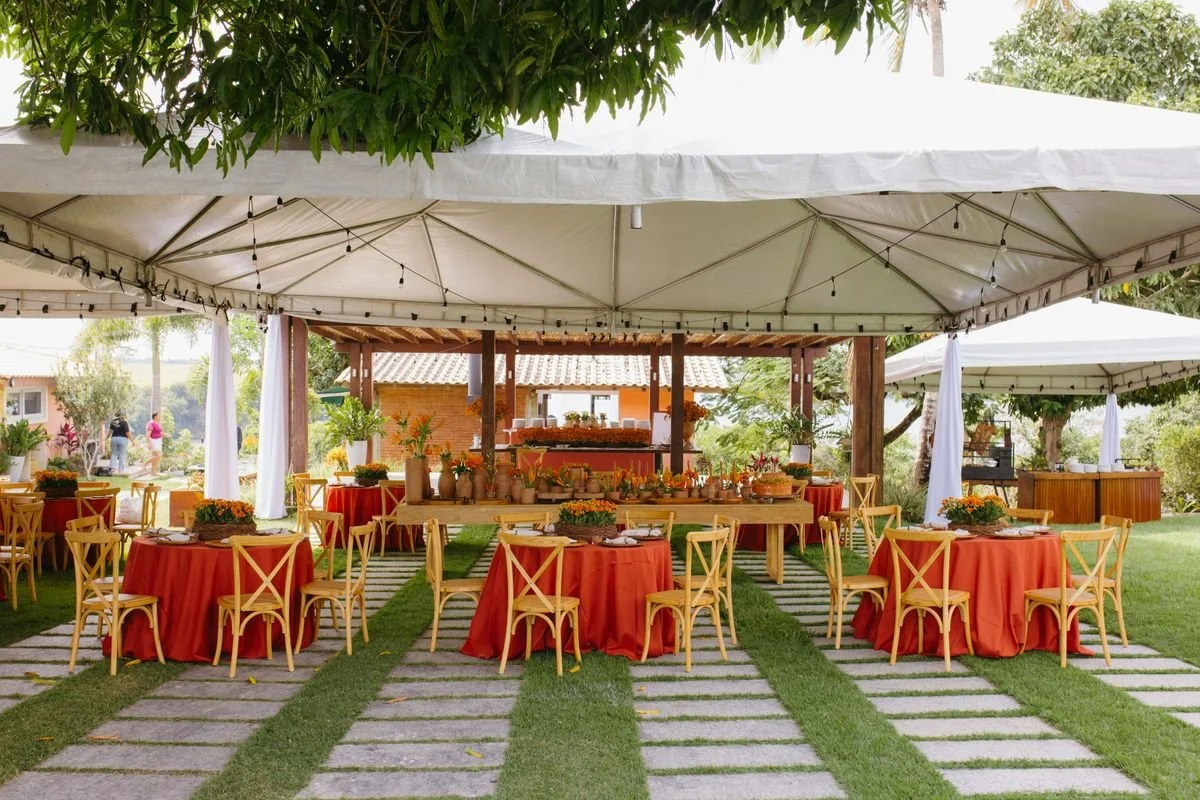
A tented reception has no existing kitchen, which means the entire cooking and production operation has to be built as a temporary, self-contained structure, typically in an adjacent tent or dedicated kitchen tent connected to the main reception space.
Tent wedding catering NYC teams experienced in this format bring the same level of equipment and organization as a full commercial kitchen, condensed into a space designed and staged specifically for the event.
Climate Control as a Real Operational Factor
Unlike an indoor venue with existing heating and cooling, a tent requires climate control to be engineered for the specific event, guest count, and season. A summer wedding needs adequate cooling to keep both guests and food at safe, comfortable temperatures.
A cooler season event requires heating substantial enough to make an open-air structure feel warm and inviting rather than drafty. Climate control for tented wedding catering NYC is not a convenience add-on; it is a core part of making the event work at all.
Power, Lighting, and Flooring Logistics
A tent typically has no built-in electrical infrastructure, which means generator power has to be planned to support everything from kitchen equipment to lighting to sound.
Flooring is its own consideration as well, since a tent is often placed over grass, gravel, or uneven ground that needs a leveled, weather-appropriate surface before any tables or a dance floor can be set. These details rarely cross a couple's mind during the excitement of choosing a tented setting, but they shape nearly every other decision that follows.
The Advantage of a Tented Reception: Total Design Control
Once the core infrastructure is planned, a tent becomes one of the most flexible settings available for a large-scale luxury wedding. Layout, lighting design, ceiling treatments, and even the shape and flow of the room can be built entirely around the couple's aesthetic, unconstrained by an existing building's architecture.
| Infrastructure Element | Why It Matters for a Tent | How It's Handled |
|---|---|---|
| Kitchen Setup | No existing kitchen infrastructure on-site | A fully equipped kitchen tent staged for the event |
| Climate Control | No built-in heating or cooling like an indoor venue | Engineered heating or cooling sized to guest count and season |
| Power Supply | No existing electrical infrastructure | Generator power planned for kitchen, lighting, and sound |
| Flooring | Often set over grass, gravel, or uneven ground | Leveled, weather-appropriate flooring installed before setup |
Coordinating With the Venue and Grounds
Beyond the tent itself, tented wedding catering NYC requires close coordination with whatever property the tent sits on, whether a private estate, a garden venue, or another outdoor setting.
Load-in access for kitchen equipment, generator placement, and how the tent integrates with the surrounding landscape all need to be planned well before the event. A caterer experienced in tented events knows how to work within these constraints while still delivering a menu and service level equal to any indoor venue.
What to Confirm With Your Tented Wedding Caterer
Confirm what kitchen setup will be used and how it will be staged relative to the main tent.
Ask how climate control will be planned for your specific season and guest count.
Clarify power and generator needs for kitchen equipment, lighting, and any additional vendors.
Review flooring plans for both the reception space and any kitchen or staging areas.
Discuss backup plans for extreme weather, even with a tent already providing cover.
What This Means for Couples Planning a Large NYC Wedding
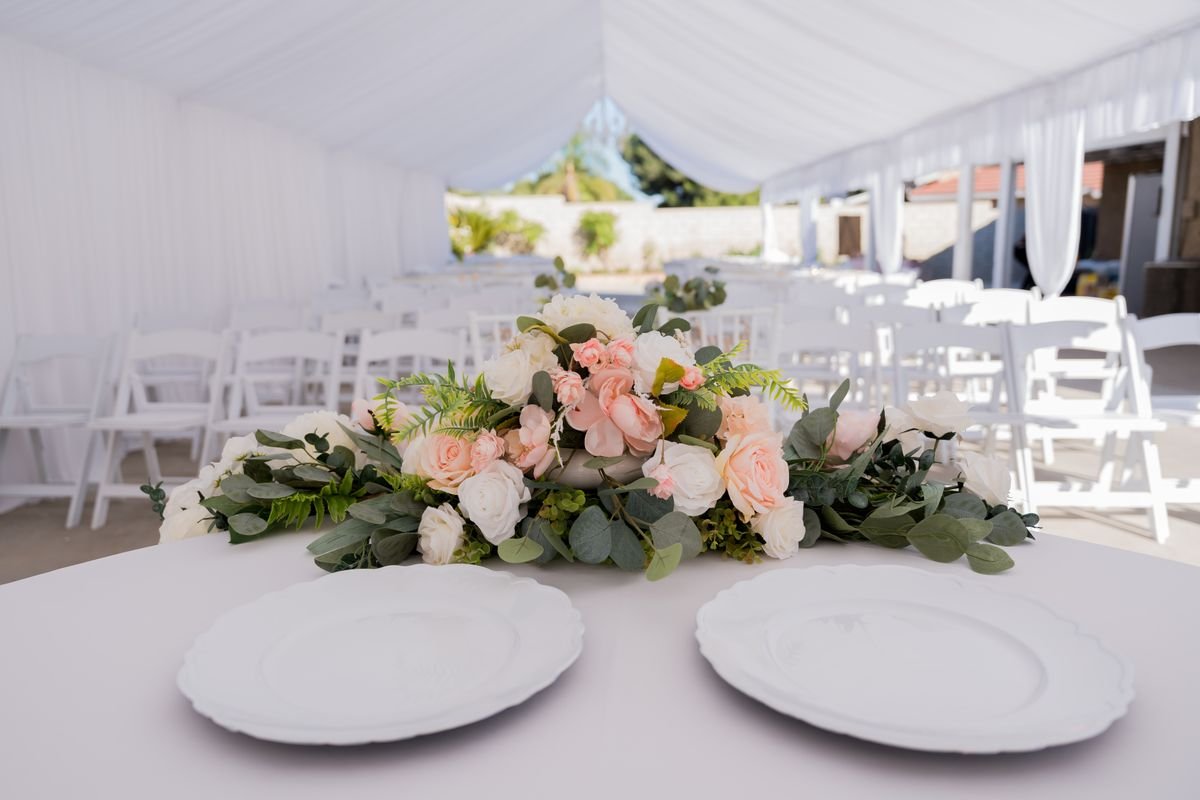
Tented wedding catering NYC offers a level of design freedom few venues can match, but that freedom comes with real planning responsibility. Every piece of infrastructure that an established venue would already provide has to be built specifically for the event, from the kitchen to the lighting to the ground beneath guests' feet.
Working with a caterer who treats these details as core planning decisions, not afterthoughts, is what allows a tented wedding to deliver on its promise: a completely custom setting, built entirely around the couple's vision, without any of the compromises of an existing space.
Frequently Asked Questions
Does a tent need its own kitchen setup?
Yes, since tented venues have no existing kitchen infrastructure, catering teams typically build a dedicated kitchen tent equipped to handle the full menu and guest count.
How is climate control handled for a tented wedding?
Heating or cooling is engineered specifically for the tent, guest count, and season, since a tent does not have built-in climate systems like an indoor venue.
What about power for a tented reception?
Generator power is planned to support kitchen equipment, lighting, sound, and any additional vendor needs, since most tented sites lack existing electrical infrastructure.
Is flooring really necessary for a tented wedding?
Yes, tents are often placed over grass or uneven ground, so leveled, weather-appropriate flooring is typically installed before tables, dance floors, or kitchen equipment are set up.
Why do couples choose a tented wedding over an existing venue?
A tent offers a fully custom, blank-slate setting, giving couples complete control over layout, design, and flow without the constraints of an established building.