
Event Catering in NYC: What to Expect From a Full-Service Experience
Quick Answer: Event catering in NYC at the full-service tier is a fully integrated experience that goes well beyond food delivery. A premier full-service caterer handles culinary design, beverage program development, service staffing, equipment and rentals, design and production coordination, venue logistics, permitting, and post-event execution as a single coordinated package. The host's role is to make strategic decisions. The caterer handles the rest. The result is an event that feels effortless on the night because every operational detail has been managed quietly in the weeks leading up to it.
Why Full-Service Event Catering Has Become the NYC Standard
New York is a market that rewards integrated delivery. The city's most beautiful event venues are non-exclusive lofts, galleries, and historic spaces that come without on-site catering teams, in-house equipment, or production support. That structure has shaped the modern NYC catering market into one where the strongest providers operate as full-service event partners rather than as food vendors.
Industry research from Future Market Insights places the catering services market in a period of substantial growth, with the corporate and event segment alone accounting for roughly 30 percent of the industry's 2025 value share.
Within that growing market, the most sophisticated NYC clients are increasingly consolidating their event catering relationships with single full-service providers who can deliver the entire production rather than coordinating across multiple specialist vendors.
The reason is operational. A full-service event catering team in NYC absorbs the complexity that the host would otherwise have to manage directly. Equipment rentals, linens, tableware, service staff, kitchen setup, beverage licensing, permitting, certificate of insurance filings, building logistics, vendor coordination, and timeline management are all handled within the same engagement.
The host gets one accountable partner rather than five separate ones. For luxury weddings, corporate galas, brand launches, and major nonprofit fundraisers, that consolidation is part of what makes the event genuinely manageable.
What Full-Service Event Catering Actually Includes
The phrase "full-service event catering" gets used loosely in the market, and the actual scope varies meaningfully across providers. Understanding what a premier full-service NYC caterer typically includes (and excludes) is the first step in evaluating the right partner for your event.
The table below summarizes the dimensions of a full-service event catering engagement at the premium tier in New York.
| Service Dimension | What a Full-Service Caterer Provides |
|---|---|
| Culinary Design | Custom menu development from a Michelin-trained team |
| Beverage Program | Featured cocktails, wine, beer, non-alcoholic, full bar staffing |
| Service Staffing | Captains, servers, bartenders, chefs on-site, runners |
| Equipment and Rentals | Tableware, glassware, linens, flatware, service equipment |
| Design and Production | Plating concept, table styling, integration with florals |
| Venue Logistics | COI filing, freight elevator scheduling, building security |
| Permitting | Liquor permits for non-licensed venues, special event filings |
| Timeline Management | Pre-event coordination with planner, venue, vendors |
| Tastings | Multiple rounds of menu refinement |
| On-Site Execution | Load-in, setup, service, breakdown, load-out |
| Post-Event | Cleanup, equipment return, follow-up, billing reconciliation |
A drop-off catering vendor covers two or three of these dimensions. A traditional caterer covers four or five. A full-service event catering partner covers all eleven, integrated as a single coordinated engagement.
The Phases of a Full-Service Event Catering Engagement
Event catering in NYC at the full-service tier follows a predictable arc from first contact through post-event follow-up. Understanding the phases helps the host know what to expect and when.
The first phase is discovery, typically running two to four weeks. The catering team meets with the host, the planner, and any creative collaborators to understand the event vision, the guest profile, the venue, the timeline, and the budget. This is where the strategic direction of the catering is established before any specific menu items are discussed.
The second phase is menu and program design, typically running three to six weeks. The culinary team develops menu concepts. The beverage program is structured. Service style decisions are made. Equipment and rental needs are scoped. The host reviews proposals, gives feedback, and refines toward a final program.
The third phase is the tasting, usually scheduled six to ten weeks before the event. The host, planner, and key stakeholders sit down with the culinary team and walk through the proposed menu in detail. This is where final adjustments are made, and the menu is locked.
The fourth phase is final coordination, running across the four to six weeks leading up to the event. Final guest counts are confirmed. Dietary accommodations are detailed. Venue logistics are walked. COI is filed. Permits are pulled if needed. Final timing is built with the planner.
The fifth phase is event execution, the day or days of the event itself. Load-in, kitchen setup, service, breakdown, and load-out are managed by the catering team's on-site leadership.
The sixth phase is post-event reconciliation, running for one to two weeks after the event. Final billing is confirmed. Equipment is returned. The host typically receives a follow-up call to debrief on what worked and what could improve for the next engagement.
The Three Teams That Define a Full-Service Caterer
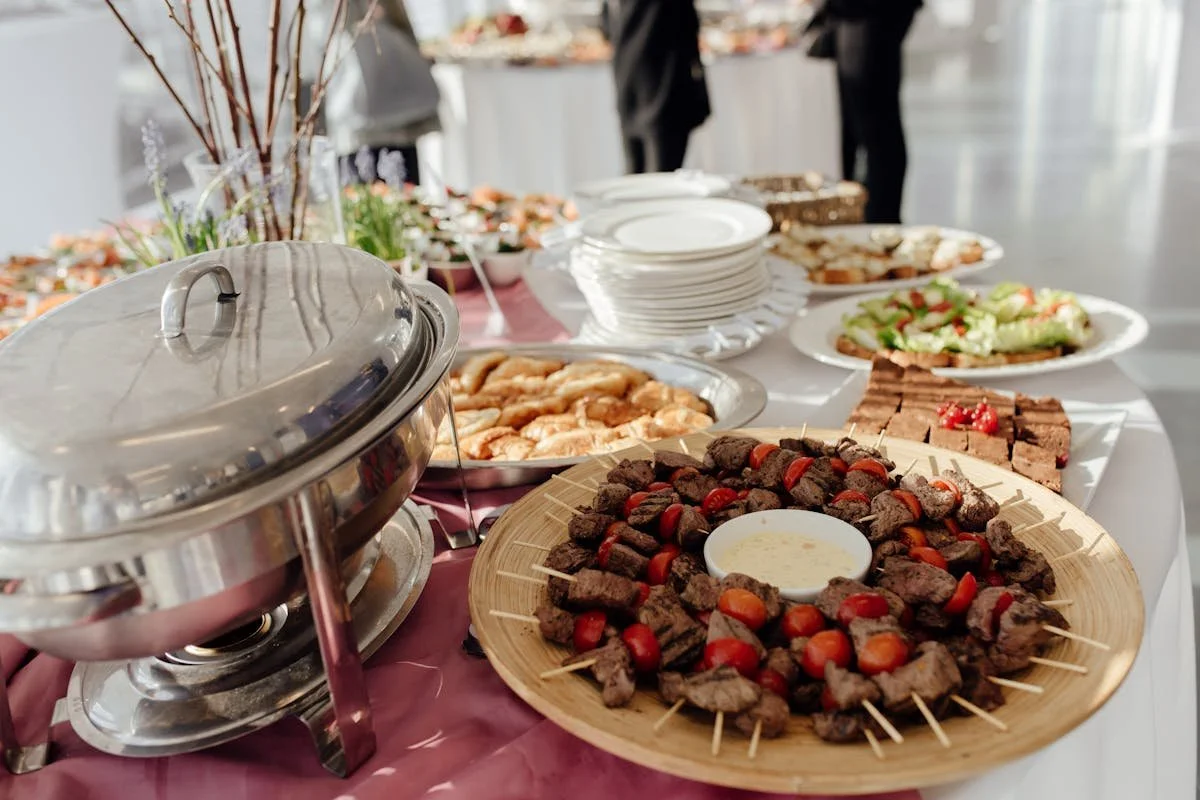
A premier full-service event catering operation runs on three coordinated teams: culinary, design and production, and service. Each one carries distinct responsibilities, and the quality of the partnership depends on how well the three are integrated under a single operational structure.
The culinary team is responsible for menu design, ingredient sourcing, kitchen execution, and plating. At the premium tier in New York, the culinary leadership has typically trained at Michelin-starred restaurants and brings that level of technique and creativity to catering output.
The Cloud Catering culinary team operates from exactly this standard, with chefs trained at the finest Michelin-starred restaurants across the globe.
The design and production team is responsible for translating the host's vision into a physical experience. This includes plating aesthetics, table styling, equipment selection, lighting coordination with production partners, integration with floral design, and the overall sensory composition of the room. A strong design and production capability is what separates a full-service caterer from a traditional catering vendor.
The service team is responsible for hospitality on the night, with every captain, server, and bartender trained to read the room and anticipate guest needs. Service ratios at the luxury tier in New York run between 1:8 and 1:15, depending on format, with one captain managing every 75 to 100 guests. Cloud Catering's service philosophy is grounded in being thoughtful, thorough, considerate, and correct.
When all three teams operate inside the same organization, the host benefits from a single accountable partner and an event that reads as coordinated rather than assembled.
What Premium NYC Event Catering Costs
Event catering in NYC at the full-service tier varies meaningfully by event format and guest count. The table below summarizes typical per-guest ranges at the premium NYC tier for the most common event formats.
| Event Format | Typical Per-Guest Range | What Drives the Variation |
|---|---|---|
| Cocktail Reception (2 hours) | $125 to $225 | Bar program, passed bites complexity |
| Heavy Cocktail (3 hours) | $175 to $300 | Number of stations, beverage tier |
| Wedding (full evening) | $225 to $475 | Service style, menu courses, bar program |
| Corporate Gala | $200 to $400 | Format, guest profile, brand integration |
| Luxury Product Launch | $200 to $500+ | Brand customization, beverage program |
| Investor Day (full day) | $250 to $500 | Multi-meal program, service ratios |
| Nonprofit Gala | $200 to $400 | Format, donor profile, sponsor offsets |
These figures reflect food, beverage, and service. Equipment, design production support, and venue logistics are typically built into the proposal as line items rather than included in a single per-guest figure. A full-service caterer will provide an itemized quote so the host can see exactly where the budget is going.
What to Expect From the Tasting
The tasting is one of the most important moments in a full-service event catering engagement. It is where the menu becomes real and where the host gets the chance to refine the program before it is locked.
A premier NYC tasting typically takes place at the caterer's culinary facility or at a select tasting space. The host and planner are presented with the proposed menu in its near-final form, with multiple options for each course where applicable. The culinary team walks through the thinking behind each dish, the sourcing approach, and any adjustments that have already been incorporated based on earlier conversations.
The host's job at the tasting is to taste and to think clearly. Which dishes work as intended? Which needs refinement? Which dietary considerations need to be addressed differently? How does the menu read as a sequence rather than as individual dishes? A strong full-service caterer welcomes feedback at the tasting and uses it to refine the final menu, rather than treating the tasting as a final presentation.
For weddings and high-stakes corporate events, multiple rounds of tasting are sometimes appropriate. A first tasting establishes direction. A second tasting refines specifics. The investment of time pays back in the quality of the final event, even with catered investor events in NYC.

Sustainability and Dietary Inclusivity as Baseline
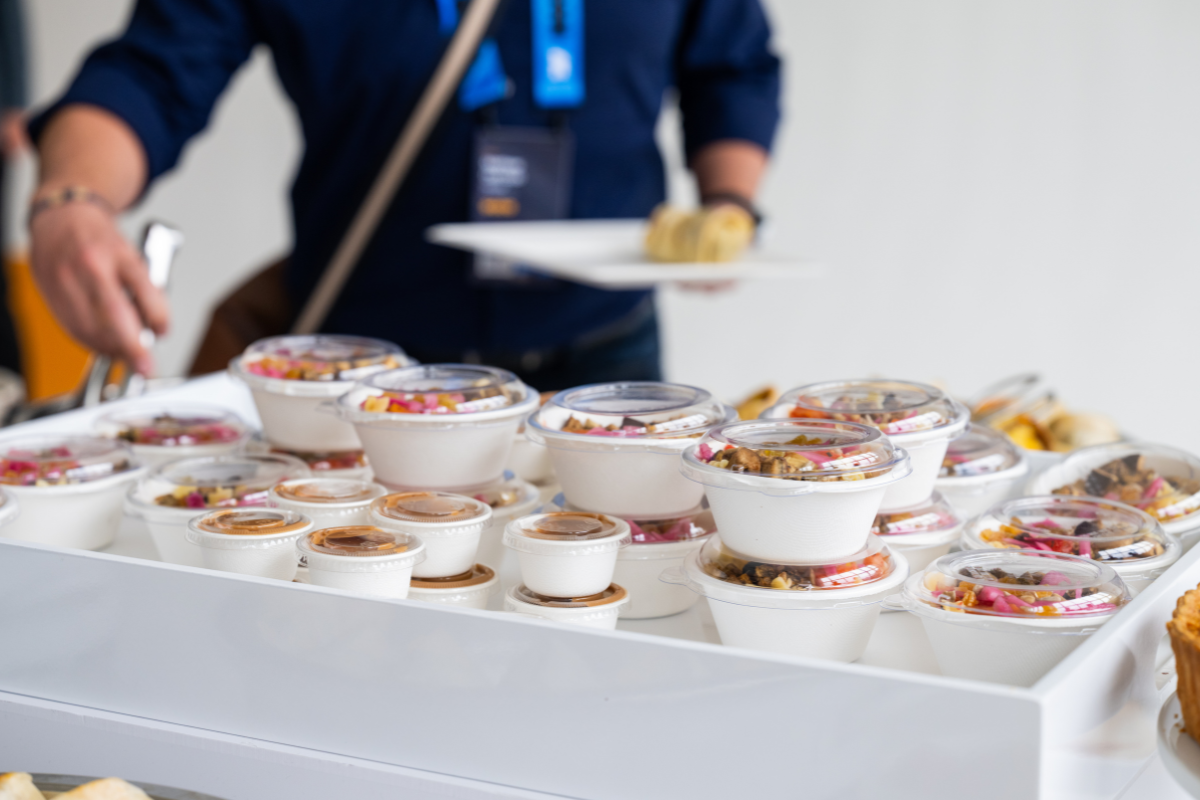
At the modern full-service tier, sustainability and dietary inclusivity are no longer differentiators. They are operating standards. NYC corporate, wedding, and nonprofit clients increasingly expect locally sourced ingredients, seasonal menus, compostable service ware where appropriate, and meaningful waste reduction protocols built into the proposal.
Dietary inclusivity has also moved from optional to standard. Vegetarian, vegan, gluten-free, kosher, halal, and allergen-aware accommodations should be designed in parallel with the main menu rather than treated as substitutions.
The strongest full-service caterers make the inclusive options as visually compelling as the main dishes, with parallel courses for guests with restrictions rather than visibly lesser alternatives.
When evaluating a full-service event catering partner, ask directly about their sourcing approach, their waste protocols, and their dietary inclusivity philosophy. The answers tell you a great deal about how the team will execute on the night.
How Venue Choice Shapes the Engagement
Event catering in NYC at the full-service tier depends heavily on the venue. New York's most beautiful event spaces are typically non-exclusive, meaning the host can bring in any qualified outside caterer. These spaces include lofts, galleries, historic ballrooms, industrial buildings, and architectural rooftops across the city.
A full-service caterer with deep institutional knowledge across the major NYC venues brings operational fluency that less experienced teams cannot match. The catering team already knows the freight elevator schedules, the COI requirements, the kitchen access windows, and the security protocols at each venue.
They have relationships with the production managers and building staff. They know what setup actually requires in the specific space.
Cloud Catering and Events operates regularly across many of the major luxury and corporate event venues in New York, including the Frick Collection, Brooklyn Grange, Highline Stages, Knockdown Center, Melrose Ballroom, IAC Building, Greenpoint Loft, 501 Union, Angel Orensanz Foundation, Glasshouses, the Park Avenue Armory, and dozens of others. You can see more of the Cloud venue partner list on the website.
How Cloud Catering Approaches Full-Service Event Catering in NYC
Cloud Catering and Events has built its New York practice as a fully integrated, full-service event catering operation since 2011. The Cloud model centers on three teams working in tight coordination: a culinary team trained at Michelin-starred restaurants, a design and production team that translates the host's vision into physical execution, and a service team grounded in hospitality that aims to be as thoughtful as it is thorough.
The Cloud approach treats every event as a collaborative expression. The team integrates closely with hosts, planners, venues, and creative partners from the earliest stages of program development through post-event reconciliation. The result is an event catering experience that delivers on the operational complexity of New York at a quality tier consistent with the city's most sophisticated audiences.
The Cloud client roster reflects the breadth of this practice, with engagements across financial institutions, luxury fashion houses, beauty brands, cultural organizations, law firms, technology companies, and luxury weddings.
Selected clients include Nasdaq, Bloomberg L.P., JP Morgan Chase, Citibank, UBS, McKinsey & Company, Microsoft, Tesla, Chanel, Vacheron Constantin, Omega, Rolex, Piaget, Swarovski, David Yurman, Brooks Brothers, MoMA, the American Ballet Theatre, the New Museum, the New York Times, and the Park Avenue Armory.
For hosts beginning to scope an upcoming wedding, corporate event, brand launch, or nonprofit gala, the Cloud team is available to consult on menu structure, service flow, design integration, and venue partnerships well in advance of the formal proposal stage. You can read more about the Cloud approach and explore the Cloud team that supports each engagement.
The strongest event catering in NYC at the full-service tier delivers an event that feels effortless on the night because every operational detail has been managed quietly in the weeks leading up to it. That is the standard a premier full-service partner is built to deliver, and the standard worth planning to.
Frequently Asked Questions
What does full-service event catering in NYC actually include?
Full-service catering in NYC typically covers culinary design, beverage program development, service staffing, equipment and rentals, design and production coordination, venue logistics, permitting, timeline management, tastings, on-site execution, and post-event reconciliation. The host gets one accountable partner managing the entire catering production rather than coordinating across multiple specialist vendors.
How far in advance should I book full-service event catering in NYC?
For weddings, corporate galas, and major brand events, contract your full-service caterer six to twelve months in advance. Premium NYC catering teams book the same calendar windows across categories, and late contracting often limits availability for premium dates between September and December and from May through October.
What is the typical cost of full-service event catering at the premium NYC tier?
Per-guest figures range widely by format. Cocktail receptions typically run $125 to $225 per guest, weddings $225 to $475, corporate galas and luxury product launches $200 to $500, and full-day investor days $250 to $500. Full-service caterers typically provide itemized quotes that separate food, beverage, service, equipment, and production costs.
How is full-service event catering different from drop-off or traditional catering?
Drop-off catering delivers food without on-site service. Traditional catering provides food, basic service, and some equipment. Full-service event catering integrates culinary, beverage, service, equipment, design, and logistics as a single coordinated engagement, with the catering team accountable for the entire production rather than just the food.
What should I look for when evaluating a full-service event catering partner in NYC?
Four things. A culinary team capable of designing a menu around your vision, a design and production team that integrates with the broader event creative, a service team trained to operate at the standard your guests expect, and an operations team with deep institutional knowledge of the NYC venue ecosystem. The strongest partners deliver across all four dimensions within a single organization.
Sources
Future Market Insights, Catering Services Market Trends & Demand 2025-2035:https://www.futuremarketinsights.com/reports/catering-services-market
Max Ultimate Food, Top Trends in Corporate Catering for 2025:https://maxultimatefood.com/top-trends-in-corporate-catering-for-2025/
The Zola Wedding Cost Index, Wedding Catering Costs: Real Numbers and Budget Tips:https://www.zola.com/expert-advice/cost-of-wedding-caterers
BizBash, Industry Reports on Event Production and Catering Trends:https://www.bizbash.com
Eventbrite, Industry Reports on Experiential Event Trends:https://www.eventbrite.com