
What Top Brands Look for in Catering for Conferences in NYC
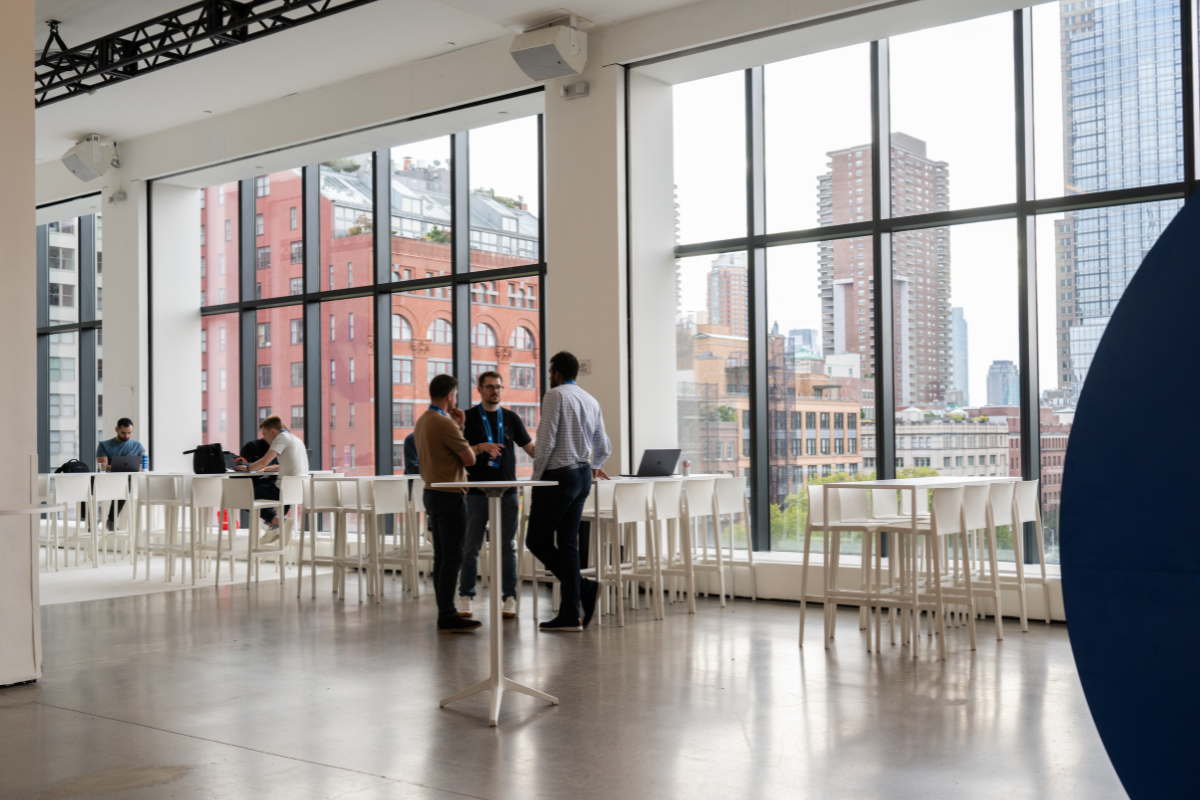
Quick Answer: Top brands evaluating conference catering in NYC prioritize five things above everything else: operational reliability across complex Manhattan venues, performance-forward menus that protect afternoon engagement, comprehensive dietary inclusivity designed in parallel with the main menu, demonstrable sustainability practices that align with brand ESG commitments, and a service team capable of delivering at a quality tier consistent with the brand's positioning. The catering decision is no longer about food alone. It is about whether the catering partner can execute at the level the brand is willing to stand behind.
Why Top Brands Are More Selective About Conference Catering Than Ever
Conferences have become high-stakes brand moments. The audiences are sophisticated, the content is increasingly competitive, and attendee feedback now travels through LinkedIn posts, internal employee channels, and industry chatter within hours of the closing remarks.
According to research from the Events Industry Council, the global meetings and events sector contributes billions of dollars in economic output annually, and a single large conference can produce more than 1,400 pounds of waste per day.
Every operational decision now carries reputational weight, and conference catering in NYC sits at the intersection of brand experience, employee wellbeing, and operational discipline. Top brands have responded by raising the bar on catering selection. The decision used to be primarily about the menu and price.
It is now about the catering partner's ability to deliver a multi-meal program across complex Manhattan venues while meeting brand standards for inclusivity, sustainability, and presentation. The shortlist for major NYC conferences is significantly narrower than it was a decade ago, and the criteria for making that shortlist have become more rigorous.
This piece walks through what top brands actually evaluate when selecting conference catering in NYC, based on the patterns visible in how Fortune 500 corporate, luxury, and major nonprofit clients now structure their decisions.
The Five Criteria Top Brands Use to Evaluate Conference Catering
Brand procurement teams and event leaders increasingly evaluate conference catering against a consistent framework. The five criteria are operational reliability, performance-forward menu design, dietary inclusivity, sustainability and sourcing, and service quality.
Each one carries weight independently, and a catering partner that falls short on any single dimension typically gets eliminated early in the selection process. The table below summarizes how each criterion is typically scored at the procurement stage.
| Evaluation Criterion | What Brands Are Actually Looking For | Why It Matters |
|---|---|---|
| Operational Reliability | Track record across major NYC venues | One delay derails the day |
| Performance-Forward Menus | Energy-supporting design across breakfast, lunch, breaks | Afternoon engagement defines outcomes |
| Dietary Inclusivity | Parallel-designed accommodations, not modifications | Audience expects it as a baseline |
| Sustainability and Sourcing | Local, seasonal, transparent, low-waste | ESG alignment, brand reputation |
| Service Quality | Trained captains, refined ratios, brand-appropriate polish | Hospitality is read as a brand signal |
Catering partners that demonstrate strength across all five criteria win major brand conference work in New York. Partners that lead with food alone typically lose to those who can articulate a complete operational story.
Operational Reliability Is the Threshold Requirement
The first thing brand procurement teams evaluate is whether the catering partner can actually deliver in New York.
The city's most-used conference venues, including major Manhattan corporate buildings, hotel ballrooms, the Nasdaq MarketSite, Convene locations, and architectural spaces like Spring Studios or the IAC Building, all carry their own COI requirements, freight elevator schedules, security protocols, and building staff dynamics. A catering team that has not executed at these venues before is a significant operational risk.
Top brands prioritize catering partners with demonstrable track records across the specific venue ecosystem that the conference will use. They ask for references from clients who have run similar programs at the same venue. They confirm that the catering team has the operational infrastructure to handle simultaneous multi-meal service across a full conference day.
They verify that COI documentation, food handler licensing, and liquor permits are in order before the contract is signed. Cloud Catering and Events brings exactly this kind of operational reliability to NYC conference catering.
The team executes regularly at major venues, including the Frick Collection, Brooklyn Grange, Highline Stages, Knockdown Center, Melrose Ballroom, IAC Building, Greenpoint Loft, Glasshouses, the Park Avenue Armory, and many more. You can see more of the Cloud venue partner list on the website.
Performance-Forward Menus Protect the Conference Outcome
The second criterion top brands evaluate is whether the catering menu is designed to support attendee engagement throughout the day or to feed them once and let the energy collapse. This is the difference between a caterer who thinks operationally and a caterer who thinks vendor-style.
The data is clear. Heavy plated lunches at 12:30 p.m. produce sluggish 2 p.m. rooms. Pastry-heavy breakfasts produce sleepy 10 a.m. presentations. Sugary afternoon breaks produce an attention drop before the closing keynote. Top brands have learned this through their own conference data and now actively select catering partners who design menus around the performance curve rather than around abundance.
Performance-forward menu design relies on a few specific patterns: protein and vegetable-forward composition rather than starch-heavy plates, whole grains and complex carbohydrates rather than refined ones, smart portioning that satisfies without overfeeding, bright flavors that read as energizing, and beverage programs built around espresso, fresh juice, and sparkling hydration rather than soda and basic coffee.
The food still needs to be delicious and visually compelling. The design priorities are energy and engagement, not volume, especially with investor day catering events.
Dietary Inclusivity Is a Pass-Fail Test
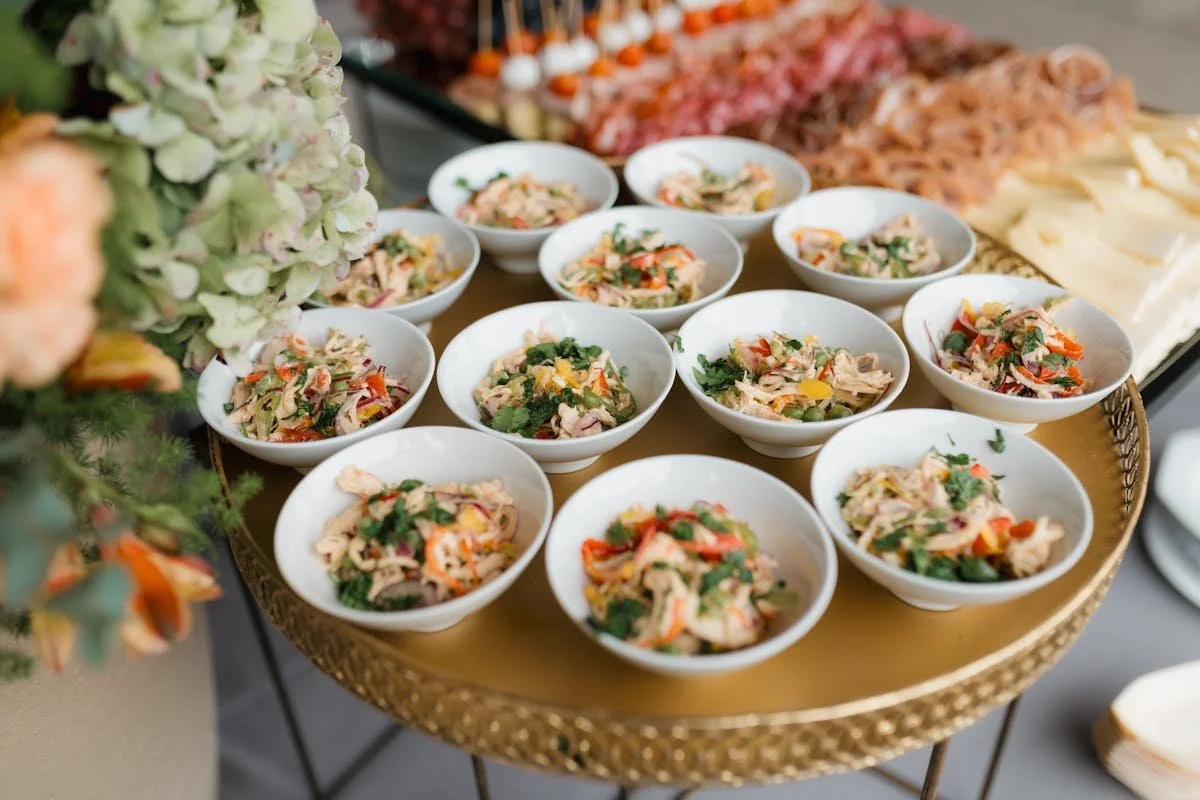
The third criterion is dietary inclusivity, and top brands now treat it as pass-fail rather than as a preference. A catering partner who handles vegetarian, vegan, gluten-free, kosher, halal, and allergen-aware accommodations as substitutions or visibly lesser alternates simply does not win major brand conference work in New York anymore.
The standard top brands now expect is a parallel design. The plant-forward dishes should be among the most beautiful items on the table. Kosher and halal accommodations should be planned in advance with proper sourcing and preparation protocols, not assembled at the last minute.
Allergen labeling should be clear, accurate, and visible. Service staff should be trained to handle cross-contamination concerns confidently. This expectation reflects how the audience has changed. NYC conference attendees now come from every cultural, religious, and dietary background.
The senior executive whose conference is being catered may include a kosher-observant client, a vegan analyst, and a gluten-intolerant board member at the same event. The catering needs to deliver beautifully for all of them. Anything less reads as carelessness, regardless of how strong the rest of the program is.
National Restaurant Association data confirms that 42 percent of audiences cite clearly labeled allergens as the single most helpful menu characteristic. That is not a fringe preference. That is the audience defining the baseline.
Sustainability Has Become an ESG Decision
The fourth criterion is sustainability, and at the brand level, it is now an ESG decision rather than a kitchen decision. Many top brands now have measurable sustainability commitments in their annual reporting, and the catering they choose for major conferences contributes to those metrics either positively or negatively.
The expectations are concrete. Locally sourced ingredients, with transparency about sourcing relationships. Seasonal menus that work with the regional growing calendar rather than against it. Compostable service ware where appropriate, with clearly marked composting bins on site.
Meaningful food waste reduction protocols, including pre-event RSVP accuracy, portion-controlled production, and partnerships with food donation organizations like City Harvest in New York for surplus. The chart below summarizes how the sustainability dimension typically appears in a brand procurement evaluation for conference catering in NYC.
| Sustainability Dimension | Top Brand Expectation |
|---|---|
| Sourcing | Local, seasonal, transparent partnerships |
| Menu Design | Plant-forward as a baseline, not an alternate |
| Service Ware | Compostable, reusable, or recyclable |
| Food Waste | Portion control, surplus donation, measurement |
| Reporting | Post-event sustainability metrics, where requested |
Catering partners who can document and report on these dimensions win procurement decisions over partners who treat sustainability as marketing language. The documentation matters because brand procurement teams now report up to ESG leadership, not just to events leadership.
Service Quality Reflects the Brand
The fifth criterion is service. This is the one most often underestimated and the one that produces the largest gap between strong and average catering partners. A brand-tier NYC conference is read by attendees through the service team almost as much as through the program content.
The captain who manages the room invisibly, the server who anticipates a glass refill before it is needed, the barista who knows the espresso program in detail, the bartender who handles a complex dietary question without hesitation: these are the people creating the brand impression in real time.
Top brands evaluate service quality by looking at training, ratios, retention, and references. A catering operation with a strong service culture will have low turnover among captains and senior service staff, formal training programs for new hires, and references that specifically call out the service team's performance rather than the food alone.
Cloud Catering's service philosophy is grounded in being thoughtful, as it is thorough and as considerate as it is correct. This is the standard that top brands recognize and select for. You can read more about the Cloud approach and the team that supports each engagement.
How Top Brands Sequence the Selection Process
Beyond the criteria themselves, top brands have refined the actual selection process for conference catering in NYC. Most major brands now follow a sequenced evaluation that begins with capability screening, moves through proposal and tasting, and ends with reference verification and contract negotiation.
Capability screening typically eliminates 60 to 70 percent of initial candidates before the proposal stage. The screening looks at venue experience, dietary inclusivity track record, sustainability documentation, and service team scale. Catering partners who cannot meet baseline thresholds on these dimensions do not advance.
Proposals from shortlisted candidates are evaluated against the full five-criterion framework, with specific scoring weights assigned based on the brand's priorities. A luxury fashion house may weigh presentation and service ratio heavily.
A technology company may weigh sustainability and dietary inclusivity heavily. A financial institution may weigh operational reliability and discretion heavily. The weighting varies by brand, but the framework is now consistent.
Tastings follow proposal selection and are increasingly used to evaluate the catering team's responsiveness to feedback as much as the food itself. A catering partner who incorporates feedback thoughtfully between tastings demonstrates exactly the collaborative posture top brands look for in a multi-year relationship.
Reference verification is the final stage and is the most rigorous it has ever been. Brand procurement teams now routinely ask for references from named comparable clients, with specific questions about operational performance during stress moments such as guest count changes, last-minute dietary additions, or venue logistics issues.
How NYC's Unique Venue Ecosystem Shapes Conference Catering Decisions
Conference catering in NYC carries operational complexity that reflects the city's particular venue mix. The strongest catering partners build deep relationships with the venues where major brand conferences run most often.
These include corporate buildings throughout Midtown and the Financial District, dedicated conference and event spaces like Spring Studios, Convene, and the IAC Building, hotel ballrooms across the major brands, and the architectural spaces along the Hudson Yards and Chelsea corridor.
A catering partner who operates routinely across these venues brings learned execution patterns that significantly improve the conference experience. They know the freight elevator schedules. They know which buildings require a photo ID for every staff member. They know the catering kitchen access windows at each space. They know which venue managers prefer which forms of communication.
Cloud Catering and Events has executed conferences and major events for top brands including Nasdaq, Bloomberg L.P., JP Morgan Chase, Citibank, UBS, McKinsey & Company, Microsoft, Cisco Systems, Ernst & Young, Latham & Watkins, Paul Weiss Rifkind Wharton, NBC Universal, CNBC, The New York Times, Bose, Akamai Technologies, Columbia Law School, the Smithsonian, MoMA, the New Museum, the American Ballet Theatre, and the Park Avenue Armory, among many others.
How Cloud Catering Approaches Conference Catering in NYC
Cloud Catering and Events has built its corporate conference practice around exactly the five-criterion framework top brands now use.
The Cloud team brings demonstrated operational reliability across the major NYC venue ecosystem, performance-forward menu design grounded in a culinary team trained at Michelin-starred restaurants, parallel-designed dietary inclusivity that treats every accommodation as a primary menu input, sustainability practices that align with brand ESG commitments, and a service operation grounded in hospitality that aims to be thoughtful, thorough, considerate, and correct.
For brand event leaders, procurement teams, and corporate event managers beginning to scope upcoming conference catering in NYC, the Cloud team is available to consult on menu structure, service ratios, sustainability protocols, and venue logistics well in advance of the formal RFP stage.
The standard top brands for conference catering in NYC have risen substantially. The partners winning that work are the ones who can deliver across all five dimensions within a single operation. That is the bar the modern conference catering market is built around, and the bar Cloud is built to clear.
Frequently Asked Questions
What is the most important criterion top brands use to select conference catering in NYC?
Operational reliability across major NYC venues. A catering partner that cannot execute reliably at the venue where the conference is being held is eliminated before any other criterion is evaluated. Demonstrable venue experience is the threshold requirement.
How do top brands evaluate dietary inclusivity in conference catering?
By looking at whether dietary accommodations are designed in parallel with the main menu rather than treated as substitutions. The plant-forward, gluten-free, kosher, and halal options should be among the most beautiful and well-positioned items on the menu, not visibly lesser alternatives. Clear allergen labeling and service team training are also evaluated directly.
How important is sustainability to top brand conference catering decisions?
Increasingly central. Many top brands now have measurable sustainability commitments in their annual ESG reporting, and the catering selected for major conferences contributes to those metrics. Local sourcing, seasonal menus, compostable service ware, food waste reduction protocols, and post-event sustainability reporting are now standard procurement requirements.
How far in advance should a top brand contract conference catering in NYC?
Three to six months in advance for single-day conferences and six to nine months for multi-day programs at premium NYC venues. Brand procurement processes typically run two to three months, and contracting earlier produces more menu customization and better venue coordination.
What is the typical per-attendee cost for conference catering at the brand tier in NYC?
Plan on $75 to $200 per attendee per day for breakfast, breaks, and lunch at the quality tier appropriate for top brand audiences. Full-day programs with custom menu development, premium beverage programs, or design-intensive presentations can run $200 to $400 per attendee.
Sources
Events Industry Council, Industry Reports on Meetings and Events Output:https://www.eventscouncil.org
BizBash, How Sustainability and Customization are Shaping Event Catering:https://www.bizbash.com/corporate-events/how-sustainability-and-customization-are-shaping-event-catering
National Restaurant Association, Industry Research on Allergen Labeling and Menu Preferences:https://restaurant.org
Future Market Insights, Catering Services Market Trends & Demand:https://www.futuremarketinsights.com/reports/catering-services-market
The Event Planner Expo, Sustainable Event Planning Guide:https://www.theeventplannerexpo.com/event-planning-tips/sustainable-event-planning-eco-friendly-events-guide/