
What to Know About Rooftop Catering in NYC Before You Book
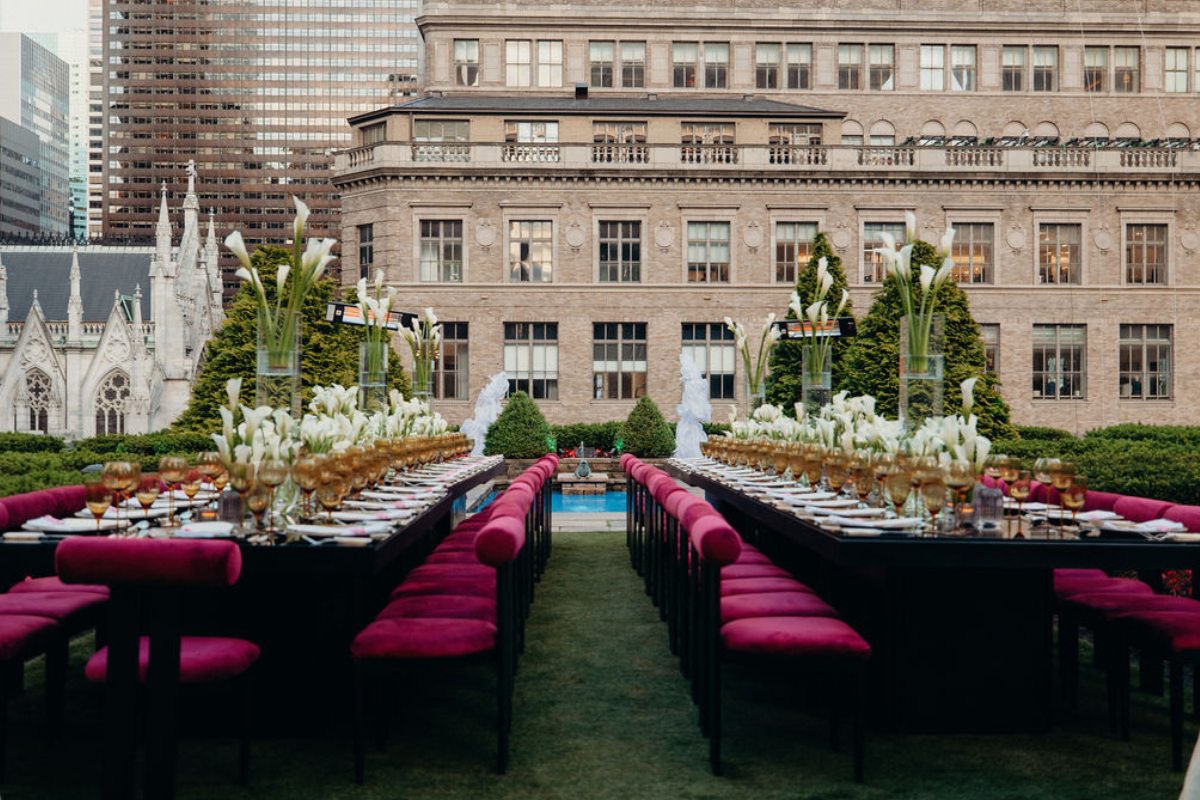
Quick Answer: Rooftop catering in NYC delivers some of the most photographed and atmospheric event experiences in the world, but it carries operational complexity that off-the-cobblestone venues do not. Before booking, hosts should understand the seasonal calendar (May through October is prime), the structural and permitting realities of rooftop production, the weather contingency requirements, the limited kitchen access most rooftops offer, and the specialized catering execution that wind, elevation, and exposure demand. The right catering partner makes a New York rooftop feel effortless. The wrong one turns a beautiful venue into an operational scramble.
Why Rooftop Catering in NYC Is a Different Discipline
A rooftop is the most romantic answer to the New York event venue question. Open-air seating with the Empire State Building in the background, golden-hour cocktails as the city lights begin to flicker on, and the natural drama of being above the street.
According to industry research compiled by EMRG Media across more than 5,000 New York events, rooftop event venues consistently rank among the top three most requested categories for both corporate and private hosting, and demand has grown substantially over the past five years as more buildings convert underused roof space into licensed event spaces.
Rooftop catering in NYC, however, is genuinely different from indoor catering. The challenges are real. Wind exposure affects everything from glassware to plating to passing service. Kitchen access is almost always limited because rooftops rarely have full commercial kitchens at the roof level.
Elevation introduces logistical complications around load-in, equipment transport, and timing. Weather contingency is non-negotiable in a city with four distinct seasons. Permits and structural certifications add a regulatory layer that ground-floor venues simply do not require.
A catering team that has not executed across NYC rooftops will struggle on all of these dimensions. A catering team that has made the night feel effortless. The difference is operational fluency built across many similar events, not improvisation on the day.
The Seasonal Calendar Defines Everything
The first thing every host should understand about rooftop catering in NYC is that the season is short. The prime window runs from May through October, with peak demand concentrated in late spring (May to June), early summer (June to early July), and early fall (September to mid-October).
July and August are workable but carry heat and humidity concerns that affect both guest comfort and catering execution. November through April is largely off-season for traditional open-air rooftops, with only the venues that offer heated enclosures or retractable roofs operating year-round. The table below summarizes the practical calendar for rooftop catering in NYC.
| Season | Demand Level | Booking Window Required | Key Considerations |
|---|---|---|---|
| May to early June | Peak | 6 to 9 months ahead | Sunset timing, mild evenings |
| Mid June to early July | Peak | 6 to 9 months ahead | Heat begins, hydration focus |
| July to August | Strong | 4 to 6 months ahead | Heat management, evening preferred |
| September to mid October | Peak | 6 to 9 months ahead | Best weather window of the year |
| Late October to November | Moderate | 3 to 4 months ahead | Heaters required, layered menus |
| December to April | Off-season | 2 to 3 months ahead | Enclosed rooftops only |
For Friday and Saturday evenings during the peak windows, premium NYC rooftops are typically booked 6 to 12 months in advance. Hosts planning a rooftop event for spring or fall should begin venue and catering conversations no later than the winter before.
Weather Contingency Is the Single Most Important Conversation
The single most important conversation a host has with a rooftop venue is the weather contingency plan. New York weather is genuinely unpredictable, and a beautiful Tuesday forecast can become a Saturday thunderstorm by the time the event arrives. Every rooftop catering decision should be built around the assumption that the weather will not cooperate.
The strongest rooftop venues in NYC now offer one of three weather solutions: retractable roof systems that close when needed, climate-controlled glass enclosures that allow the rooftop experience even in poor weather, or indoor backup spaces in the same building that can absorb the full event if the rooftop becomes unusable.
A venue with no weather contingency is a venue with a meaningful operational risk attached, and that risk falls on the host, even with investor day catering events in NYC.
From a catering perspective, weather contingency affects more than just the room. Menu items that hold beautifully indoors may not survive on a windy rooftop. Plated service that works in a still ballroom can be challenging when napkins are taking flight.
Beverage service needs to account for both ice melt in summer and condensation management throughout the year. A seasoned catering partner builds these realities into the menu and service plan from the start rather than improvising on the night.
Kitchen Access Is Almost Always Limited
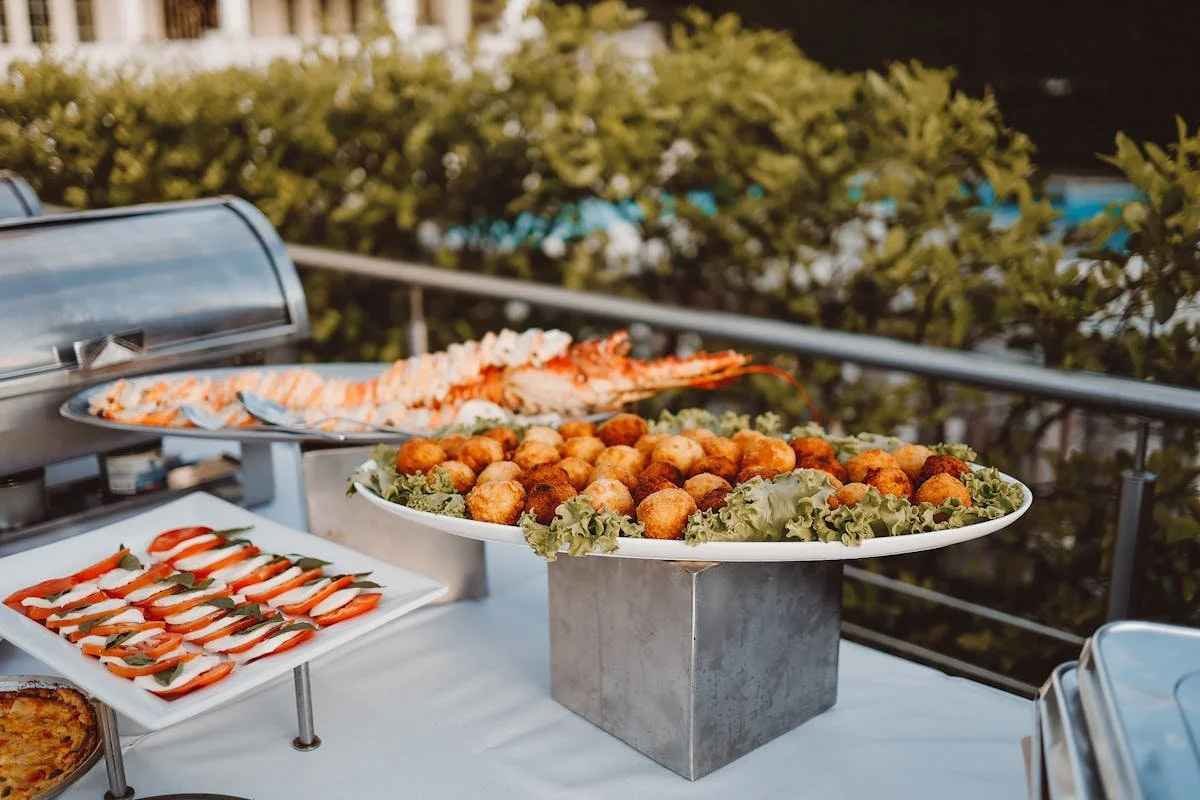
The second operational reality of rooftop catering in NYC is that most rooftop venues do not have full commercial kitchens at the roof level. Some have prep kitchens. Some have a single induction line and a holding area. Some have no kitchen at all and require the catering team to operate from a lower floor with food traveling up by service elevator, or to bring fully prepared food on site.
This shapes catering decisions significantly. Menus with multiple hot courses requiring last-minute finishing are challenging on most NYC rooftops unless the catering team can deploy specialized equipment and additional staff to manage the timing. Menus built around cold and ambient items, paired with strategically chosen hot items that hold well, perform much more reliably.
The most experienced rooftop caterers in NYC have developed specific equipment and execution playbooks for these constraints. Wind-resistant glassware, weighted serving trays, compact heating stations, and modular bar setups all become essential. The catering team brings these realities as part of the engagement rather than discovering them during load-in.
Cloud Catering and Events operates regularly across NYC rooftops, including spaces like 620 Loft and Garden, Brooklyn Grange, and other rooftop event venues across the city. You can see the broader Cloud venue partner list on the website.
Permits and Structural Realities
Rooftop catering in NYC carries a layer of regulatory complexity that ground-floor venues do not. Every rooftop space must hold structural load certifications confirming the roof can safely bear the combined weight of guests, furniture, production, and catering equipment. FDNY occupancy caps apply strictly. Wind-rated tent permits are required for any tented or enclosed structures.
When external catering is brought into a rooftop venue, additional permitting often applies. A Temporary Food Service Establishment permit from the NYC Department of Health is typically required for caterers operating outside the venue's permanent licensed food service.
Alcohol service beyond what the venue's own SLA license covers requires a Special Event Permit from the New York State Liquor Authority, particularly if the rooftop activation extends beyond the venue's licensed footprint.
A catering team with deep NYC rooftop experience handles these permits as part of the engagement. A less experienced team can leave permitting responsibilities ambiguous, which creates real risk for the host. Confirm permit responsibilities in writing before the contract is signed.
Capacity Reads Differently Above the Street
A rooftop rated for 400 cocktail guests typically supports closer to 200 for a seated dinner, once dance floor, staging, and service flow are factored in. This is true at most venues, but it is especially true on rooftops, where service paths are tighter, kitchen flow is more constrained, and weather contingency space needs to be planned into the layout.
The chart below provides practical capacity guidance for rooftop catering in NYC across common formats.
| Event Format | Cocktail Capacity (rating) | Realistic Seated Capacity | Service Considerations |
|---|---|---|---|
| Standing Cocktail Reception | Full venue rating | N/A | Passed bites + 1 stationed element |
| Cocktail with Light Bites | ~80% of rating | N/A | 4 to 6 passed canapés, 2 stations |
| Family Style or Small Plate Seated | N/A | ~50% of cocktail rating | Shared platters or station service |
| Plated Seated Dinner | N/A | ~45% of cocktail rating | Limited course count for kitchen flow |
| Plated Dinner with Dance Floor | N/A | ~35% of cocktail rating | Reduced courses, tight service paths |
Match the format to the capacity carefully. A rooftop that hits guest count on paper but feels compressed on the night undermines the very atmosphere that made the rooftop the right venue in the first place.
Menu Design for Rooftop Catering
The strongest rooftop menus in NYC are designed for the environment rather than imported from indoor playbooks. A few principles consistently produce better outcomes.
Seasonal, fresh, light-leaning composition reads beautifully outdoors. Stone fruit and citrus in summer, root vegetables and warm spices in early fall, bright herbs and fresh seafood throughout the season. Heavy braises and rich proteins that work indoors can feel out of place in the open air.
Passed canapés and small plate stations almost always outperform full plated dinners for rooftop service, both because they accommodate the kitchen constraints and because they support the social, photogenic energy that makes rooftops appealing in the first place.
Beverage programs at rooftop events should lean into refreshment. Signature cocktails with crisp profiles, sparkling wine pours, premium sparkling water, and fresh-pressed juices all read better at elevation than heavy spirits or rich red wines.
A signature rooftop cocktail named for the venue or the host is one of the most common content moments at a New York rooftop event, and it consistently produces more guest engagement than a generic open bar setup.
Cloud Catering's culinary craft is grounded in a Michelin-trained kitchen that designs menus around the specific environment and audience rather than working from a fixed catalog. That capability matters disproportionately for rooftop work.
Service Strategy on a Rooftop
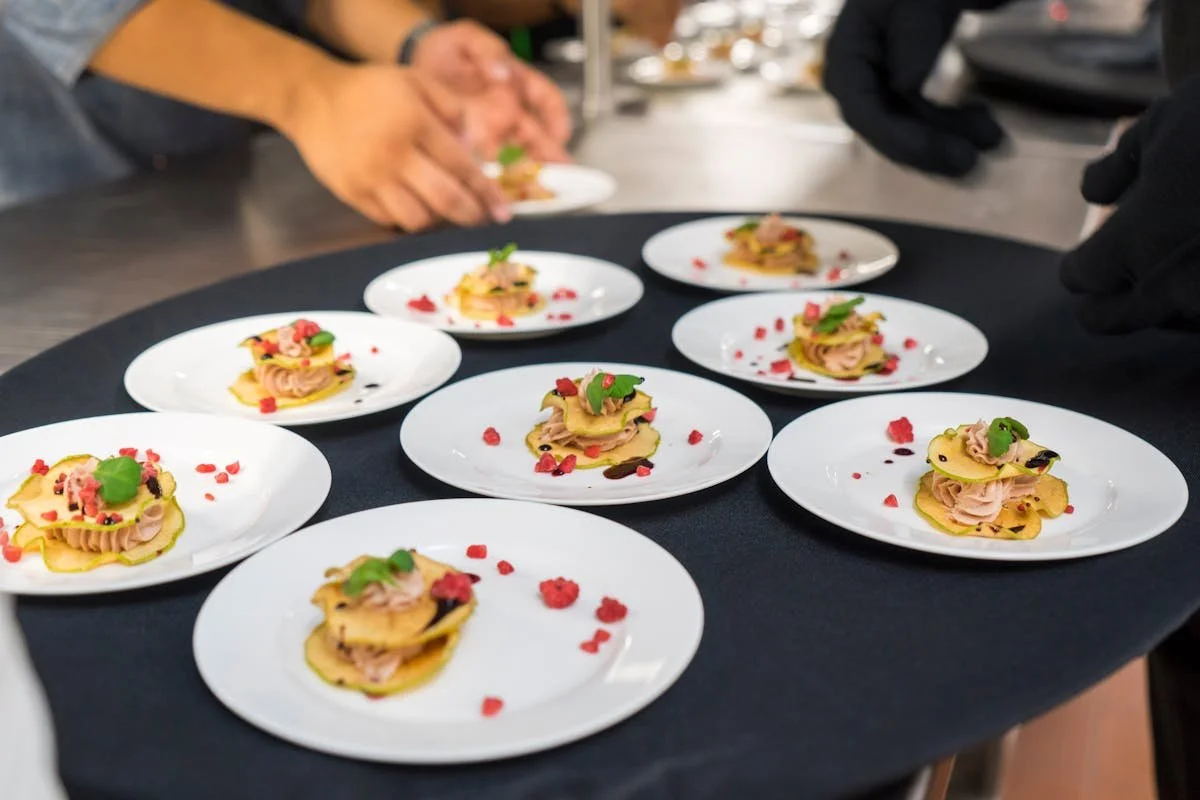
Service ratios on rooftops should typically run slightly higher than equivalent indoor events. The reasons are practical. Servers cover more ground because layouts tend to be longer and narrower. Plate clearing happens more often because guests are moving and putting glasses down on more surfaces. Wind and weather add small friction points that absorb service team attention.
A standard ratio for premium rooftop catering in NYC is one server per 12 to 15 guests for passed service and one bartender per 60 to 75 guests for a controlled beverage program. Captains should run no more than 75 guests each so they can manage the full perimeter of the space attentively.
The service team also needs specific training for rooftop conditions. Wind awareness, clearing protocols for outdoor settings, comfort with guest movement around the perimeter for skyline photography, and discretion around the increased phone and content activity that rooftops generate are all distinct skills.
Cloud Catering's service philosophy brings the kind of thoughtful, considerate, polished delivery that the rooftop format requires.
How Cloud Catering Approaches Rooftop Catering in NYC
Cloud Catering and Events has executed rooftop programs across many of New York's signature event venues, including spaces like 620 Loft and Garden, Brooklyn Grange, and other premium outdoor venues across the city.
The Cloud team brings the operational fluency that rooftop catering specifically demands: kitchen flow built around the realities of limited rooftop kitchen access, menu design tuned to seasonal and environmental conditions, beverage programs engineered for elevation, and a service team trained to operate in open-air conditions.
The Cloud client roster across rooftop events includes corporate brands, luxury fashion houses, beauty brands, financial institutions, and luxury wedding hosts. Each engagement starts with a venue walkthrough, a weather contingency review, and a menu design conversation that integrates the rooftop's specific operational constraints into the program from the start.
The result is a rooftop event that delivers the atmospheric magic that made the venue the right choice while executing with the precision the New York market expects.
For hosts beginning to scope a rooftop event for the coming season, the Cloud team is available to consult on venue selection, menu structure, service flow, and operational logistics well in advance of the formal proposal stage. You can read more about the Cloud approach and the integrated culinary, design, and service capability the team brings to each event.
The best rooftop catering in NYC delivers an event that feels effortless because every detail of the operation was planned around the realities of working above the street. That is the standard worth booking to, and the standard the best rooftops in New York deserve.
Frequently Asked Questions
When is the best time of year to host a rooftop event in NYC?
May through October is the prime window for rooftop catering in NYC, with peak conditions in late May to mid-June and again from September to mid-October. July and August are workable, but heat and humidity affect guest comfort and catering execution. Year-round rooftop events are only practical at venues with retractable roofs or heated enclosures.
How far in advance should I book rooftop catering in NYC?
For peak-season Friday and Saturday evenings, six to twelve months ahead is the standard. Premium rooftop venues book the same calendar windows as luxury weddings and major corporate events. Off-season and weekday bookings can often be secured with three to four months of lead time.
What is the typical per-guest cost for rooftop catering in NYC?
Premium rooftop catering in NYC typically runs $200 to $450 per guest for food, beverage, and service, with the spread driven primarily by service format, beverage program complexity, and the operational requirements of the specific rooftop. Cocktail-style events sit at the lower end of the range. Full plated dinners with dance floor production sit higher.
What happens if it rains on the day of the event?
This is the single most important question to ask the venue before booking. The strongest rooftop venues offer retractable roofs, climate-controlled glass enclosures, or indoor backup spaces. A venue with no weather contingency means the host bears the risk. Confirm the contingency plan in writing before signing any contract.
Are there permitting requirements specific to rooftop catering in NYC?
Yes. Every rooftop venue must hold structural load certifications and FDNY occupancy clearance. External caterers typically require a Temporary Food Service Establishment permit from the NYC Department of Health, and alcohol service beyond the venue's licensed footprint may require additional New York State Liquor Authority permitting. A catering team with deep NYC rooftop experience handles these permits as part of the engagement.
Sources
EMRG Media, Best Rooftop Corporate Event Venues NYC 2026 Booking Guide:https://www.emrgmedia.com/rooftop-corporate-event-venues-nyc/
EMRG Media, NYC Venue Licensing: 2026 Corporate Event Rules:https://www.emrgmedia.com/resources/nyc-venue-licensing/
EMRG Media, NYC Event Compliance Guide 2026:https://www.emrgmedia.com/resources/nyc-event-compliance/
Peerspace, How and Where to Find a Rooftop Airbnb in NYC:https://www.peerspace.com/resources/airbnb-rooftop-alternative-nyc/
Tagvenue, The 16 Best Rooftop Venues for Rent in New York City:https://www.tagvenue.com/us/hire/rooftop-venues/new-york-city