
How Networking Event Catering Keeps Conversations Flowing at NYC Gatherings
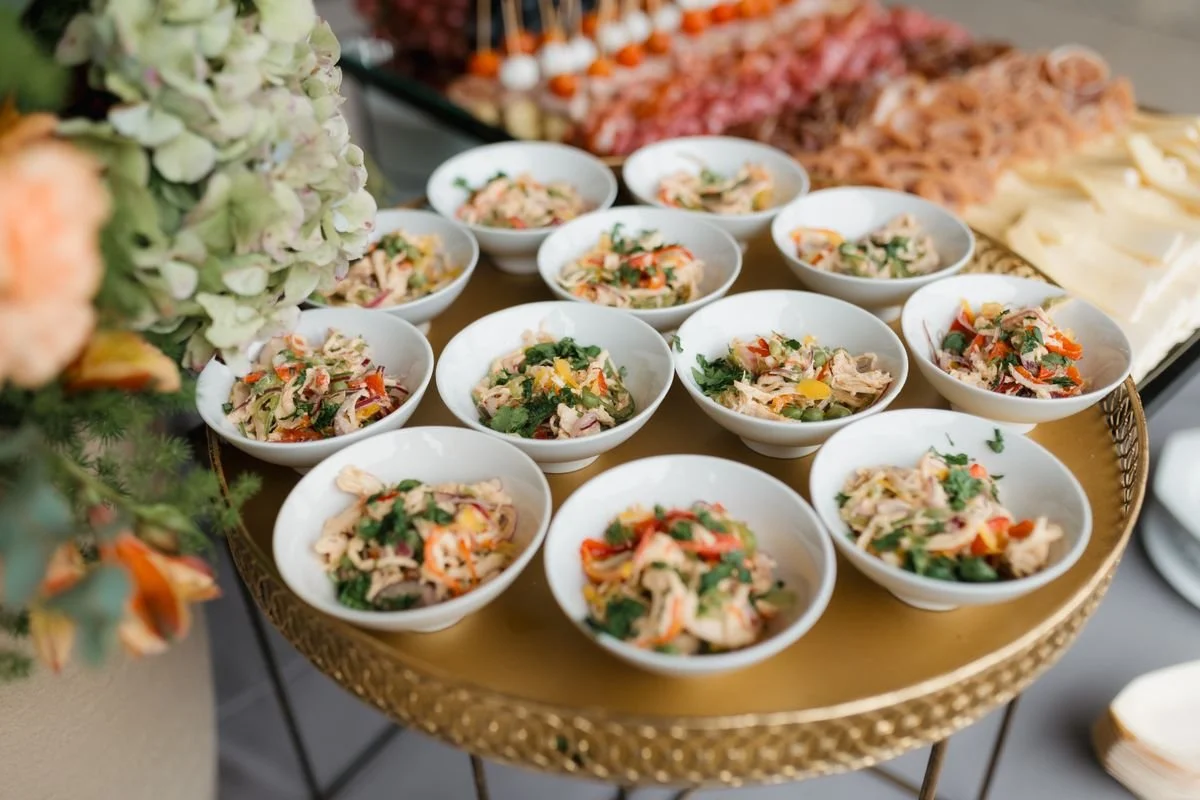
Quick Answer: Networking event catering keeps conversations flowing by serving food that can be eaten in one bite with one hand, placing stations and bars so guests circulate rather than cluster, and timing service to the moments when a room's energy naturally dips. Done well, networking event catering in NYC is nearly invisible, and the room simply works.
The purpose of a networking event is conversation, so every networking event catering decision should be judged by whether it helps people keep talking.
Guests need one hand free at all times, which makes glass management, plate size, and bite design more important than menu ambition.
Room flow matters as much as food quality in networking event catering, since station and bar placement determine whether a crowd circulates or gridlocks.
Why Does Food Determine How Well a Networking Room Works?
Every other kind of corporate event has a focal point. A conference has a stage, a gala has a program, a dinner has a table. A networking event has none of that. The room is the content, and the only structure guests get comes from where the food and drinks are.
That puts unusual weight on catering. Networking event catering is not a supporting element at these gatherings; it is the primary tool for shaping how several hundred people move, gather, and break apart over two hours.
The corporate event venues in NYC failure modes are easy to spot once you know them. A single bar with a twelve-person line. A buffet that pins guests against a wall with a plate in each hand. Bites that require full attention to eat. Each of these quietly ends conversations that were going well.
Strong networking event catering removes those friction points before anyone notices they existed. Guests leave saying the event had good energy, without being able to say exactly why.
What Makes a Bite Conversation-Friendly?
There is a practical test that governs almost all networking event catering menu design. A guest should be able to eat the item in one motion, while holding a drink, without looking down, and without needing a napkin immediately afterward.
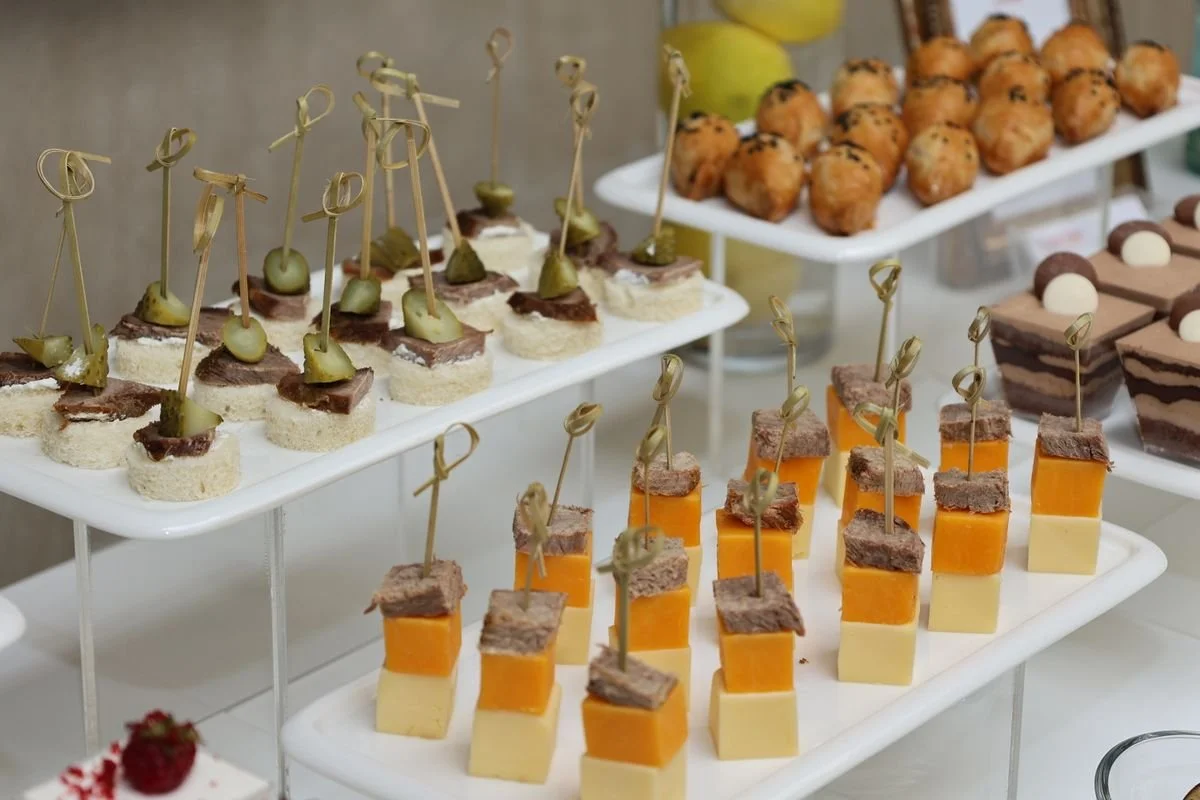
That single standard eliminates a surprising amount. Anything on a skewer creates a disposal problem with no obvious solution. Anything with a loose filling forces guests to lean forward and stop talking. Anything genuinely crunchy makes people wait to answer a question. Anything requiring two bites means the second bite happens mid-sentence.
What works instead is compact and self-contained. Spoons and small vessels that hold everything together. Bites built on a firm base. Items served at a temperature that does not force urgency. This is where experienced networking event catering teams earn their keep, because the menu has to be genuinely delicious while obeying rules a plated dinner never faces.
Aroma deserves a mention too. Strong-smelling items travel across a room and follow guests into conversations they are trying to make a good impression in. Restraint is the better instinct at a business reception.
None of this means networking event catering should be simple. It means the complexity belongs in flavor rather than in structure, which is a harder brief and a better result.
Where Should Stations and Bars Go to Create Movement?
Placement is the most underused lever in corporate networking catering NYC hosts have available. Most rooms are set by default, with the bar near the entrance and the food along the back wall, and that default produces the worst possible traffic pattern.
The better networking event catering approach treats the room as a circuit. Bars go deep into the space rather than at the door, which pulls guests past each other instead of stalling them at the entrance. Stations sit apart from the bars so the two lines never merge. Standing height cocktail tables spread evenly so no corner of the room goes dead.
The goal is a room where every guest has a reason to move at least three times. Movement is what creates new conversations, and the physical layout of networking event catering is what makes movement happen without anyone being asked.
Bottlenecks deserve specific attention in New York venues, where columns, coat check lines, and narrow entries are common. Walking the room with the caterer before the layout is locked is worth the hour it takes.
Which Service Choices Actually Help People Talk?
Different service formats do different things to a room. The table below maps the choices that matter most in high-volume networking events, catering to their real effect on conversation.
| Service Choice | Effect on Conversation | Where It Belongs |
|---|---|---|
| Passed Hors d'Oeuvres | Brings food to guests so nobody has to leave a conversation to eat | Arrival and peak windows, continuously |
| Standing Cocktail Tables | Frees a hand for greetings and cards by giving glasses a home | Spread evenly, never clustered in one zone |
| Chef-Attended Stations | Creates a destination and an easy opening line between strangers | Mid-event, positioned well away from the bars |
| Secondary Bar | Splits the line so the main bar stops becoming a wall | Opposite corner from the primary bar |
| Late Savory Pass | Resets energy and extends the best conversations of the night | Final forty-five minutes, with coffee service |
The pattern is consistent. In networking event catering, anything that brings food to guests protects conversations. Anything that requires guests to queue interrupts them. The program should tilt heavily toward the first category and use the second sparingly and deliberately.
How Do You Solve the Two-Hand Problem?
This is the single most overlooked issue in networking event catering. A guest holding a drink in one hand and a plate in the other cannot shake hands, cannot exchange a card, and cannot gesture. They are effectively removed from the networking they came for.
Good networking event catering solves this structurally rather than asking guests to manage it. Cocktail tables placed generously throughout the room give people somewhere to set a glass. Napkin service that circulates removes the need to hold one. Bites are sized, so a plate is never necessary, keeping the second hand free entirely.
Attentive clearing is the other half of the networking event catering solution. Staff who circulate continuously, collecting empty glasses and used napkins before guests have to look for a place to put them, keep hands free without a word being exchanged.
At larger gatherings, this level of service requires real staffing depth. It is the least visible line on a proposal and one of the most consequential to how the evening actually feels.
How Does Timing Keep a Room's Energy From Dipping?
Networking events have a predictable arc, and networking event catering should be built against it rather than spread evenly across the clock.
The arrival window needs immediate service, with passed items and drinks reaching guests within the first minute so nobody stands empty-handed while the room is still thin.
The build phase, roughly twenty to forty minutes in, is the heaviest passing period, since this is when the room reaches capacity and conversations form fastest.
The plateau is when stations should open, giving guests a fresh reason to move once initial conversations have settled.
The dip, usually about ninety minutes in, is where a second wave of passed items resets energy that would otherwise fade.
The close calls for a final savory pass and coffee service, which extends the most valuable conversations rather than letting the room empty on a flat note.
Reading that arc correctly is what separates professional business reception catering NYC hosts return to from service that simply puts food out. The room tells you when it needs something, and the catering team should already be moving.
What Should Hosts Confirm Before the Event?
A few networking event catering details shape the guest experience more than the menu does, and they are worth settling early.
Confirm the guest count against the room's actual comfortable capacity rather than its fire code maximum, since a room at true capacity stops circulating entirely. Confirm the staffing ratio for both passing and clearing, not just for the bar. Confirm dietary coverage across every passed item so guests with restrictions are not left waiting for something specific to reach them.
Finally, confirm what happens if the event runs long, because networking events frequently do when they are going well. Extending service for thirty minutes is straightforward when it is planned and awkward when it is not.
Frequently Asked Questions
How much food is needed for a networking reception?
For a two-hour reception that replaces a meal, plan on a substantially heavier passed program than most hosts expect, plus stations. If the event precedes dinner, a lighter program works, but guests should still be able to eat steadily rather than waiting between passes.
Are stations or passed hors d'oeuvres better for networking?
Both, used differently, and strong networking event catering programs use each for what it does best. Passed service protects conversations because food comes to the guest, so it should carry the arrival and peak windows. Stations create destinations and give guests a reason to move, so they work best once the room is full.
How do you keep lines from forming at the bar?
Split the service. A second bar positioned away from the first, plus passed wine and a signature cocktail during arrivals, keeps any single point from becoming a wall guests have to wait behind.
What foods should be avoided at a business reception?
Anything requiring two hands, anything with a loose filling, anything on a skewer with no disposal path, and anything with a strong lingering aroma. All of them work against the reason guests are in the room.
How far in advance should networking event catering be booked in NYC?
Six to eight weeks is workable for most corporate receptions, though popular New York venues and the fall and holiday calendar move considerably faster and warrant a longer runway.